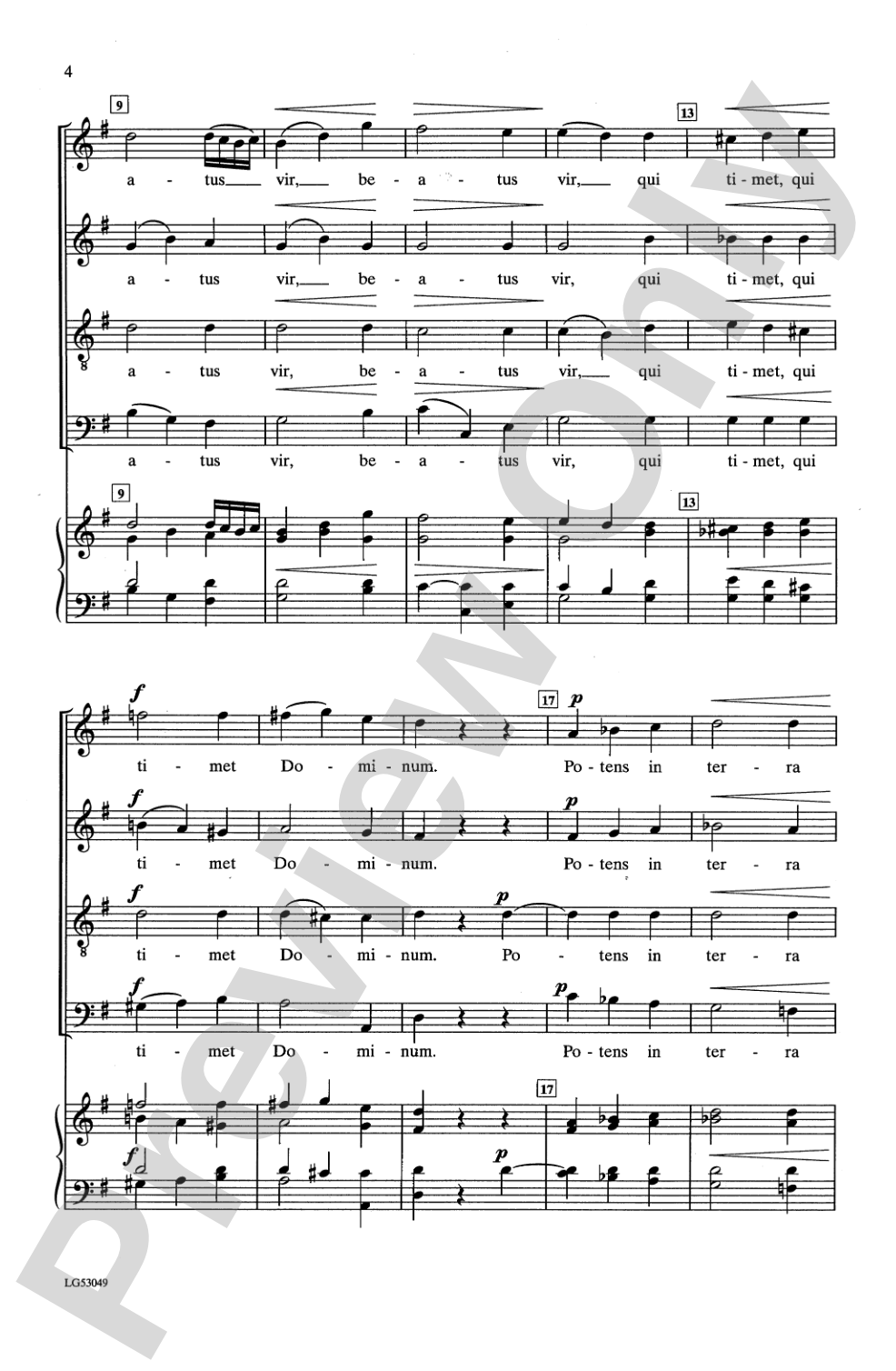
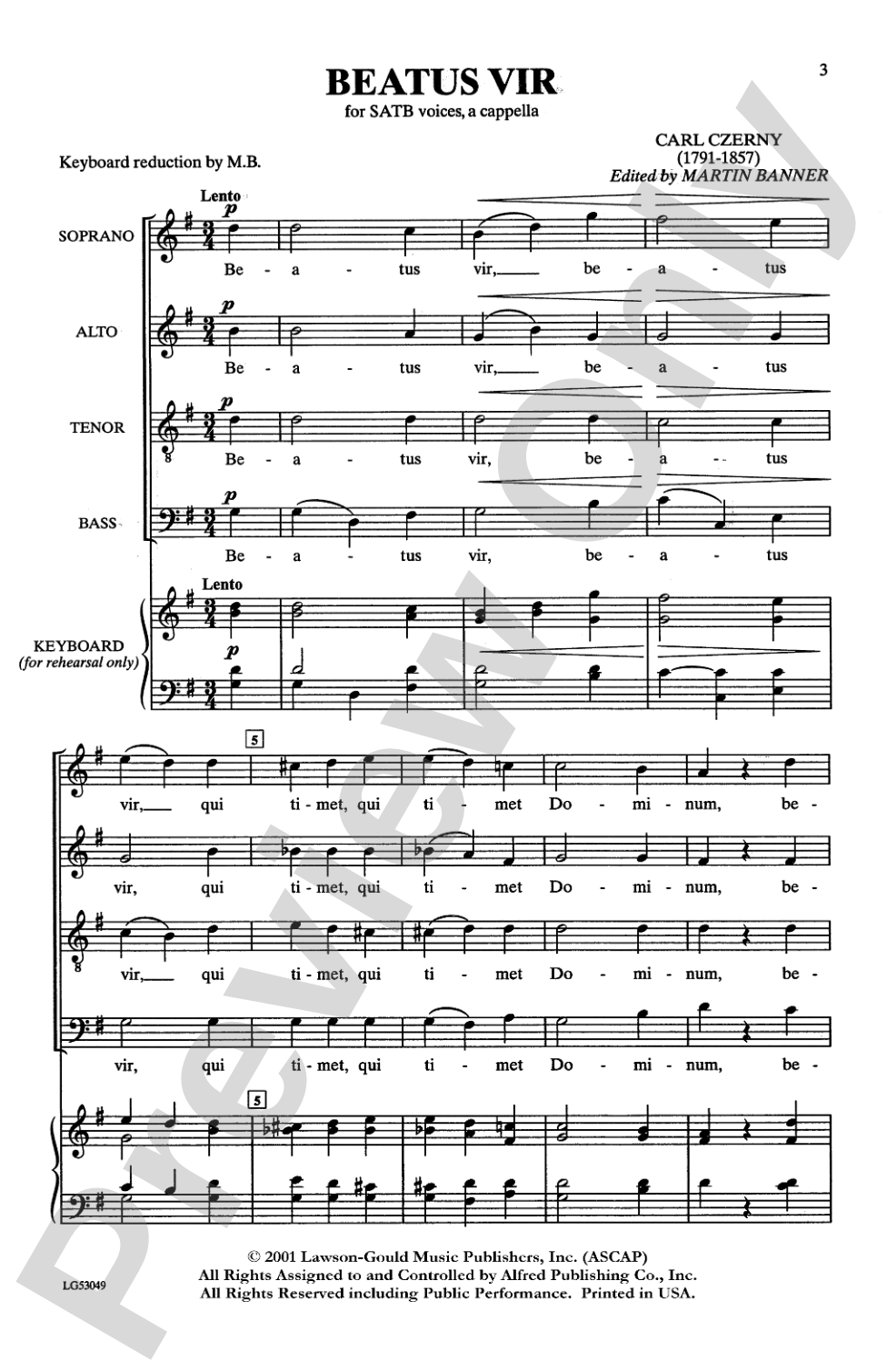
Beatus Vir Sheet Music Preview

Beatus Vir: SATB, a cappella Choral Octavo

By Carl Czerny / ed. Martin Banner

Level: Moderate

Item: 00-PO-0005109

Digital Download
$2.25

Minimum order quantity: 20 copies

Description
Carl Czerny is remembered primarily for his piano teaching materials that are still being used today. "Beatus Vir" comes from a collection of Graduals he composed during the 19th century. A partial translation of the Latin text is "Blessed is the man who fears the Lord, who takes joy in his commandments."

Beatus Vir: SATB, a cappella Choral Octavo isn't in MakeMusic Cloud just yet...but it could be. Let us know you'd like to see it, and you'll help shape what comes next. In the meantime, start a free trial and dive into thousands of interactive titles your students can play along with today.

Sample Audio
No sample audio found.
Sample Video
Additional Details
Series: Alfred Archive Edition: Lawson-Gould Music Publishers
Publisher: Alfred Music
Page Count: 8
SKU: 00-PO-0005109

More about this title

About the Composer: Carl Czerny

Carl Czerny (1791–1857) stands as one of the most prolific composers of the 19th century, yet his legacy rests almost entirely on his keyboard pedagogy. His etudes and technical studies remain cornerstones of piano instruction worldwide, used by teachers and students to build facility and musicianship. Beyond his famous piano works, Czerny composed in virtually every genre: symphonies, concertos, chamber music, and sacred choral works that reveal a composer deeply versed in the Classical and early Romantic traditions.

Czerny's sacred music, including the Graduals from which "Beatus Vir" is drawn, demonstrates his skill at word setting and harmonic language. These works deserve far greater attention than they typically receive. Writing for the liturgical calendar, Czerny combined accessibility with musical substance, creating pieces that serve their devotional purpose while offering choirs genuine musical reward.

Why we love this

Czerny's choral writing is refreshingly direct and singable without sacrificing harmonic interest. This piece sits comfortably for a grade 3 choir, making it an ideal choice for directors seeking liturgical or concert repertoire that neither talks down to singers nor demands excessive rehearsal time to sound accomplished.

What to expect

Czerny's "Beatus Vir" conveys quiet reverence and harmonic warmth. Sung unaccompanied, the four-voice texture creates intimate space for the Latin text to unfold, moving between moments of collective strength and delicate interweaving of voices.

Who it's for

This octavo suits moderately experienced SATB choirs preparing sacred repertoire for liturgical settings, concert programming, or festival performances. The grade 3 difficulty level makes it accessible to high school choirs and college ensembles while remaining musically substantive.

How to get the most out of it

  • Emphasize the text's spiritual content in rehearsal. The declarative nature of "Beatus Vir" benefits from a grounded, contemplative tone rather than showy phrasing.
  • Balance the four voices with care, especially in passages where one line carries the melodic weight. A cappella singing exposes imbalance immediately.
  • Shape phrases in service of the Latin text, observing natural word stress. This approach clarifies the meaning and improves diction.
  • Allow space for breath at phrase endings. The eight-page format likely contains longer sections where breathing strategy will affect overall musicality.

How to use it

Program this piece alongside other sacred works from the 19th century to create a thematic concert around liturgical music. Its moderate length and difficulty make it an excellent pairing with more ambitious works in the same concert, allowing your choir to demonstrate versatility without overextending rehearsal resources.

Skills your students will build

  • Sustaining unaccompanied pitch and intonation in four-part writing
  • Balancing SATB voicing without instrumental support
  • Interpreting Latin text underlay and applying authentic pronunciation
  • Shaping phrases according to textual meaning and harmonic structure
  • Singing with focused tone in moderate dynamics appropriate to sacred music

You May Also Like