

Beati Quorum Via: SSA Double Chorus Choral Octavo
By Charles Villiers Stanford / ed. and arr. Russell Robinson
Item: 00-PO-0000952
$2.25
Minimum order quantity: 20 copies
Pickup currently not available
Description
Well-suited for honor choirs and collegiate use, this excellent edition for SSA double choir will be a stunning addition to your classic repertoire. Extremely effective!


Beati Quorum Via: SSA Double Chorus Choral Octavo isn't in MakeMusic Cloud just yet...but it could be. Let us know you'd like to see it, and you'll help shape what comes next. In the meantime, start a free trial and dive into thousands of interactive titles your students can play along with today.
Request This Title
Tell us you want it.
Start Your Free Trial
Explore everything that's ready to play right now.
Sample Audio
1
Audio File
--:--
0:00
0:00
Sample Video
No sample videos found.
Additional Details
Series:
Lawson-Gould
Publisher:
Alfred Music
Page Count:
12
SKU:
00-PO-0000952
More about this title
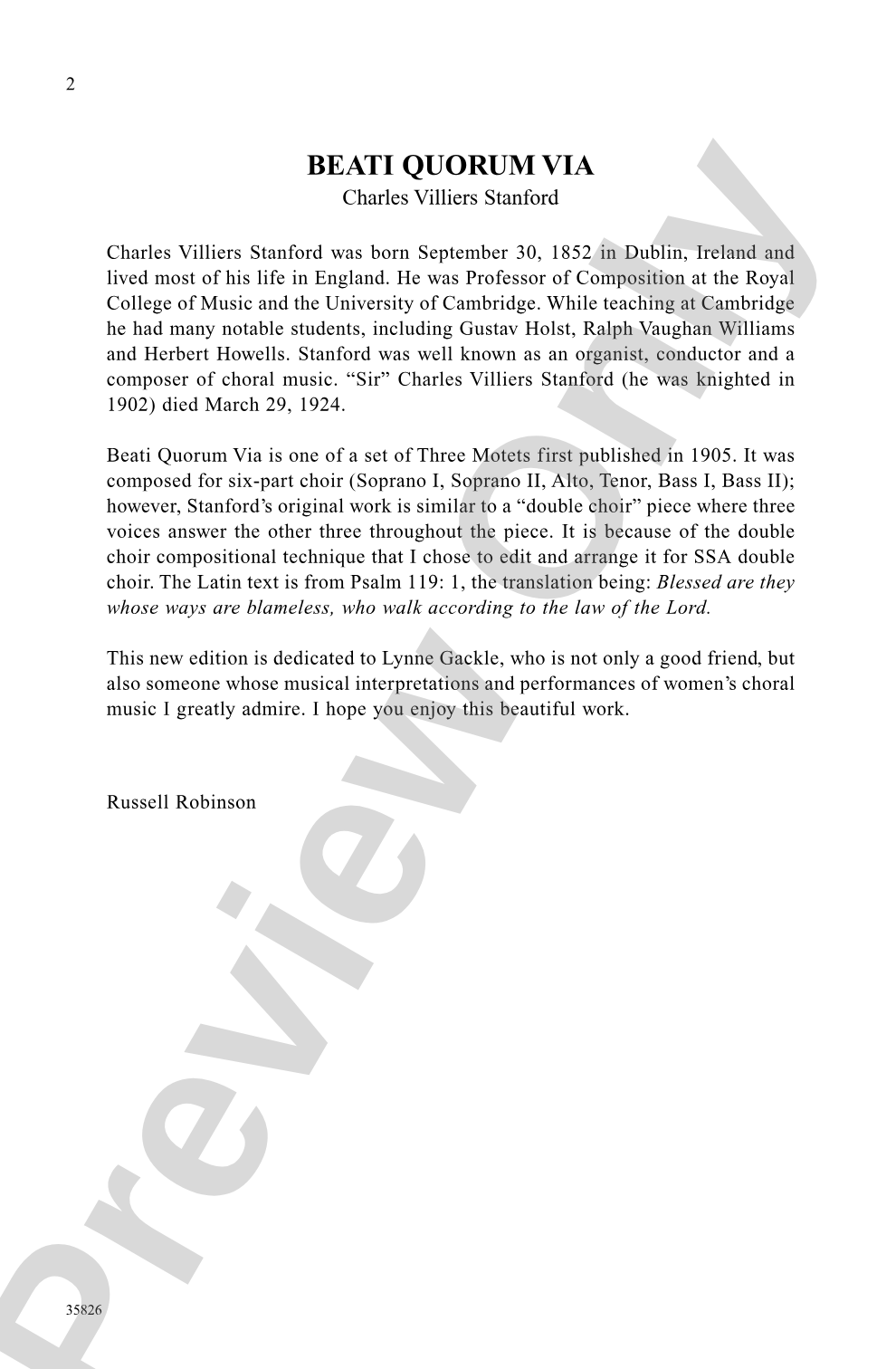
About the Composer: Charles Villiers Stanford
Charles Villiers Stanford (1852-1924) was an Irish composer and conductor whose prolific output shaped the sound of late 19th-century British choral music. A professor at the Royal College of Music for nearly four decades, Stanford championed the tradition of Anglican sacred music while expanding its harmonic and structural possibilities. His choral works remain central to concert and liturgical repertoires worldwide.
Why we love this
Stanford's gift for writing ungainly intervals and harmonic color translates beautifully to the SSA double chorus format, creating richness without requiring large forces. The piece sits comfortably for college and advanced high school choirs, offering the architectural sophistication your singers crave without melodramatic excess. This is the kind of repertoire that sounds more difficult than it sits, rewarding both rehearsal time and careful listening.
What to expect
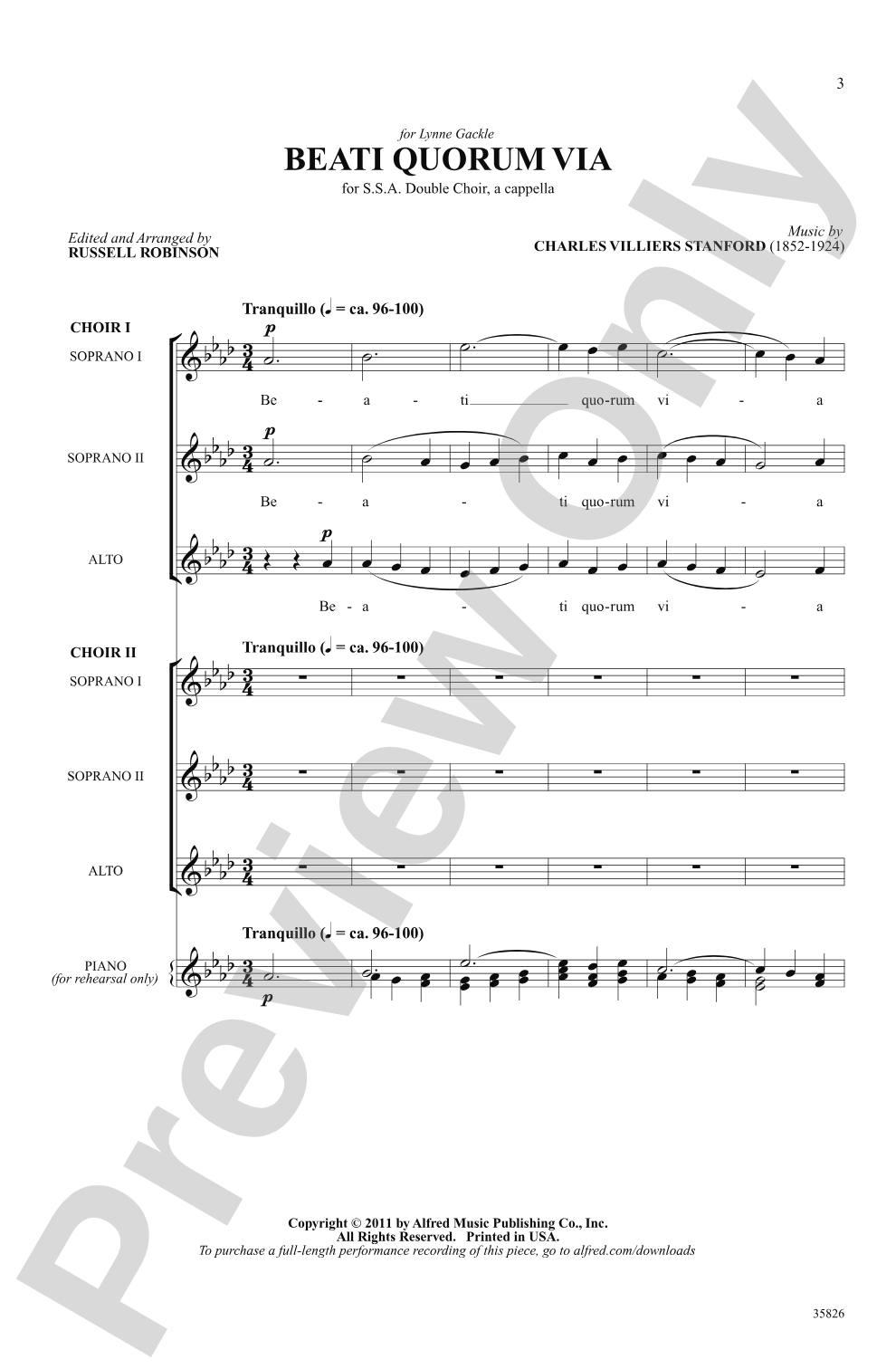
Beati Quorum Via unfolds with the contemplative grandeur characteristic of Stanford's sacred writing. The double chorus architecture creates dialogue and layering that feels both intimate and expansive, with harmonic colors that deepen as the piece develops. Singers experience both the scaffolding of traditional form and the emotional intelligence of a composer writing at full command of his craft.
Who it's for
This octavo serves honor choirs, collegiate ensembles, and advanced high school choirs seeking repertoire that demonstrates maturity and harmonic sophistication. Directors programming year-round or preparing for competitive festivals will find the SSA voicing both accessible and musically substantial. The double chorus requirement makes it ideal for institutions with divided or rotating sections.
How to get the most out of it
- Establish the two choirs' independence through spatial separation or distinct tonal balances in early rehearsals; this architecture is central to the piece's effect and deserves explicit attention from the first read.
- Attend to Stanford's harmonic language in sustained passages; intonation will reveal or obscure the richness of his voice leading, so plan sectional work around chord verification.
- Shape phrases through text underlay rather than artificial breathing; let the sacred text guide your singers' sense of line and weight.
How to use it
Program this as a centerpiece for a liturgical or sacred concert, where its architectural design and textual weight justify programmatic focus. It pairs naturally with other British choral literature from the same era, or serves as a sophisticated anchor when programming mixed classical and contemporary sacred work. The length and complexity make it suitable for spring concerts or festival performances where rehearsal time has accrued.
Skills your students will build
- Ensemble listening and independent voice part awareness in double chorus texture
- Reading mixed clefs and harmonic complexity in Victorian choral writing
- Sustaining line and phrasing across longer, less frequently marked sections
- Intonation accuracy in chromatic and non-diatonic harmonic contexts