
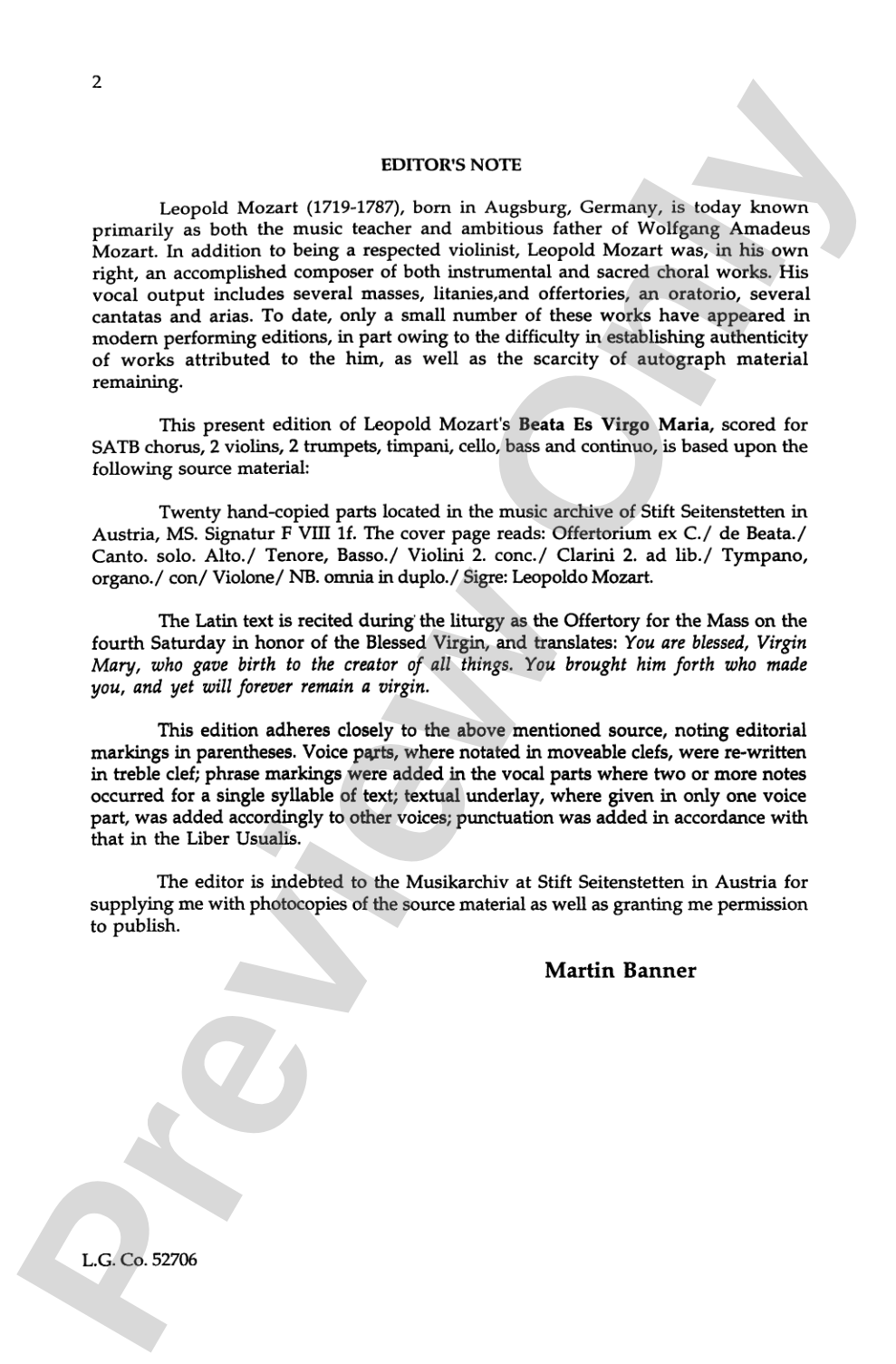
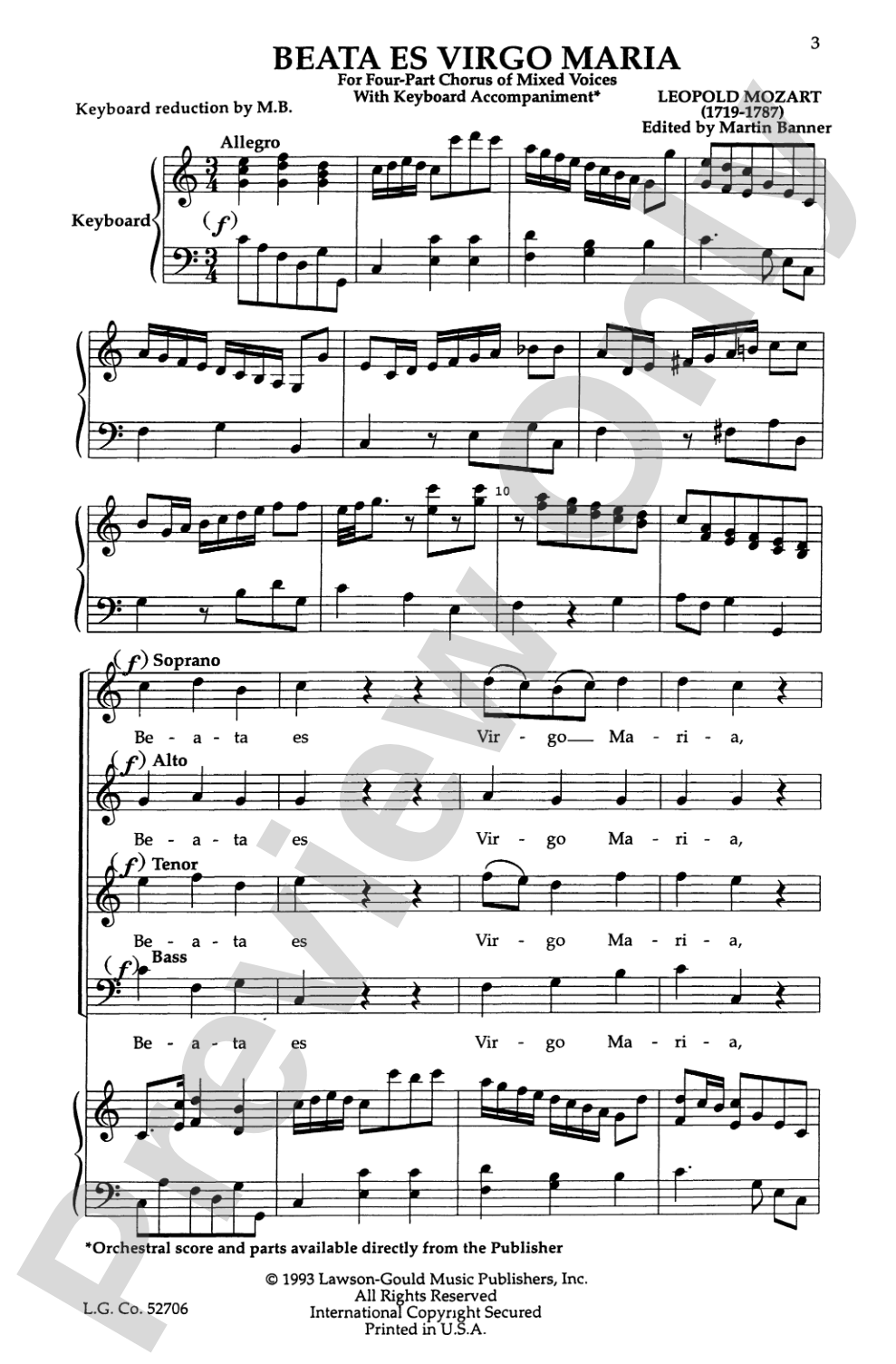
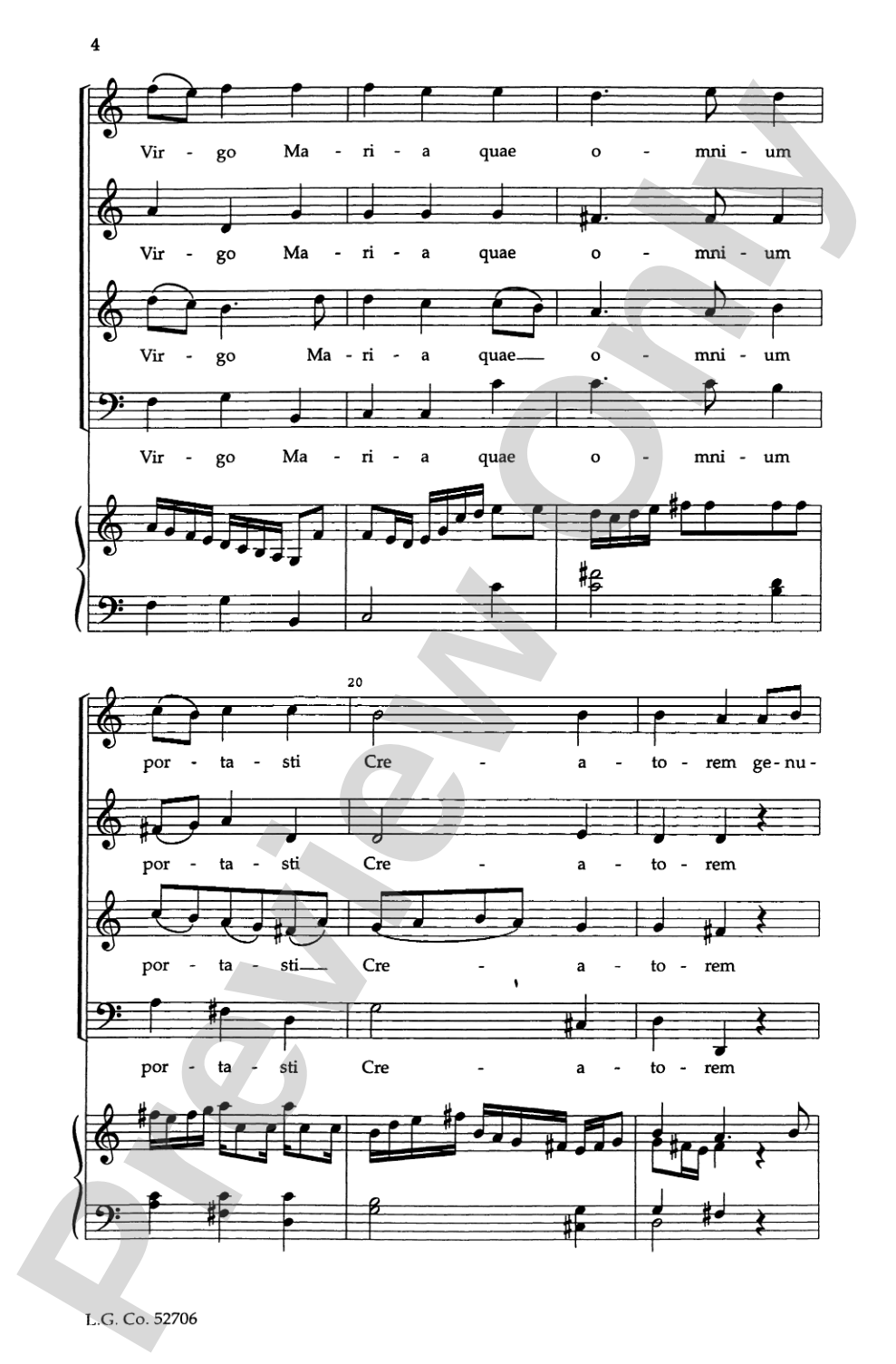
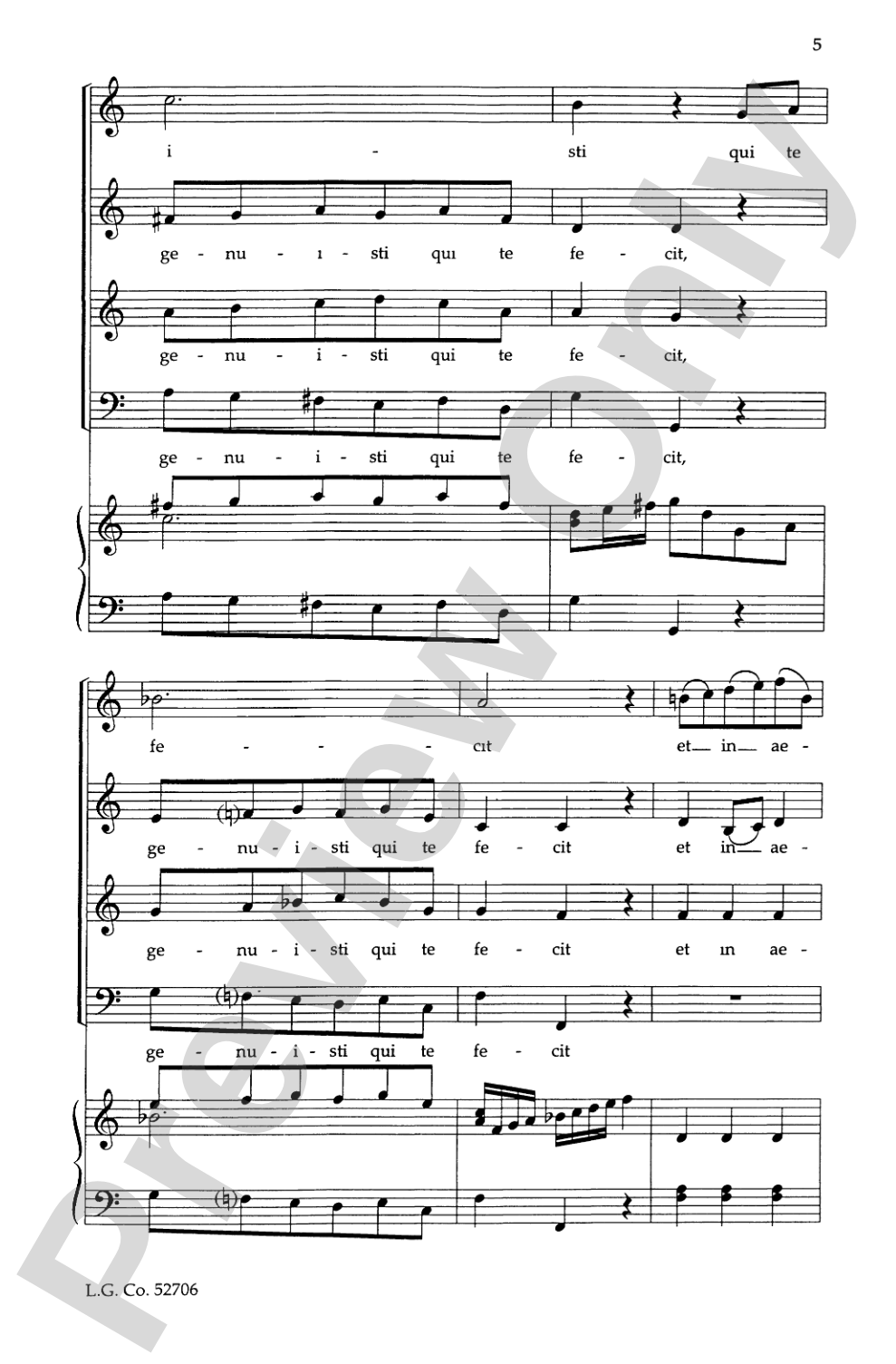

Beata Es Virgo Maria: SATB Choral Octavo
By Leopold Mozart / arr. Martin Banner
Item: 00-PO-0005081
$3.50
Minimum order quantity: 20 copies
Pickup currently not available
Related Items
Beata Es Virgo Maria: SATB Choral Octavo |
$3.50
|
View |
Description


Beata Es Virgo Maria: SATB Choral Octavo isn't in MakeMusic Cloud just yet...but it could be. Let us know you'd like to see it, and you'll help shape what comes next. In the meantime, start a free trial and dive into thousands of interactive titles your students can play along with today.
Request This Title
Tell us you want it.
Start Your Free Trial
Explore everything that's ready to play right now.
Sample Audio
No sample audio found.
Sample Video
No sample videos found.
Additional Details
Series:
Alfred Archive Edition: Lawson-Gould Music Publishers
Publisher:
Alfred Music
Page Count:
20
SKU:
00-PO-0005081
More about this title
About the Composer: Leopold Mozart
Leopold Mozart (1719-1787) was a respected violinist, composer, and pedagogue who shaped the musical training of his son Wolfgang Amadeus Mozart. His own compositions, though often overshadowed by his son's legacy, reveal a solid command of counterpoint and the Classical style emerging in the mid-18th century. Leopold's sacred works demonstrate the craftsmanship expected of a court musician in Salzburg, blending Baroque polyphony with the clarity of the Classical era.
As a composer and father, Leopold understood how to write music that was both artistically substantial and performable by capable musicians. His sacred motets and masses served the liturgical needs of the Salzburg court while maintaining musical integrity. For choral directors, his works offer a window into the musical language of the Mozart household and the compositional standards of late Baroque and early Classical sacred music.
Why we love this
This arrangement brings a Baroque-Classical masterwork within reach of accomplished SATB choirs while preserving the harmonic sophistication and contrapuntal clarity that make Leopold Mozart's sacred music compelling. The 20-page score gives singers genuine musical substance without the performance demands of an unedited original, making it an excellent choice for choirs seeking repertoire that feels substantial without requiring extensive rehearsal time.
What to expect
The piece carries the polished gravity of sacred music from the Classical-Baroque threshold. Melodic lines unfold with elegant restraint, while rich four-part harmony creates warmth without sentimentality. There is an air of devotion rendered in pure musical craftsmanship.
Who it's for
This octavo suits intermediate to advanced SATB choirs with solid sight-reading skills and experience with Baroque-era harmonic language. Church choirs, college ensembles, and high school honors choirs will find the musical and technical demands appropriately challenging.
How to get the most out of it
- Approach the counterpoint with clarity. Each voice line should sing through independent melodic phrases rather than becoming lost in harmonic texture; light articulation on repeated notes helps maintain definition.
- Balance the inner voices carefully during sections where soprano and bass carry the primary melodic material. Tenor and alto parts often contain important harmonic support that benefits from warm, rounded tone rather than pulling back entirely.
- Shape phrases according to text underlay, allowing natural breathing points to guide phrasing even within longer harmonic progressions. This prevents the piece from becoming static and honors the text's meaning.
- Use the recorded accompaniment as a rehearsal tool to secure harmonic intonation, but ensure singers understand the underlying harmonic movement so they can phrase expressively without depending on instrumental support during performance.
How to use it
Program this alongside other Leopold Mozart sacred works or as a centerpiece in a concert exploring the Mozart family's contributions to church music. Its moderate length and SATB accessibility make it ideal for spring choral concerts or liturgical services where elevated repertoire is valued. The work also pairs well with contemporary or Renaissance sacred music in thematic programs exploring continuity in choral traditions.
Skills your students will build
- Reading and sustaining independent melodic lines within four-part texture
- Baroque-Classical harmonic language and functional harmony
- Textual interpretation and phrase shaping in sacred music
- Ensemble balance and blending when inner voices carry harmonic weight
- Intonation strategies in extended harmonic passages