
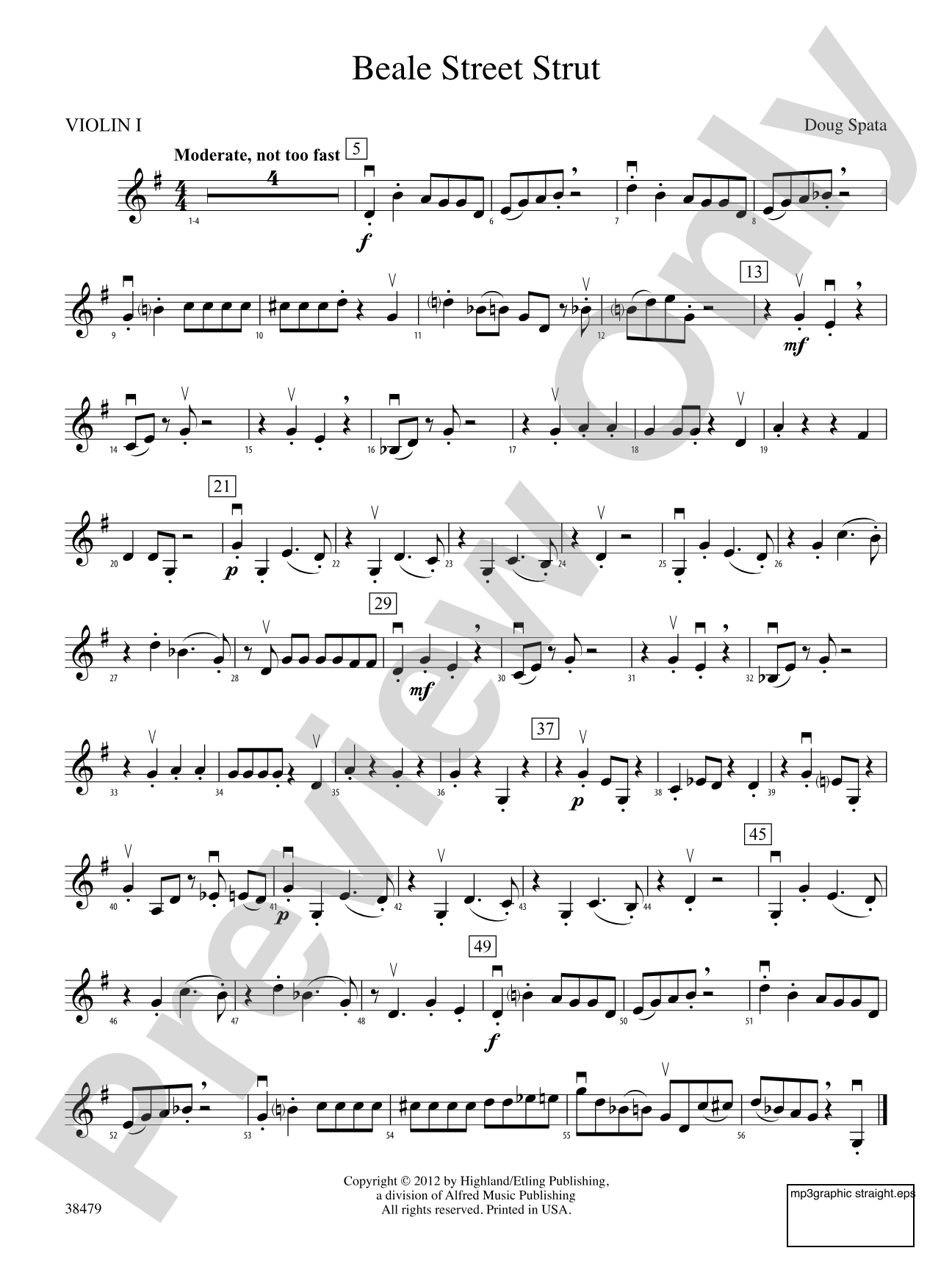

Beale Street Strut: 1st Violin
By Doug Spata
Grade: 2.5
Item: 00-PC-0015527_VN1
$5.99
Pickup currently not available
Description
Taking its name from the epicenter of Southern jazz in Memphis, this fun little boogie will get the orchestra moving! Featuring accidentals and chromatic passages throughout, each section gets its turn at the jazzy, swaggering melodies as well as the bouncy accompaniment parts. It's great practice for chromatics and a fun piece that students will enjoy learning.


Don't just read it, hear it, play along with it, and watch your students grow with it. In MakeMusic Cloud, Beale Street Strut: 1st Violin comes alive with professional accompaniment, adjustable tempo, and built-in practice tools that turn solo practice into real progress.
Open in the Player
Jump straight in and assign it today.
Start Your Free Trial
Open this title and explore the full library in minutes.
Sample Audio
1
Audio File
--:--
0:00
0:00
Sample Video
No sample videos found.
Additional Details
Series:
Highland/Etling String Orchestra
Publisher:
Alfred Music
Page Count:
62
SKU:
00-PC-0015527_VN1
More about this title
About the Composer: Doug Spata

Doug Spata comes to composition with the perspective of a working orchestra director. While his foundation is in clarinet, his years in the classroom have shaped him as a composer who understands what students need to play and what teachers need to teach. His works have earned recognition across the country and internationally, performed by student ensembles, professional orchestras, and chamber groups alike.
Beyond student repertoire, Spata's catalog encompasses opera, ballet, symphonies, and large ensemble works that showcase his versatility across genres and instrumentation. His ability to write idiomatically for strings while maintaining accessibility for student players has made him a trusted voice in school orchestra libraries.
Why we love this
This piece captures authentic jazz idiom without asking string players to abandon their training. Spata distributes the melody and accompaniment across sections strategically, giving violins, violas, and cellos equal moments in the spotlight while keeping the arrangement playable at the 2.5 level. The chromatic work embedded throughout serves a musical purpose, not as a technical exercise tacked on for drill.
What to expect
The energy of Beale Street itself comes through in the swagger and bounce of this piece. Chromatic flourishes and syncopated rhythms create a playful, finger-snapping groove that feels spontaneous even when precisely notated. It's the sound of musicians having fun with a style that invites personality.
Who it's for
String orchestras at the grade 2.5 level looking for repertoire with genuine stylistic character. Directors seeking pieces that develop chromatic reading and rhythmic precision while keeping students engaged with music they'll want to play. Ensembles building a concert with contemporary American jazz idiom.
How to get the most out of it
- Establish a clear groove in rehearsal before focusing on pitch accuracy. Have the rhythm section (cellos and basses if available) find their pocket first, then build the rest of the arrangement around that foundation.
- Shape the accidentals with intention; they're part of the jazz vocabulary here, not mistakes to iron out. Slight inflection on chromatic passages will make them sound less clinical and more swaggering.
- Balance the section melodies carefully when they trade off. Use dynamic rehearsal marks to ensure the accompaniment players know when to sit back and support versus when their part carries weight.
- Let the bounce come from rhythmic clarity, not tempo. Many directors rush this piece out of enthusiasm; maintaining a steady, grooving tempo will serve the style far better.
How to use it
Program this as an opening number to establish energy and audience engagement right away. Pair it with contrasting styles (classical or lyrical pieces) to showcase the range of your ensemble and the versatility of string players. This piece works especially well mid-concert as a palate cleanser between more serious works.
Skills your students will build
- Reading and executing chromatic passages in ensemble context
- Understanding jazz vocabulary and style conventions in string writing
- Rhythmic precision in syncopated, groove-based accompaniment patterns
- Balance and blend when trading melody between instrumental sections
- Articulation control in swaggering, detached jazz idiom