
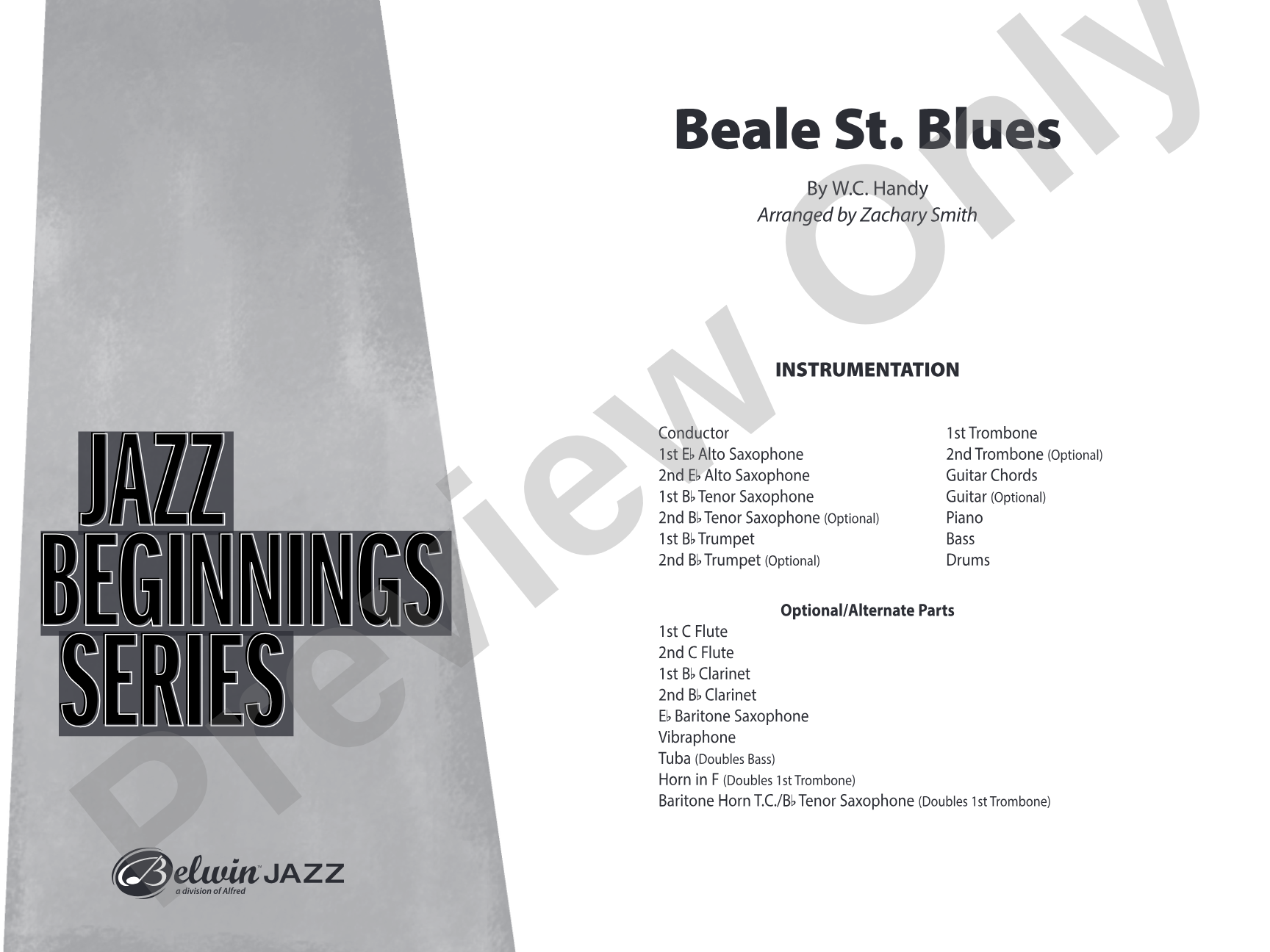
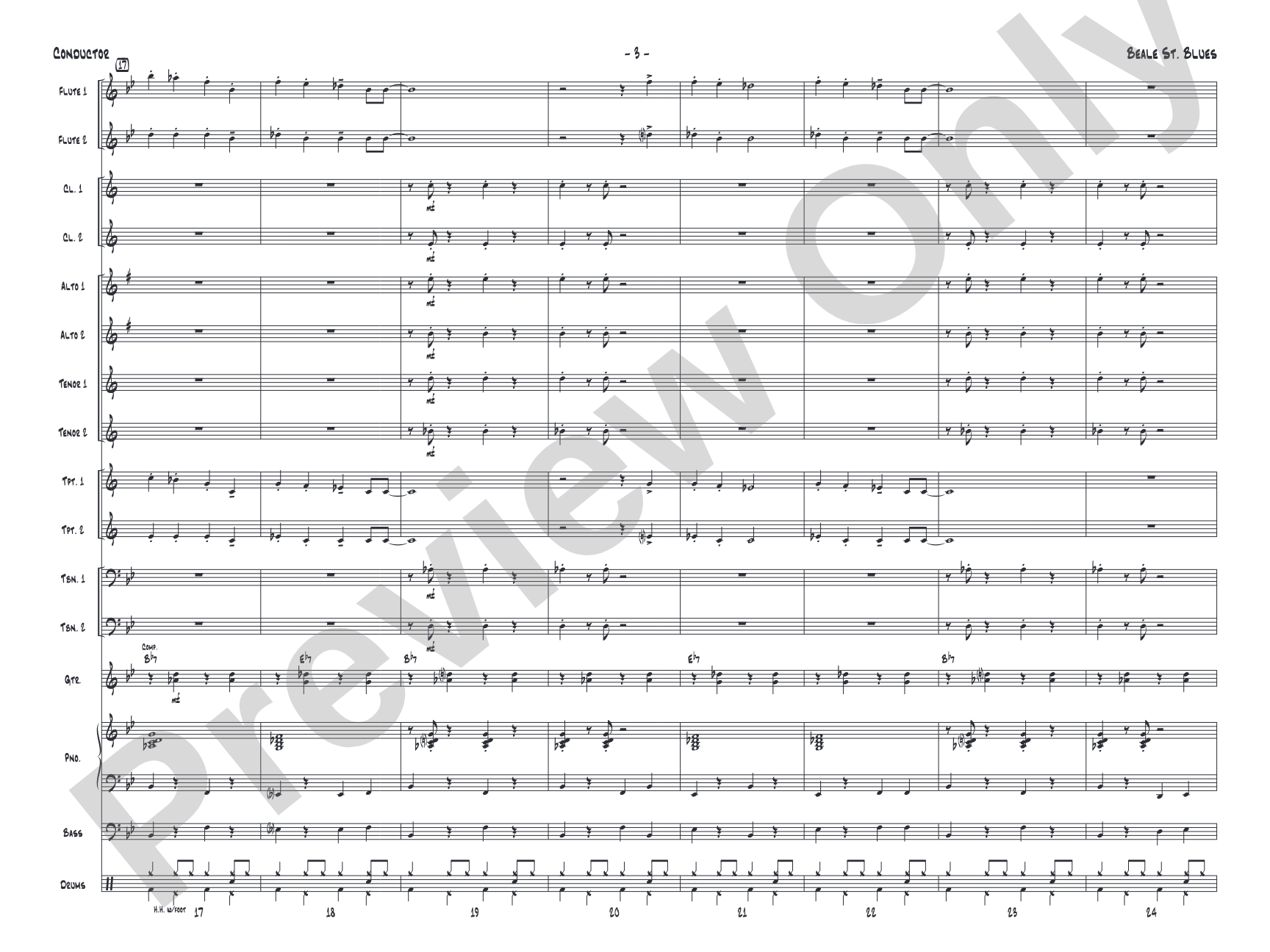
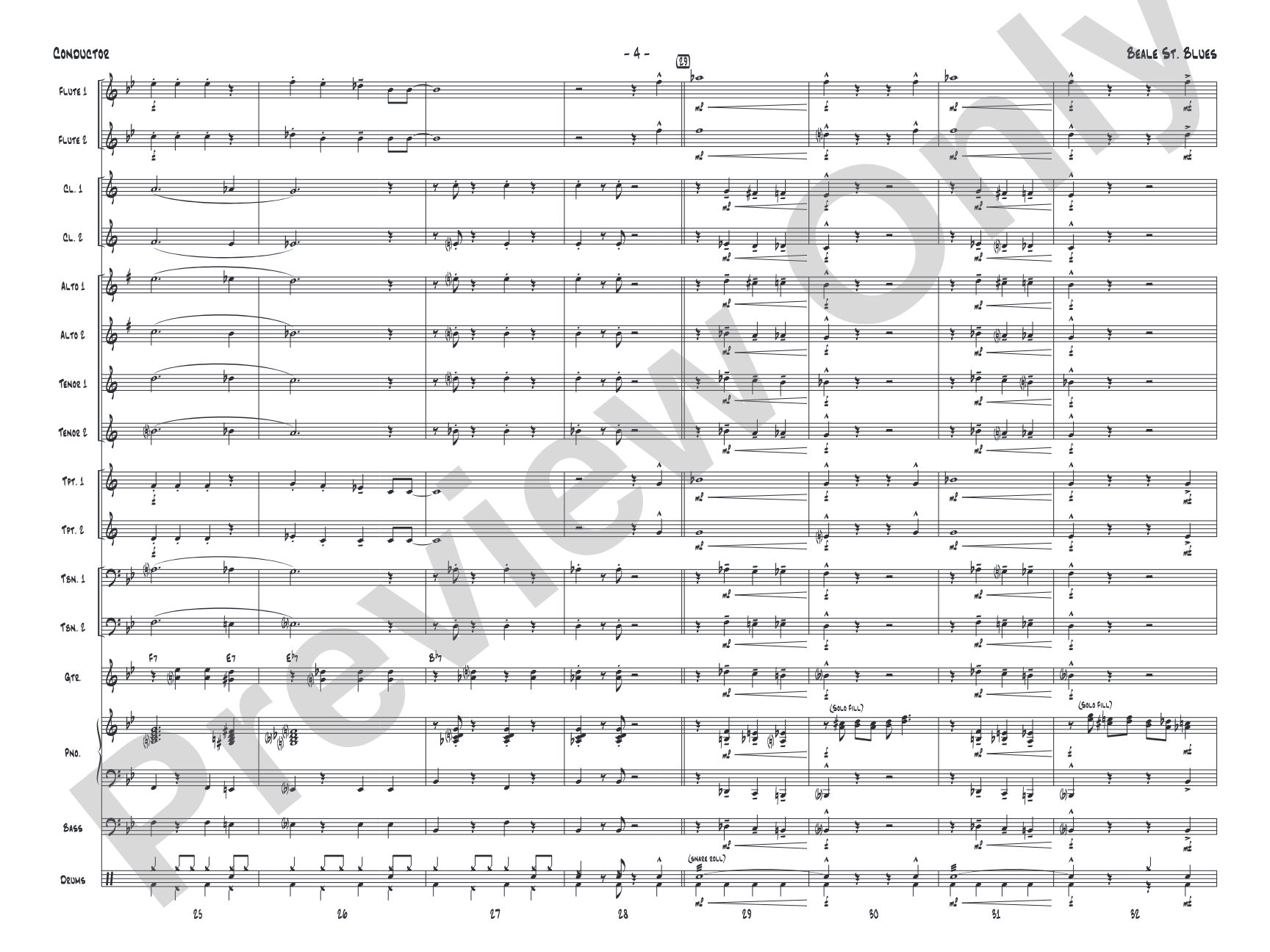
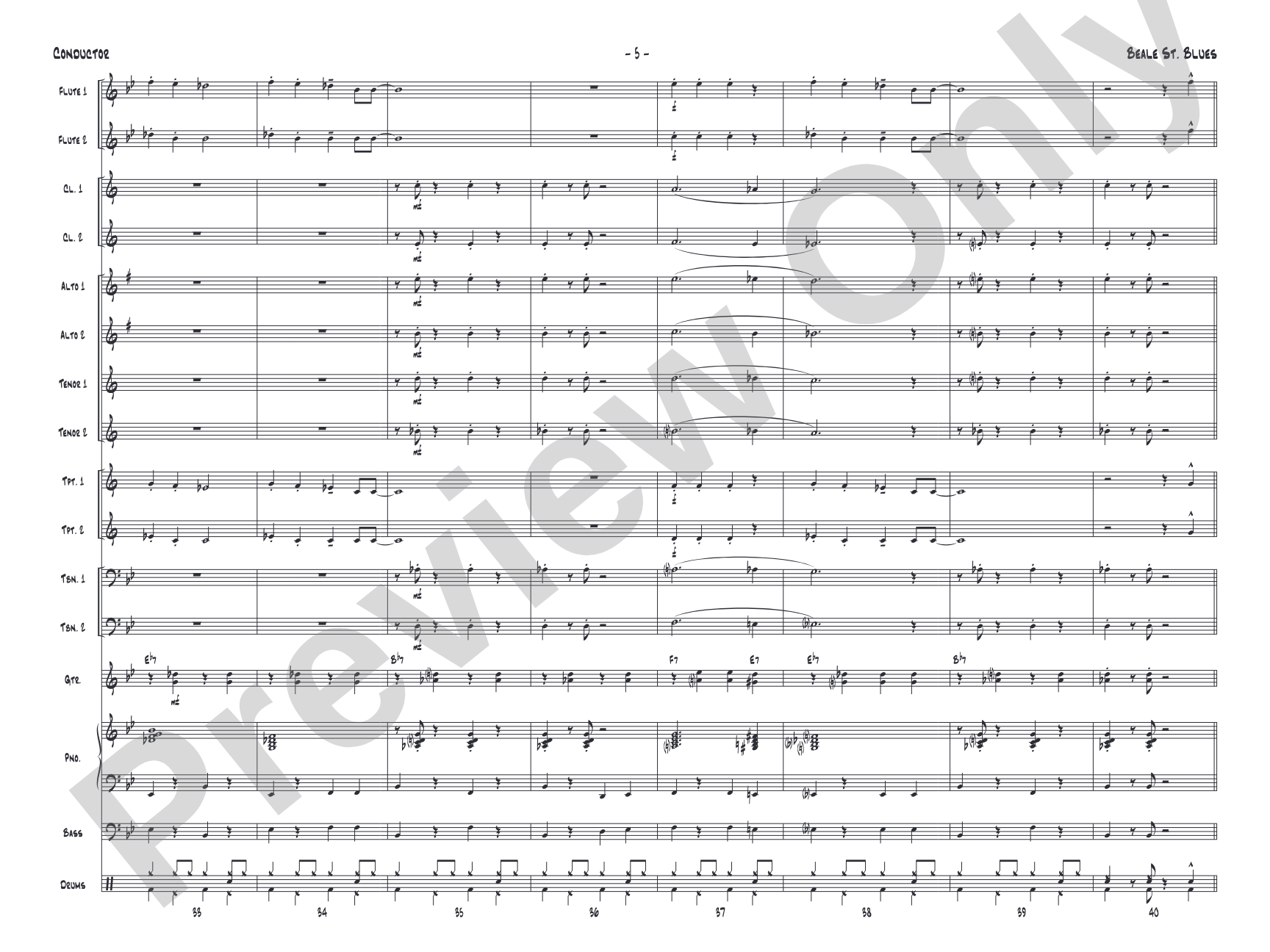
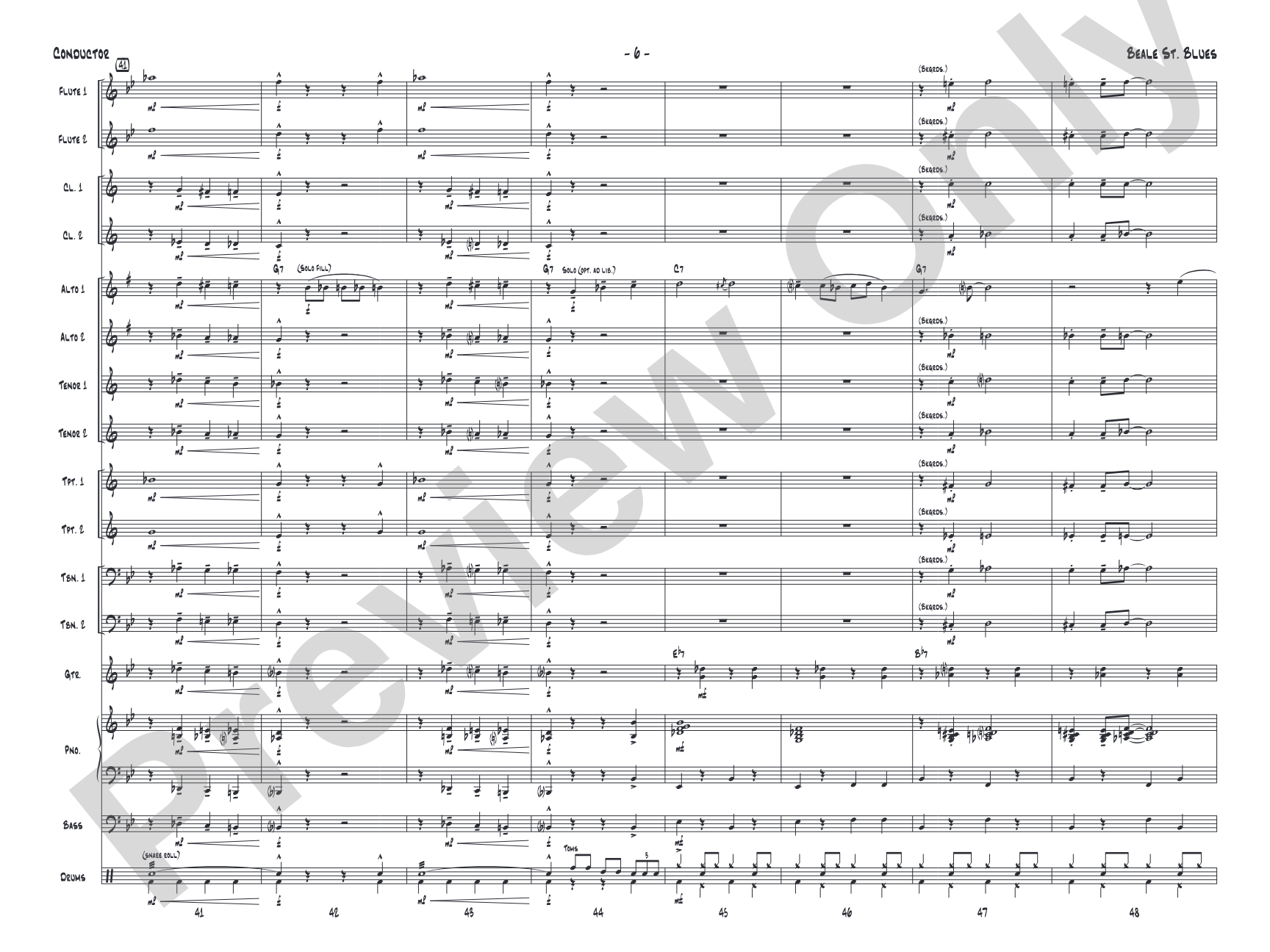
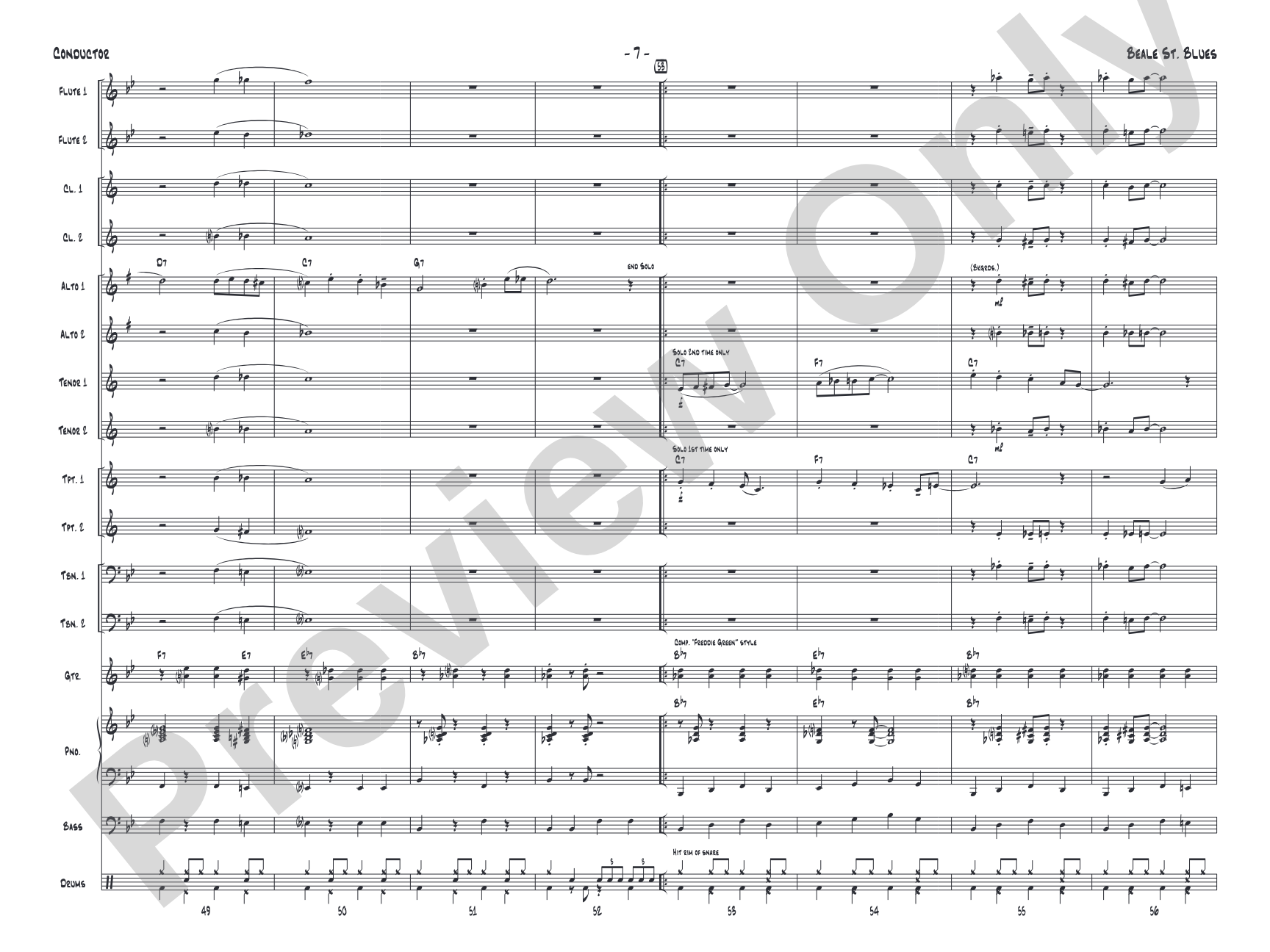
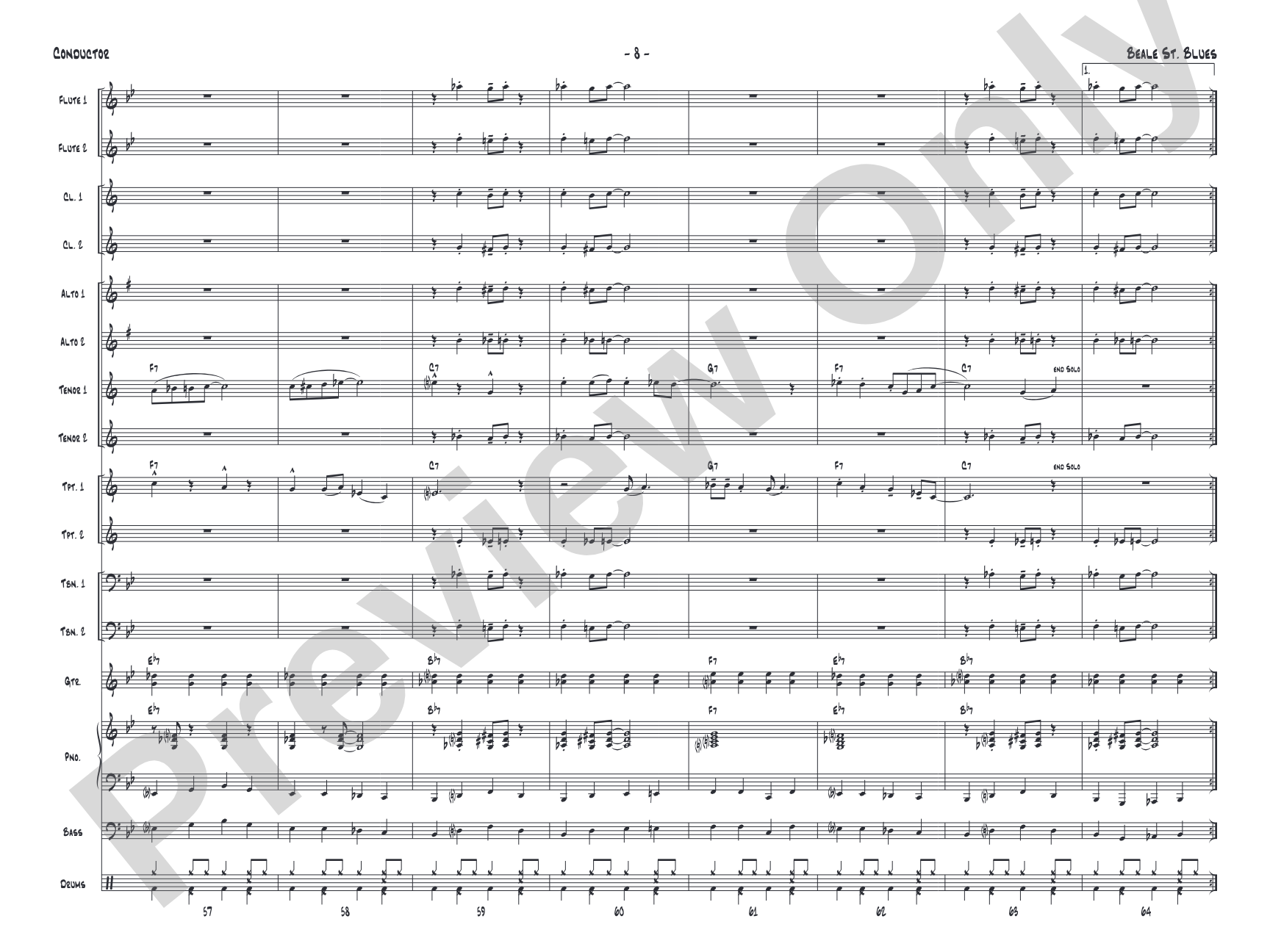
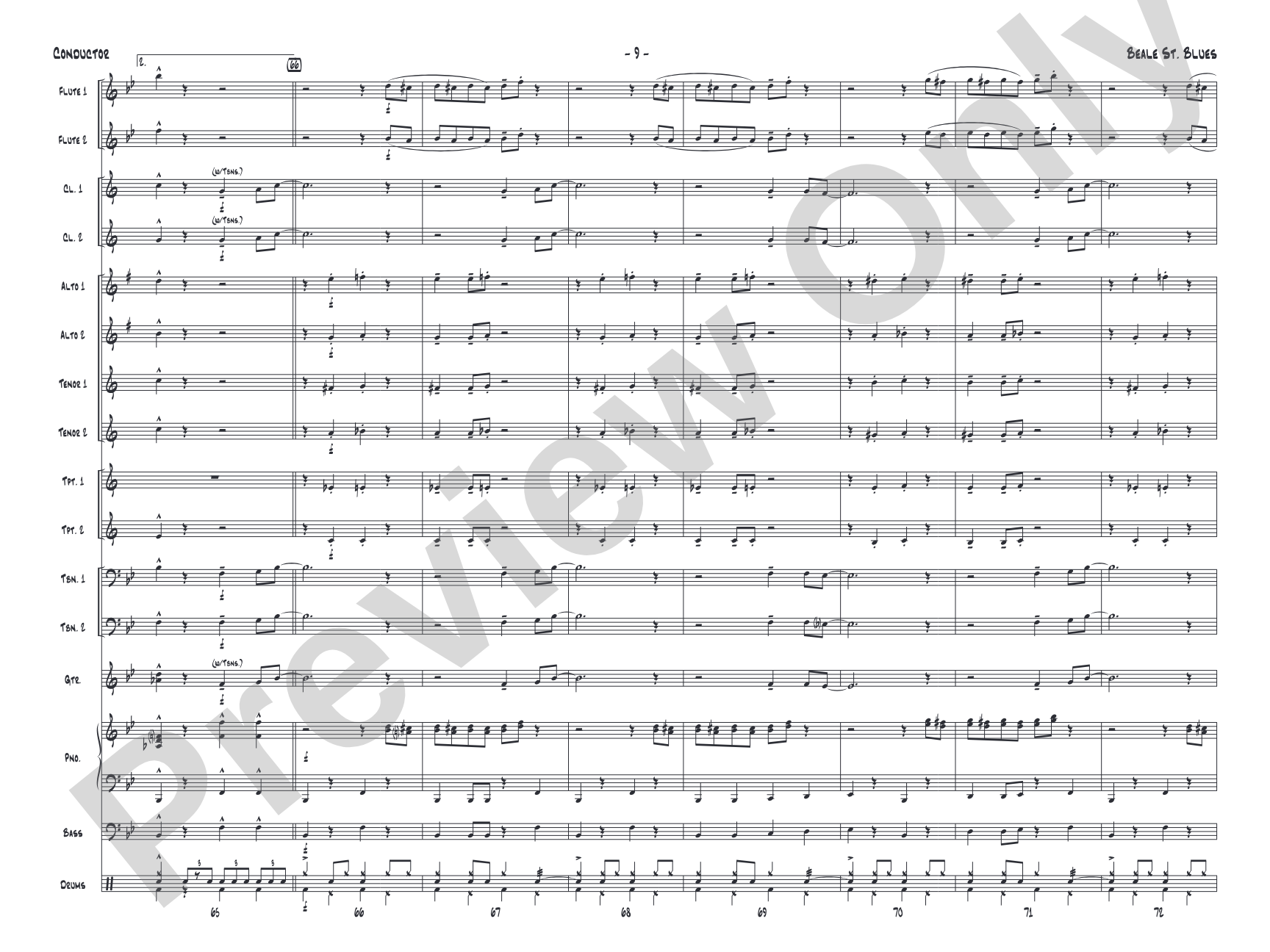
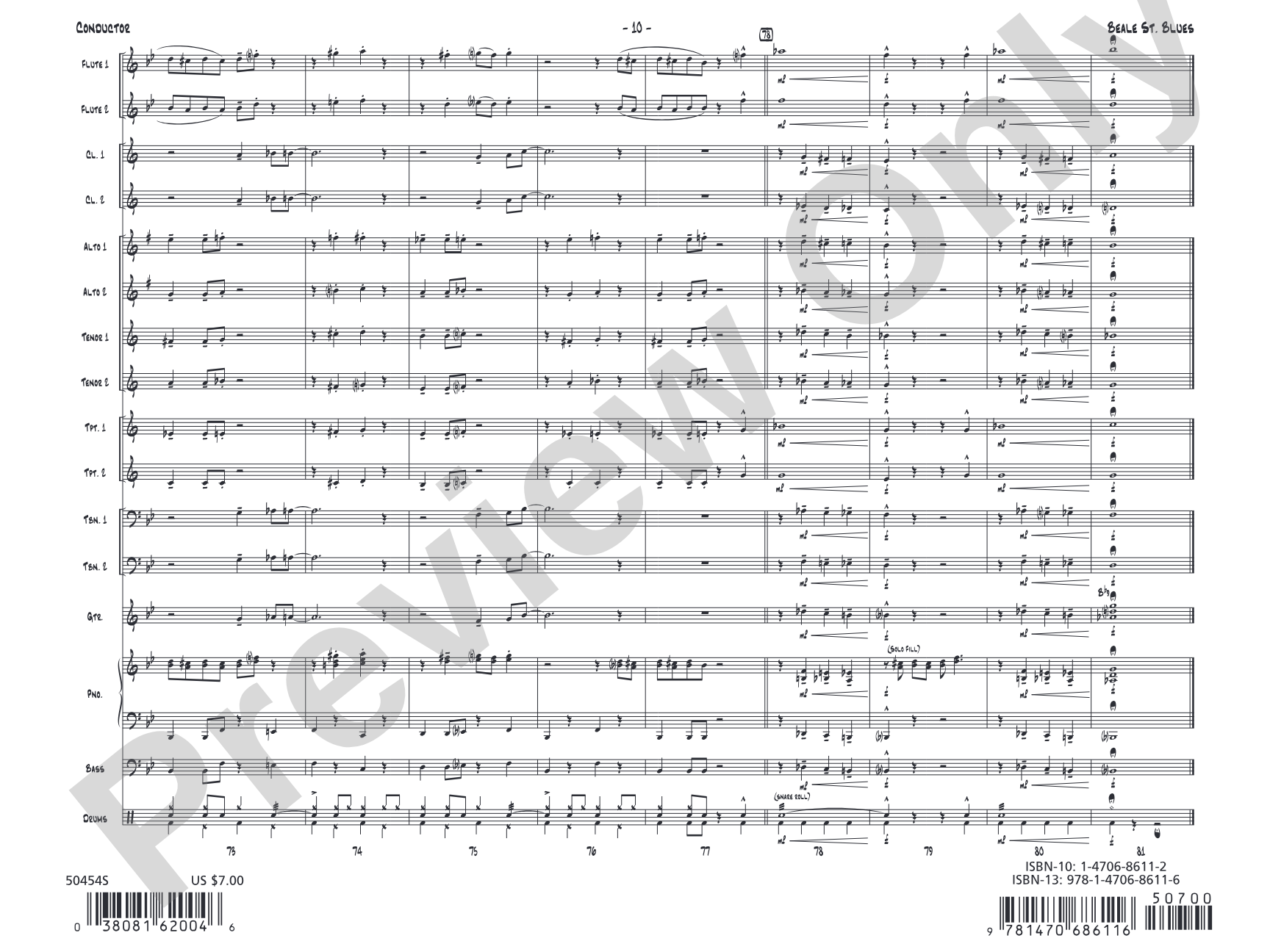

Beale St. Blues: Jazz Ensemble Conductor Score & Parts
By W.C. Handy / arr. Zachary Smith
Level:.5
Item: 00-PK-0009565
$45.00
Pickup currently not available
Buy Extra Parts (Digital PDF Download)
| Product | Price | Quantity |
|---|---|---|
| Beale St. Blues: Score | $7.00 | |
| Beale St. Blues: E-flat Alto Saxophone | $3.00 | |
| Beale St. Blues: 2nd E-flat Alto Saxophone | $3.00 | |
| Beale St. Blues: B-flat Tenor Saxophone | $3.00 | |
| Beale St. Blues: 2nd B-flat Tenor Saxophone | $3.00 | |
| Beale St. Blues: 1st B-flat Trumpet | $3.00 | |
| Beale St. Blues: 2nd B-flat Trumpet | $3.00 | |
| Beale St. Blues: 1st Trombone | $3.00 | |
| Beale St. Blues: 2nd Trombone | $3.00 | |
| Beale St. Blues: Guitar Chords | $3.00 | |
| Beale St. Blues: Guitar | $3.00 | |
| Beale St. Blues: Piano Accompaniment | $3.00 | |
| Beale St. Blues: String Bass | $3.00 | |
| Beale St. Blues: Drums | $3.00 | |
| Beale St. Blues: Flute | $3.00 | |
| Beale St. Blues: 2nd Flute | $3.00 | |
| Beale St. Blues: 1st B-flat Clarinet | $3.00 | |
| Beale St. Blues: 2nd B-flat Clarinet | $3.00 | |
| Beale St. Blues: E-flat Baritone Saxophone | $3.00 | |
| Beale St. Blues: Vibraphone | $3.00 | |
| Beale St. Blues: Tuba | $3.00 | |
| Beale St. Blues: 1st F Horn | $3.00 | |
| Beale St. Blues: Baritone T.C. | $3.00 |
Parts Added to Cart!
Description
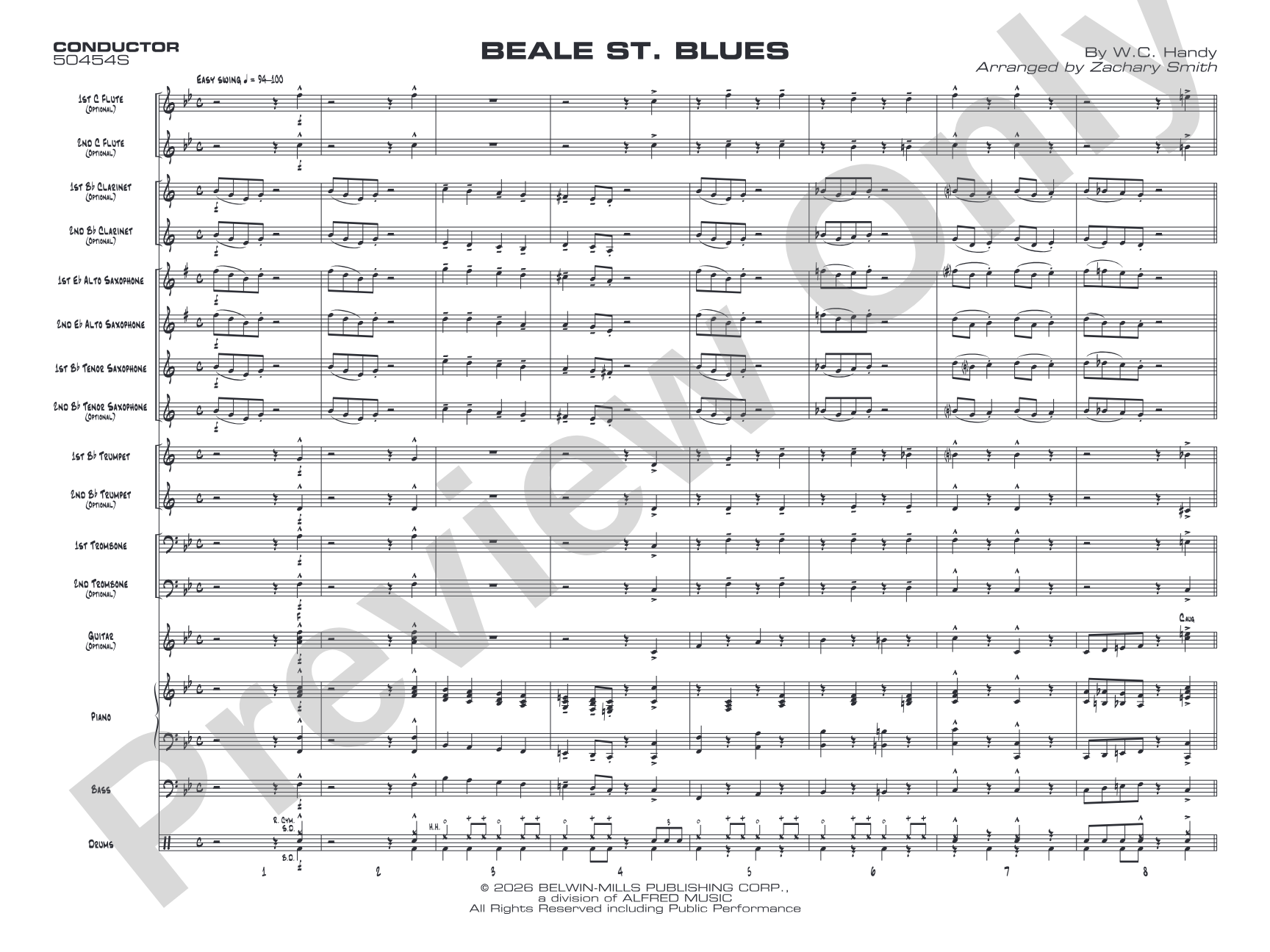
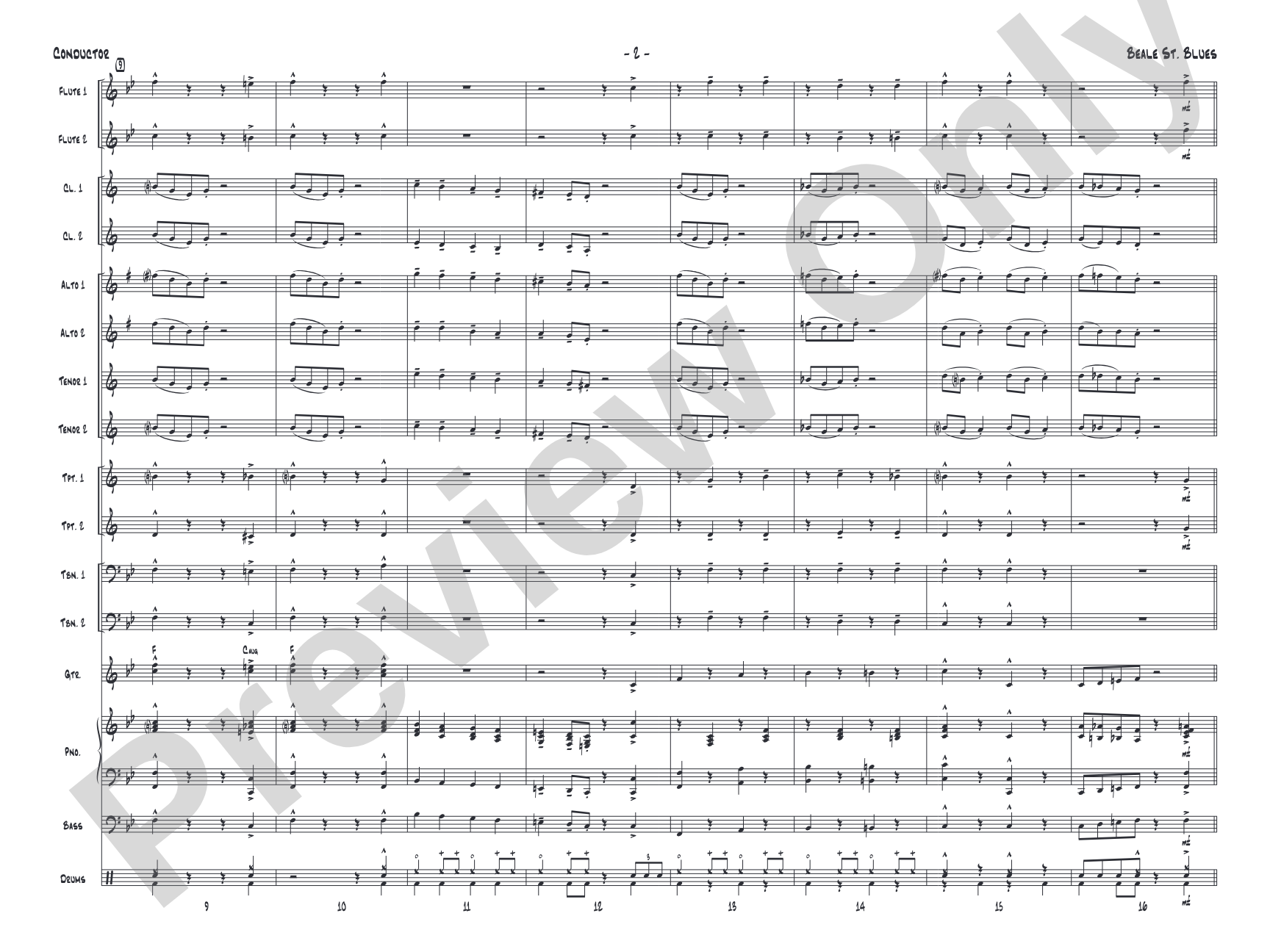
This super-easy chart is terrific with an easy swing tempo of 110 BPM and written solos for alto, tenor, and trumpet. Trumpet 1 range is to written C third space. This is a "fail-safe" chart!


Discover MakeMusic Cloud: thousands of interactive titles your students can play along with today.
Sample Audio
1
Audio File
--:--
0:00
0:00
Sample Video
Additional Details
Series:
Belwin Jazz Beginnings
Publisher:
Alfred Music
SKU:
00-PK-0009565
More about this title
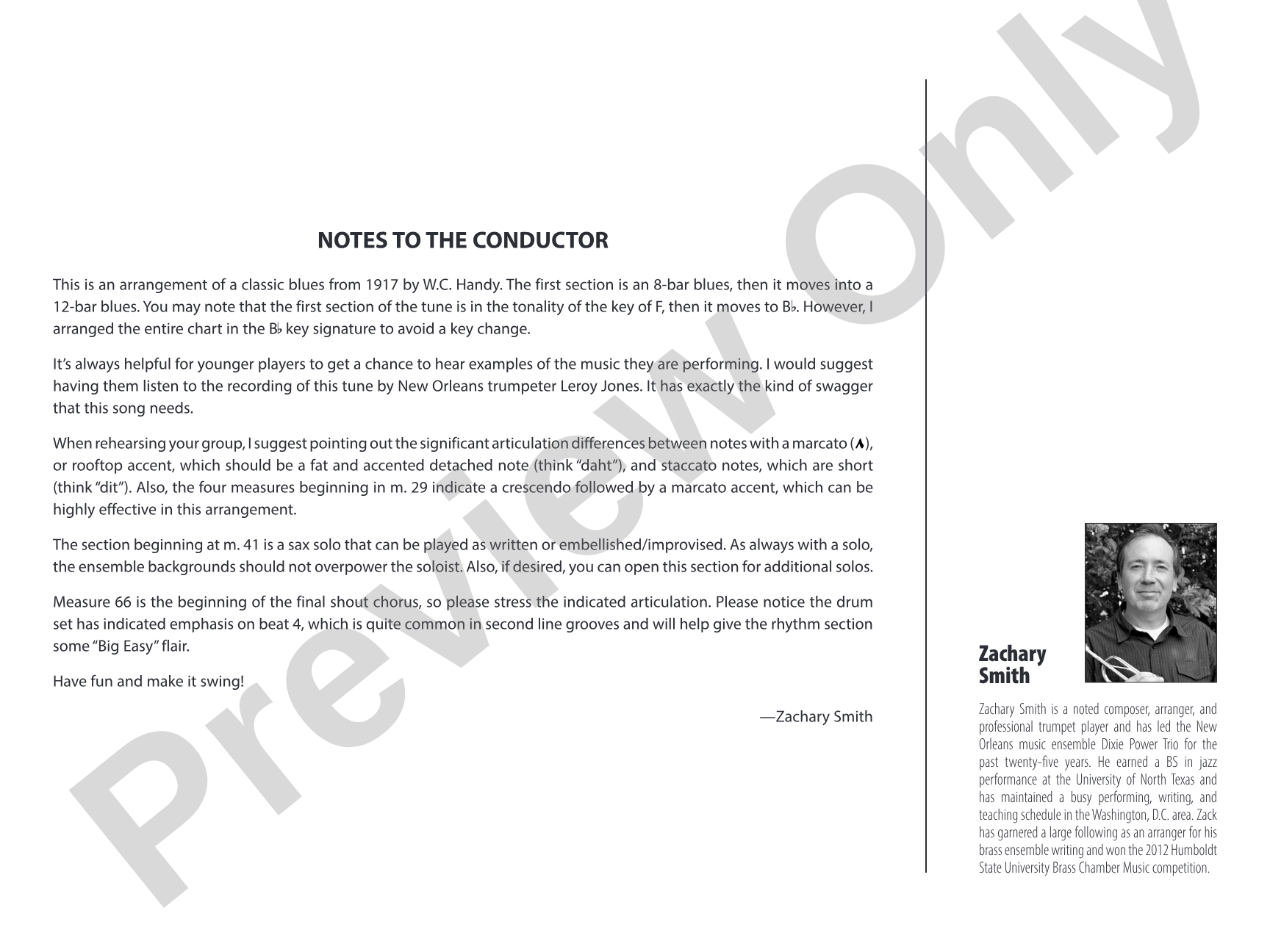
About the Composer: W.C. Handy
W.C. Handy (1873-1958) earned his place in American music history as the composer who brought blues idiom into concert and popular music. A trained musician and bandleader, Handy transcribed and formalized blues melodies that had circulated orally in the American South, creating compositions that bridged folk tradition and formal music notation. His work gave blues respectability in institutional settings and opened doors for countless jazz and popular musicians who followed.
Why we love this
Beale Street Blues remains one of the most accessible entry points to authentic jazz repertoire. Zachary Smith's arrangement respects the harmonic and melodic essence of Handy's classic while keeping ensemble difficulty minimal, letting students focus on swing feel and listening to one another rather than wrestling with complex charts. At 110 BPM with written solos and straightforward voicings, this is exactly the kind of "fail-safe" material that builds confidence and joy in young jazz players.
What to expect
Beale Street Blues carries the relaxed strut of a blues tune that has survived a century because it swings naturally. The melody is warm and instantly recognizable, the harmonic movement is predictable enough to encourage listening and response, and the solos invite individual voices to emerge within a familiar structure. You get the genuine flavor of American blues and early jazz without technical barriers getting in the way.
Who it's for
This chart is built for jazz ensembles just beginning to explore swing repertoire. High school beginners and advanced middle school ensembles will find the range, voicing, and solo difficulty immediately manageable, making it ideal for a first jazz concert or a festival where confidence matters as much as polish.
How to get the most out of it
- Establish the swing eighth-note feel in the rhythm section before rehearsing the melody; lock the hi-hat and bass into a relaxed, forward-leaning pulse at this tempo.
- Shape the solo passages with light dynamics. The alto, tenor, and trumpet solos should sit comfortably in the mix without overshadowing the ensemble background parts.
- Pay attention to the blues tonality and bent notes that define this style. Encourage players to listen to recordings of Handy's original and early jazz recordings to hear how phrasing and timbre carry as much weight as pitch.
- Keep the rhythm section relaxed and behind the beat slightly. Young ensembles often rush swing tunes; a gentle reminder to "lay back" transforms the groove.
How to use it
Program this early in your jazz ensemble's season or as part of a concert celebrating American music history. It pairs beautifully with other Handy standards and sits well alongside early swing charts. Use it as the opener on a concert where you want to establish comfort and connection with the audience before moving into more complex material.
Skills your students will build
- Swing eighth-note feel and phrasing within a blues harmonic structure
- Solo improvisation and written solo interpretation in a blues context
- Listening and blend within a small ensemble rhythm section
- Recognition of blues chord changes and their role in jazz vocabulary