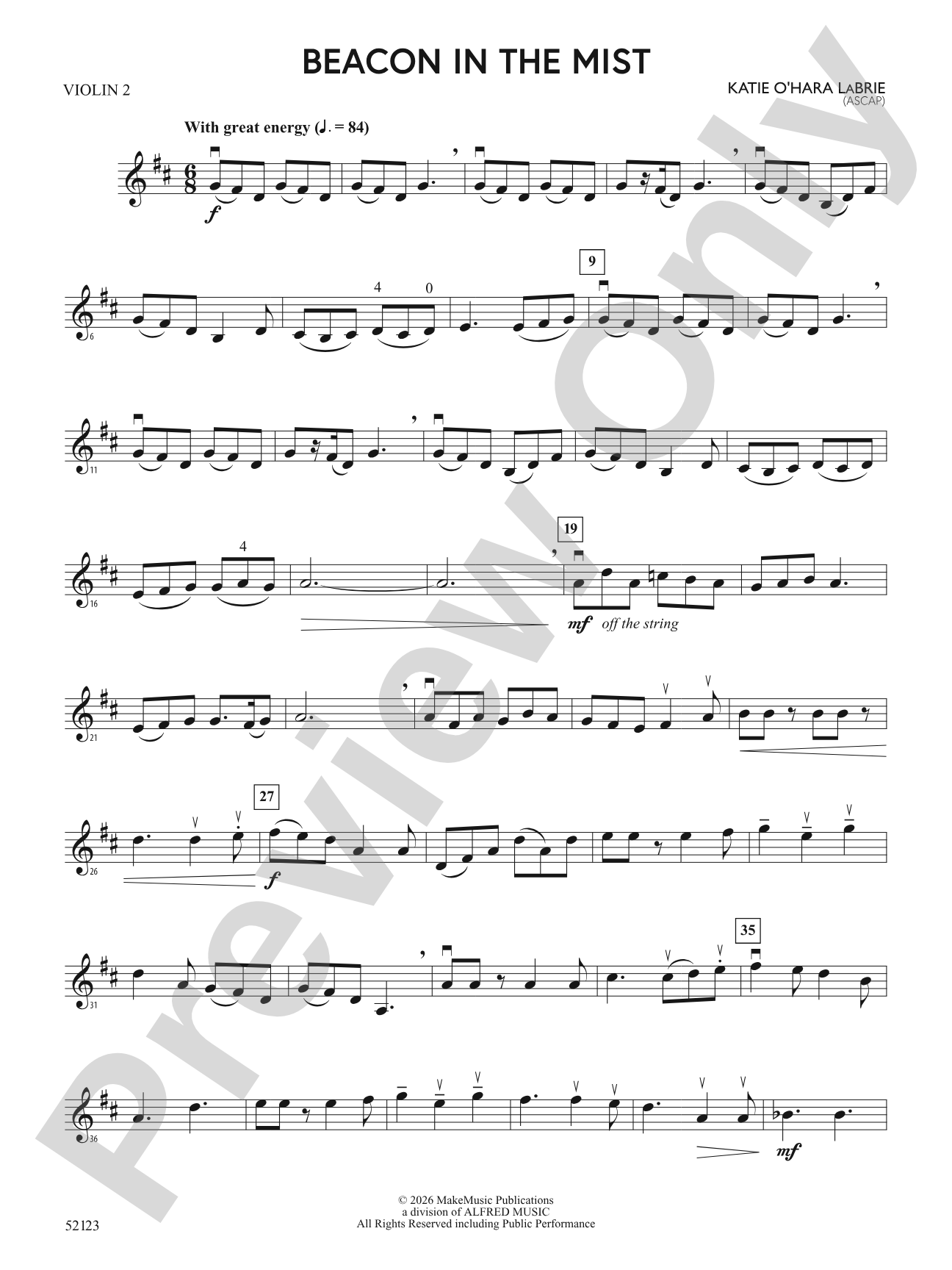
Beacon in the Mist: 2nd Violin Sheet Music Preview

Beacon in the Mist: 2nd Violin

Katie O'Hara LaBrie

Grade: 3.5

Item: 00-PC-0019690_VN2

Digital Download
$3.00
Description
Bring the lighthouse's timeless symbolism to life with this spirited melody that evokes a ship's adventurous journey. A calm, arpeggiated section reflects the beacon's unwavering glow. A triumphant return celebrates a safe homecoming that will surely inspire your students and audience. (3:30)

Beacon in the Mist: 2nd Violin isn't in MakeMusic Cloud just yet...but it could be. Let us know you'd like to see it, and you'll help shape what comes next. In the meantime, start a free trial and dive into thousands of interactive titles your students can play along with today.

Sample Audio
0:00
0:00
Sample Video
Additional Details
Series: MakeMusic Symphony Strings
Publisher: MakeMusic Publications
SKU: 00-PC-0019690_VN2

More about this title

About the Composer: Katie O'Hara LaBrie

Katie O'Hara LaBrie

Katie O'Hara LaBrie brings two decades of orchestra teaching experience to her work as a composer and conductor. After teaching orchestral music in Fairfax County, Virginia for fifteen years, she earned her Bachelor of Music in Music Education from St. Olaf College and her Master of Music in Instrumental Conducting from George Mason University. Her compositions draw inspiration from nature, family, and her deep commitment to music education.

LaBrie's work consistently balances artistic substance with practical pedagogy, earning recognition as a J.W. Pepper Editor's Choice composer and a Yamaha "40 Under 40" honoree in 2022. She founded the Fairfax Chamber Players and co-created "the Big IDEA" practice method, reflecting her philosophy that purposeful practice and student engagement drive musical growth. Her compositions appear regularly at major conferences including the Midwest Band and Orchestra Directors Clinic and the American String Teachers Association Conference.

Why we love this

Beacon in the Mist captures the theatrical storytelling that string orchestras do best without overreaching technically. LaBrie's structure unfolds like a narrative film score: the opening melody draws listeners into the ship's voyage, the arpeggiated middle section creates genuine intrigue and calm, and the final statement lands with earned triumph rather than forced bombast. Your students will connect to music that asks them to shape a journey, not simply execute passages.

What to expect

This piece moves you through a complete dramatic arc: the ship ventures into the unknown, guided by the steady beam of light, and finally reaches safe harbor. The music captures both the adventure and reassurance of that journey, shifting between forward-moving melodic lines and contemplative, shimmering textures that invite thoughtful listening.

Who it's for

String orchestras at the Grade 3.5 level who are ready for pieces with genuine musical narrative and emotional arc. Directors preparing festival or contest programs will find a work that balances artistic credibility with accessibility for developing ensembles.

How to get the most out of it

  • Shape the opening melody with gentle dynamic waves to evoke the lighthouse beacon's rhythmic, reassuring presence rather than playing it straight.
  • Balance the arpeggiated section so sustained upper voices remain warm and connected while lower strings support without dragging tempo.
  • Build the triumphant return deliberately, resisting the urge to rush; let the students feel the safe harbor moment through clear, controlled crescendos.

How to use it

Program this as the anchor of a thematic concert about light, journeys, or nature. It pairs well alongside folk arrangements or other descriptive works that give students repertoire connected by imagery rather than era or style. The 3:30 duration makes it ideal for festival competitions or as a substantial closing piece for a concert that celebrates student growth.

Skills your students will build

  • Musical phrasing and shaping across longer melodic lines
  • Dynamic control in arpeggiated accompaniment figures
  • Balance between primary melody and supporting voices
  • Interpretation of program music and emotional intent
  • Ensemble cohesion across contrasting tempo and texture sections

You May Also Like