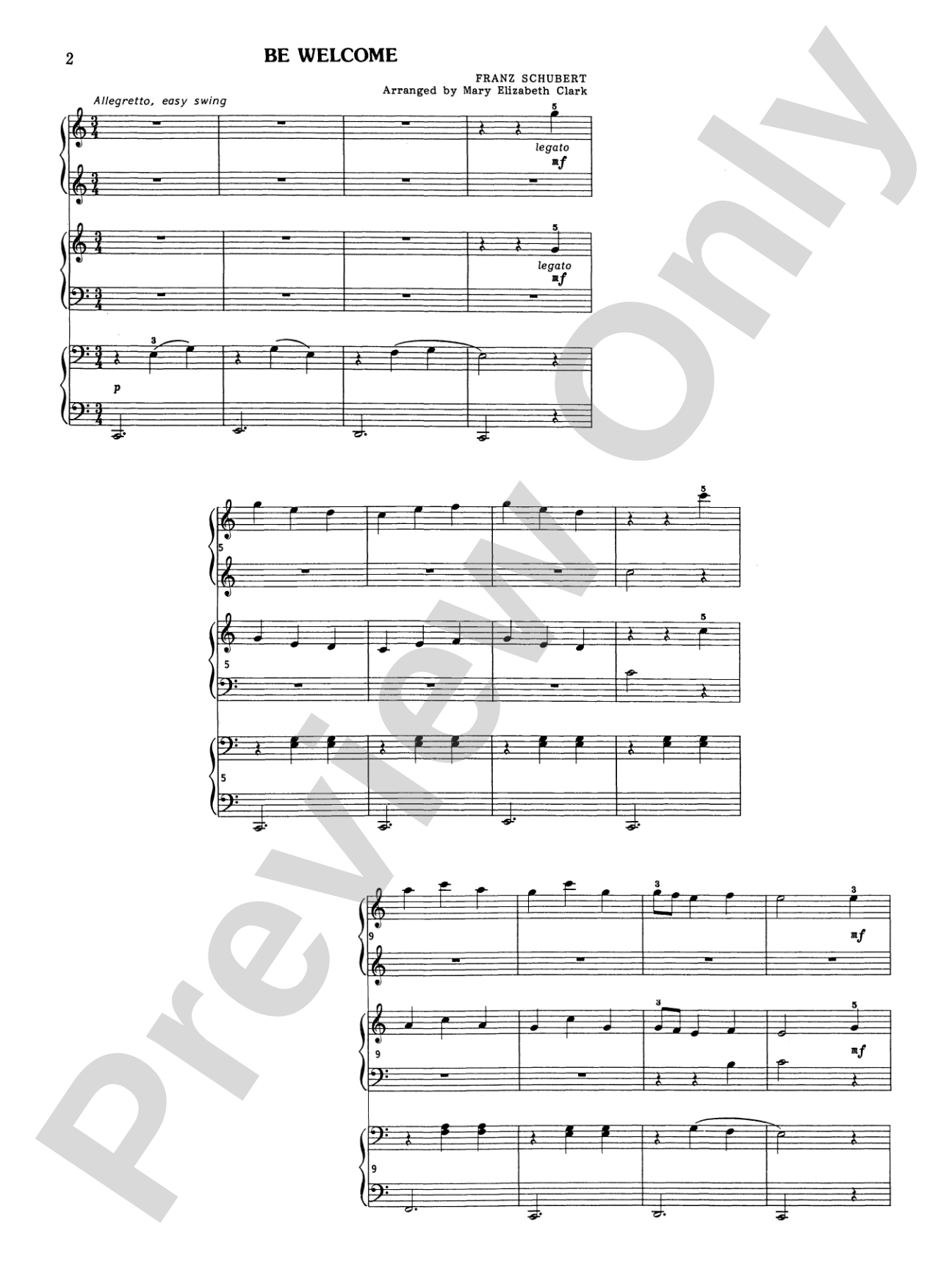
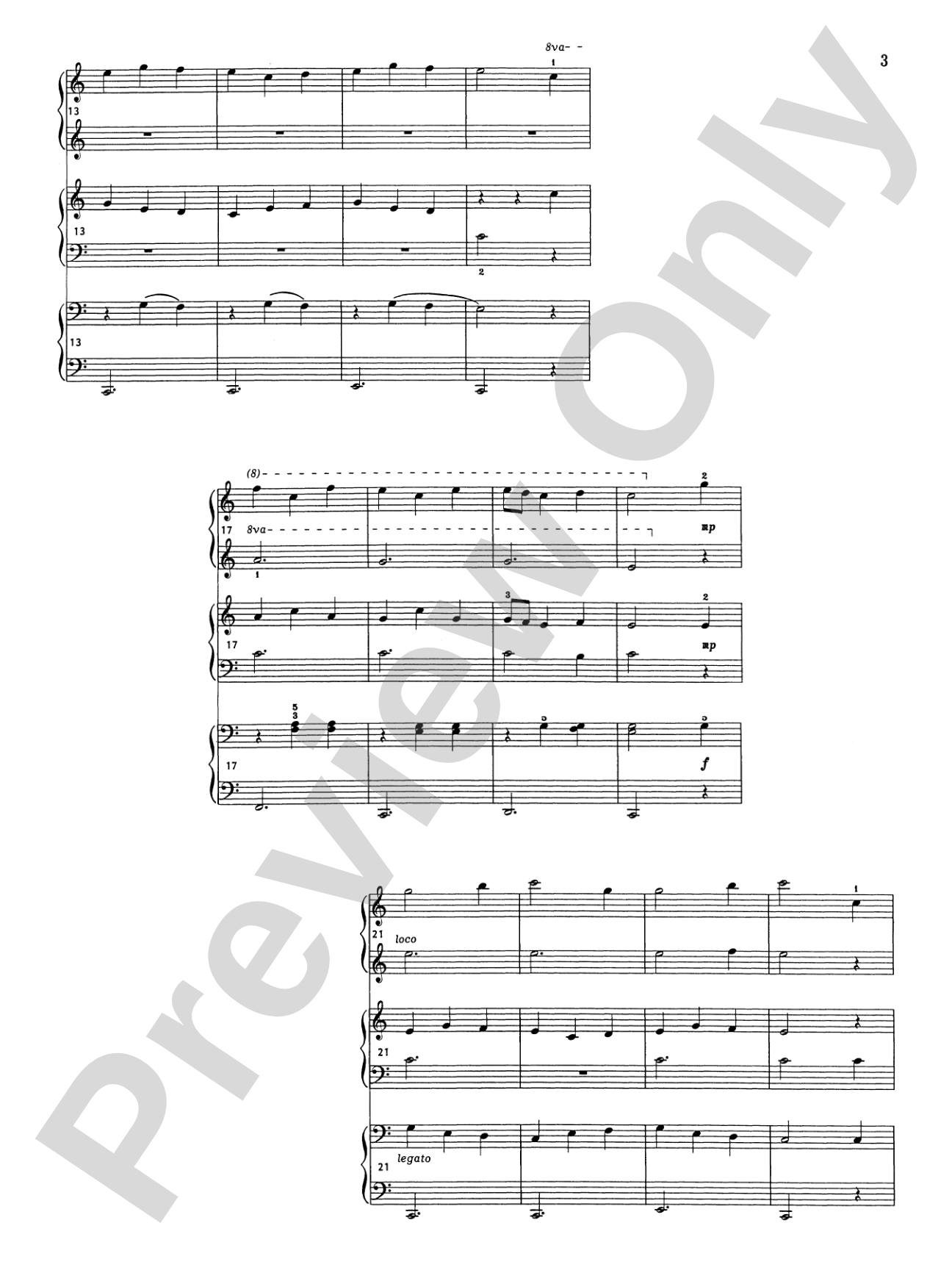
Three performers at one piano will be delighted with this Schubert "round," which is written in 3/4 time and in C Major. All three parts have turns at the melodic themes, which wind between them, one after another. Three individual pages are provided, one for each separate part, and the entire score is included a second time on the inside and outside of the song's cover. A Federation Festivals 2024-2028 selection.
Discover MakeMusic Cloud: thousands of interactive titles your students can play along with today.
Franz Schubert composed over a thousand works across every major genre during his short life, establishing himself as a bridge between Classical and Romantic sensibilities. His gift for melody was nearly inexhaustible, and he brought that lyrical warmth to chamber music that continues to reward both amateur and professional musicians.
Schubert's instrumental works reveal a composer deeply invested in exploring texture and color within intimate settings. The piano trio was one of his favored forms, and his approach to writing for multiple hands at a single keyboard demonstrates his understanding of how to distribute musical ideas across performers in ways that feel both natural and engaging.
Why we love this
This arrangement captures what makes Schubert's melodies so teachable: they're memorable without being simplistic, and they pass naturally between the three performers like a musical conversation. Mary Elizabeth Clark has preserved the integrity of the round form while making the logistics of shared performance genuinely manageable, which is rarer than it sounds. For young pianists, this selection offers the joy of ensemble playing without requiring them to master complex coordination or sight-read from unfamiliar positions.
What to expect
Graceful and intimate, with a gentle lilt that feels almost like a lullaby. The continuous passing of melody creates a sense of ease and flowing conversation, never rushed or overwrought. There's a quietness to this piece that invites listening and draws in audiences with its simplicity and charm.
Who it's for
Elementary-level pianists ready to experience ensemble playing in an accessible, elegant context. This works particularly well for music teachers looking to introduce chamber music concepts to young students or for festivals where collaborative performance is valued. The arrangement is forgiving enough that students of varying abilities can perform together successfully.
How to get the most out of it
Balance the phrases as they pass from player to player by listening across the keyboard rather than focusing only on your own part; the melody should seem to float from hand to hand rather than jolt.
Work out the hand positions and transitions during rehearsal so that performance day feels comfortable; three people sharing one bench requires explicit planning about seating and spacing.
Keep the 3/4 meter consistent and unhurried, especially where the parts overlap; rushing is a common instinct when three people share one piano, but Schubert's phrasing rewards a steady tempo.
Use the accompaniment patterns in the lower registers as your rhythmic anchor; when the melody moves between players, the underlying pulse in the left hand keeps the whole ensemble grounded.
How to use it
This is an excellent choice for a student or family concert where you want to highlight collaborative playing and introduce Schubert to audiences unfamiliar with his chamber works. Program it alongside other small ensemble selections to create a "music around the piano" segment, or use it as a closer to a recital to leave listeners with something warm and memorable.
Skills your students will build
Reading multiple voices and following entrances across shared keyboard space
Ensemble listening and blending with other pianists at the same instrument
Maintaining tempo and rhythmic stability in 3/4 meter while managing melodic movement
Phrase shaping and legato playing across hand positions and performer transitions
Score awareness and coordination in a round-like form where parts overlap
You May Also Like
Scan to Complete Your Purchase
Use your phone's camera to scan the code below
You'll log in on your phone and the order will be added to your account