Be-Bop-A-Lula Sheet Music Preview

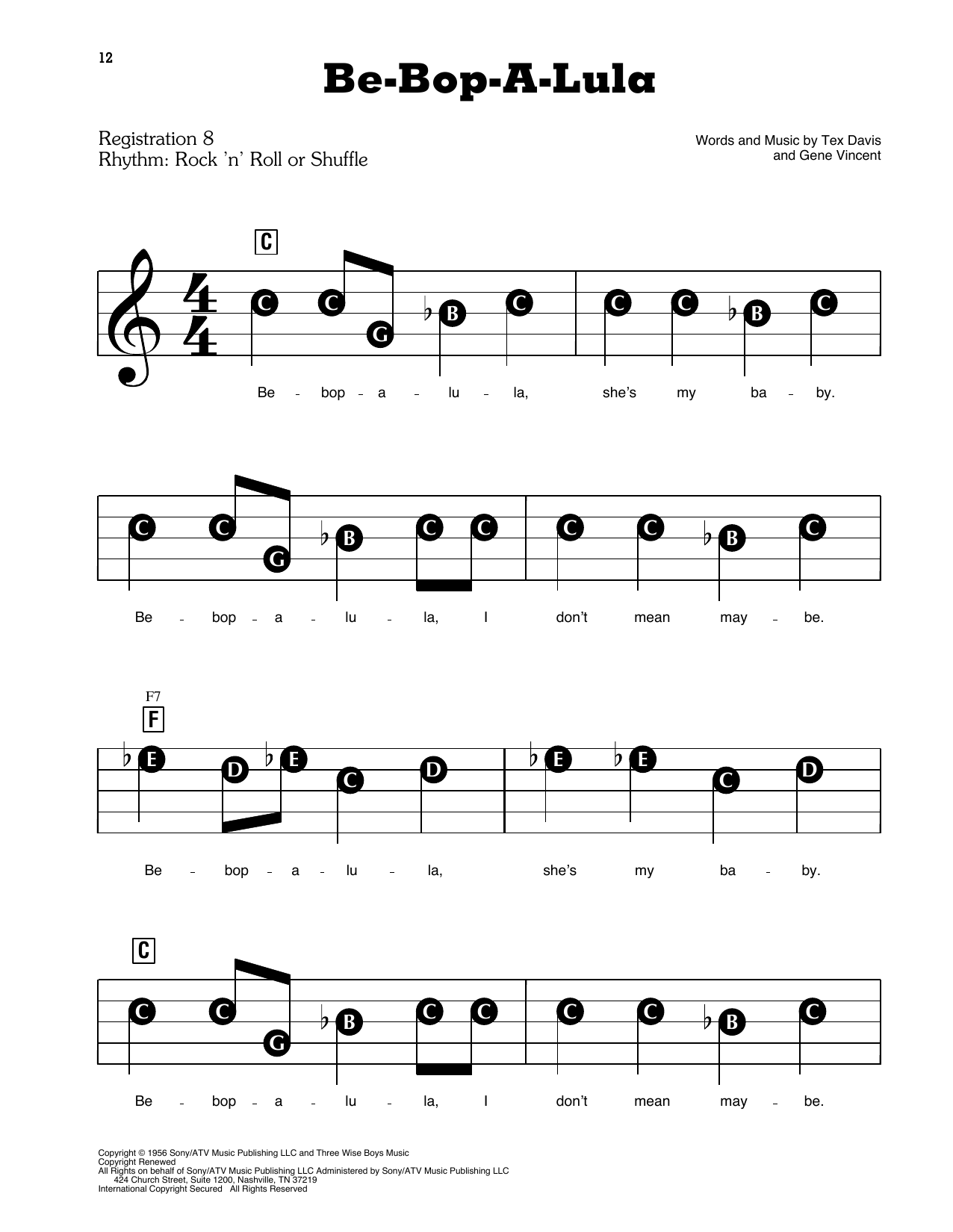
Be-Bop-A-Lula: E-Z Play Today

As performed by Gene Vincent

Item: 35-DS00498482

Digital Download
$4.99
Description

Be-Bop-A-Lula: E-Z Play Today isn't in MakeMusic Cloud just yet...but it could be. Let us know you'd like to see it, and you'll help shape what comes next. In the meantime, start a free trial and dive into thousands of interactive titles your students can play along with today.

Sample Audio
No sample audio found.
Sample Video
Additional Details
Publisher: Hal Leonard
Page Count: 3
SKU: 35-DS00498482

More about this title

About the Artist: Gene Vincent

Gene Vincent (1935-1971) was a pioneering rockabilly artist whose raw vocal style and energetic stage presence helped define early rock and roll. Though a car accident in 1960 left him with a permanent limp, Vincent continued performing and recording, influencing generations of rock musicians with his rebellious spirit and genre-blending approach.

Why we love this

Be-Bop-A-Lula captures the infectious energy of 1950s rockabilly in an accessible piano arrangement. The tune's straightforward structure and instantly recognizable melody make it rewarding for students building confidence with rhythm-driven pop styles, while the arrangement respects the song's playful character without overcomplicating it.

What to expect

The piece pulses with the swagger of 1950s rock and roll; playful, driving, and impossible not to move along with. There's a built-in sense of forward momentum that makes it naturally engaging to both play and hear.

Who it's for

This arrangement serves pianists exploring pop and rock repertoire beyond classical traditions. It works well for students building sight-reading skills in contemporary styles and for teachers seeking accessible material that connects to music history.

How to get the most out of it

  • Lock into a steady backbeat feel to honor the rockabilly roots; this isn't a ballad, so keep the tempo brisk and the rhythmic pocket tight.
  • Lean into the repetition of the main melodic phrase rather than rushing through it; the hook's power comes from familiarity and groove.
  • Balance melody and accompaniment so the left hand's rhythmic support doesn't overwhelm the vocal line or right-hand melody.

How to use it

Include this in a concert exploring the roots of rock and roll, or pair it with other early rock standards for a program that bridges classical and popular music. It also works well as a sight-reading or improvisation springboard for students learning to add their own interpretation to familiar songs.

Skills your students will build

  • Reading straight rhythms in a rock and roll context
  • Maintaining steady tempo while driving a groove
  • Balancing melody and accompaniment in pop arrangements
  • Interpreting dynamics and feel in non-classical styles

You May Also Like