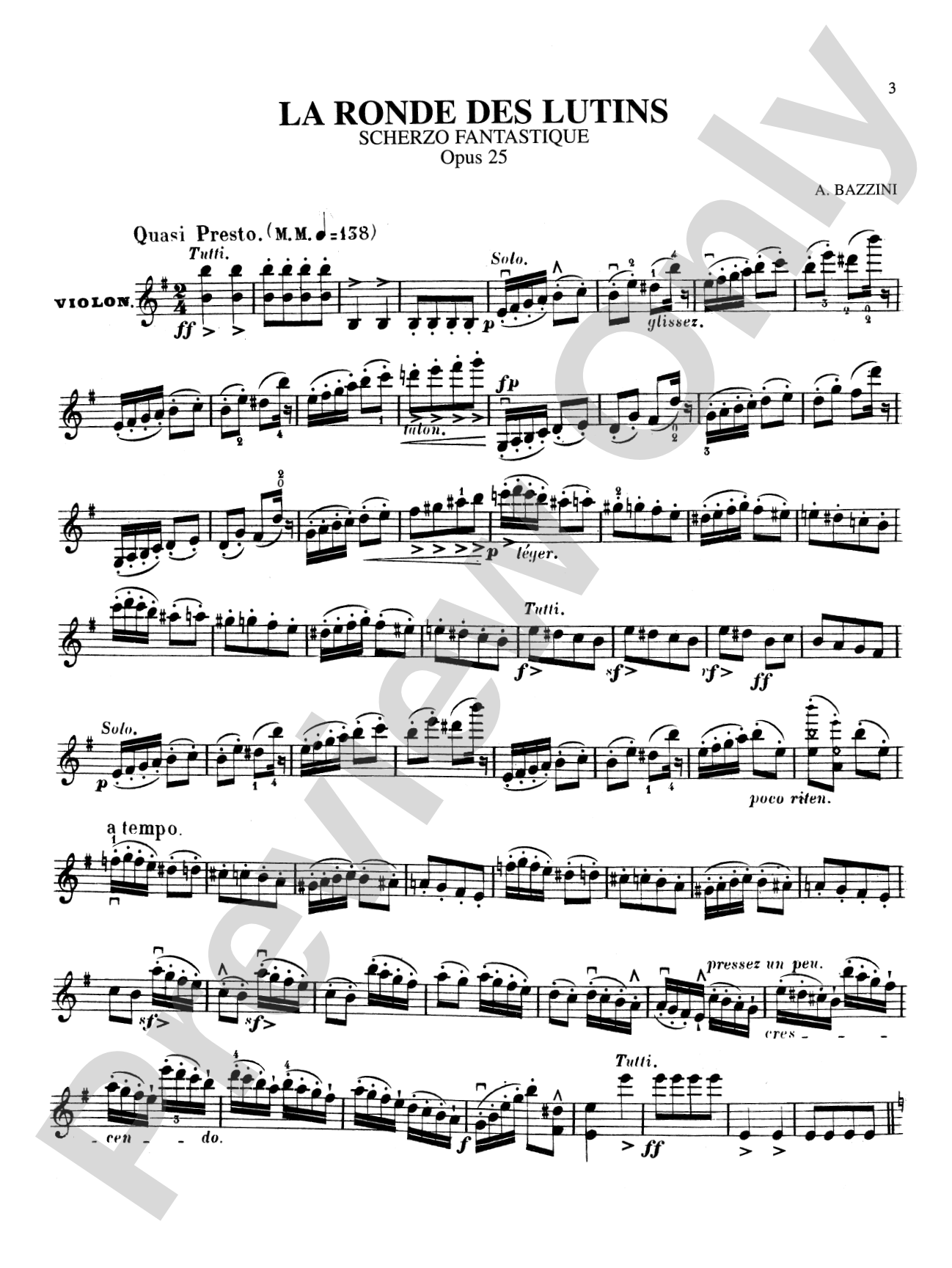
Bazzini: La Ronde des Lutins (Scherzo Fantastique, Op. 25) Sheet Music Preview

Bazzini: La Ronde des Lutins (Scherzo Fantastique, Op. 25)

By Antonio Bazzini

Item: 00-PC-0003894

Digital Download
$3.99
Description
A Violin solo with Piano Accompaniment composed by Antonio Bazzini.

Don't just read it, hear it, play along with it, and watch your students grow with it. In MakeMusic Cloud, Bazzini: La Ronde des Lutins (Scherzo Fantastique, Op. 25) comes alive with professional accompaniment, adjustable tempo, and built-in practice tools that turn solo practice into real progress.

Sample Audio
No sample audio found.
Sample Video
Additional Details
Series: Kalmus Edition
Publisher: Alfred Music
Page Count: 24
SKU: 00-PC-0003894

More about this title

About the Composer: Antonio Bazzini

Antonio Bazzini (1818-1897) was an Italian violinist and composer whose virtuosic writing for the instrument shaped 19th-century violin repertoire. A celebrated performer across Europe, he composed primarily for his own instrument, creating works that demanded technical brilliance while maintaining genuine musical substance. His compositions remain standard recital fare and teaching repertoire for advanced violinists.

Bazzini's legacy rests on pieces like La Ronde des Lutins, which showcase his gift for combining technical display with orchestral imagination. Though less frequently performed today than during his lifetime, his music continues to attract musicians drawn to Romantic-era violin writing that balances virtuosity with melodic richness.

Why we love this

This scherzo sits at the sweet spot between legitimate musical substance and guaranteed audience engagement. The perpetual-motion figuration keeps fingers and bow busy without requiring gymnastics, while the whimsical character and programmatic title let performers embrace genuine storytelling rather than pure spectacle.

What to expect

Gossamer and quicksilver, full of impish energy. The perpetual sixteenth-note motion evokes darting, dancing figures caught in some enchanted romp; sudden shifts in harmony and texture keep the listener slightly off-balance, never quite sure whether the sprites are friendly or mischievous. The piece sparkles without becoming precious.

Who it's for

Advanced high school violinists and college-level players preparing for competitions, festivals, or solo recitals. This is repertoire for performers who have solid intonation, secure vibrato, and the stamina for sustained rapid passagework, yet still benefit from music that teaches character and musical storytelling alongside technique.

How to get the most out of it

  • Shape the rapid figuration in phrases rather than treating it as undifferentiated passage work; the "mischievous sprites" need personality and direction even at speed.
  • Attend to dynamic shading within the fast sections. Bazzini's orchestration suggests terraced dynamics, and the violin part benefits from similar contrast rather than uniform tone.
  • Coordinate articulation choices with your accompanist early. Decisions about how detached or connected the main theme plays will set the piece's character from the opening measures.
  • Balance velocity with clarity in the upper register; speed without definition makes this piece sound brittle rather than playful.

How to use it

Program this as a showpiece within a more substantial recital, either pairing it with a lyric Romantic slow movement or grouping it with other character pieces. It works equally well as a competition selection or festival performance piece, where its combination of virtuosity and audience appeal tends to resonate with judges and listeners alike.

Skills your students will build

  • Rapid scalar and arpeggio passage work in multiple positions and registers
  • Sustaining consistent tone and intonation across extended sixteenth-note runs
  • Vibrato control and consistency during fast figuration
  • Coordination between left and right hand during perpetual-motion sections
  • Narrative interpretation and character work in scherzo form
  • Collaborative balance between solo and accompaniment roles

You May Also Like