
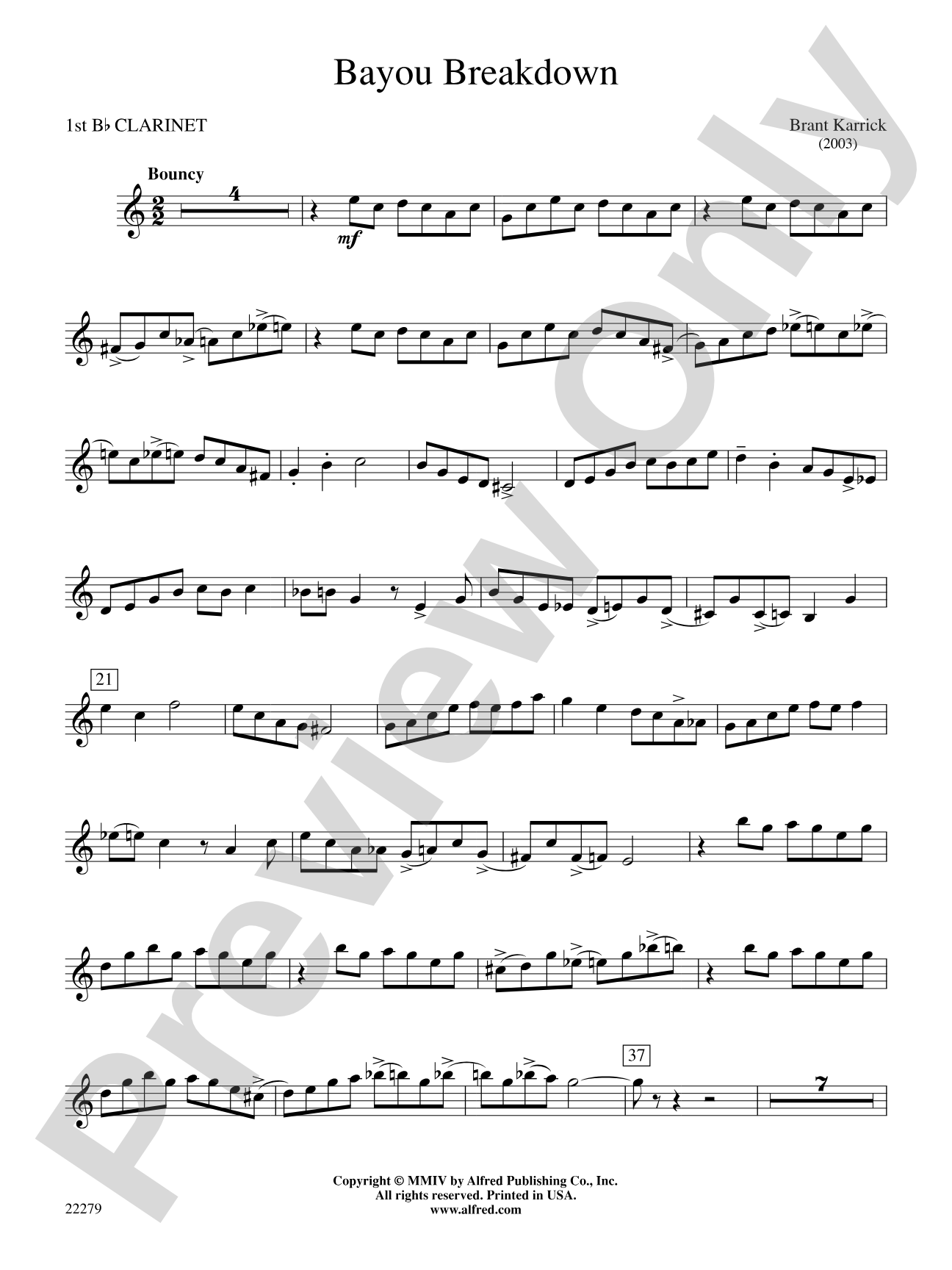

Bayou Breakdown: 1st B-flat Clarinet
By Brant Karrick
Grade: 4 (Medium Difficult)
Item: 00-PC-0000533_C1
$3.00
Pickup currently not available
Description
This fun and whimsical work creates a piece that will provide musical and technical challenges for performers yet can be immediately enjoyed by the listener, musician, and non-musician alike. Starting with a four-part fugue scored for woodwinds, the work then moves to a folk song-like lyrical theme, then eventually back to the initial fugue. Bayou Breakdown is a perfect showpiece for your band! (4:30) This title is available in MakeMusic Cloud.


Don't just read it, hear it, play along with it, and watch your students grow with it. In MakeMusic Cloud, Bayou Breakdown: 1st B-flat Clarinet comes alive with professional accompaniment, adjustable tempo, and built-in practice tools that turn solo practice into real progress.
Open in the Player
Jump straight in and assign it today.
Start Your Free Trial
Open this title and explore the full library in minutes.
Sample Audio
1
Audio File
--:--
0:00
0:00
Sample Video
Additional Details
Series:
Alfred Concert Band
Publisher:
Alfred Music
Page Count:
308
SKU:
00-PC-0000533_C1
More about this title
About the Composer: Brant Karrick

Brant Karrick is an active composer, arranger, and conductor whose works have been performed internationally across North America, Europe, Africa, South America, Asia, and Australia. He earned his Ph.D. in music education from Louisiana State University and holds degrees in music education from the University of Louisville and Western Kentucky University, with additional study in conducting and composition under respected mentors including Frank Wickes and David Livingston.
Since 2003, Karrick has served as Director of Bands at Northern Kentucky University, where he oversees the band program curriculum and teaches conducting, orchestration, and instrumental methods. He remains engaged as a guest conductor, clinician, and adjudicator while maintaining his work as a published composer. His professional involvement includes membership in NAFME, ASCAP, and the College Band Directors National Association.
Why we love this
Bayou Breakdown threads together formal musical architecture with genuine accessibility. The opening fugue demands serious musicianship from your woodwind section, but the piece never loses sight of immediate audience enjoyment—folk melody and regional character make it as much fun to hear as it is to rehearse.
What to expect
Bayou Breakdown opens with intellectual rigor as the woodwinds weave a four-part fugue, then shifts into something warmer and more lyrical—like pausing mid-journey to soak in the landscape. The piece carries a regional personality and playful wit, making it feel both sophisticated and unquestionably alive.
Who it's for
Grade 4 bands looking for a concert or contest piece that satisfies both artistic ambition and listener appeal. Directors seeking repertoire that challenges woodwind musicianship without requiring advanced technical facility across the entire ensemble will find this work ideally balanced.
How to get the most out of it
- Balance the four-part fugal texture in the woodwind opening by establishing clear independence in each voice during early rehearsals; avoid the temptation to let one part dominate.
- Shape the lyrical folk-like section with long phrase lines and subtle dynamic inflection to highlight the melodic contrast with the surrounding fugal material.
- Use the sectional transitions as opportunities to reset ensemble unity and confirm that all parts understand the architectural purpose of returning to the fugue.
How to use it
Program this as a strong centerpiece for a concert or festival performance where you want to showcase your band's technical depth alongside musicality. The 4:30 duration and accessible melodic content make it an excellent choice for mixed audiences, and the formal structure gives it weight on a concert of contemporary concert band literature.
Skills your students will build
- Fugal voice independence and four-part harmonic clarity in woodwind textures
- Phrase shaping and legit melodic line in contrasting sections
- Stylistic awareness across formal structures and regional musical characteristics
- Balance and blend when multiple independent musical lines occur simultaneously