Bayom Hahu Sheet Music Preview

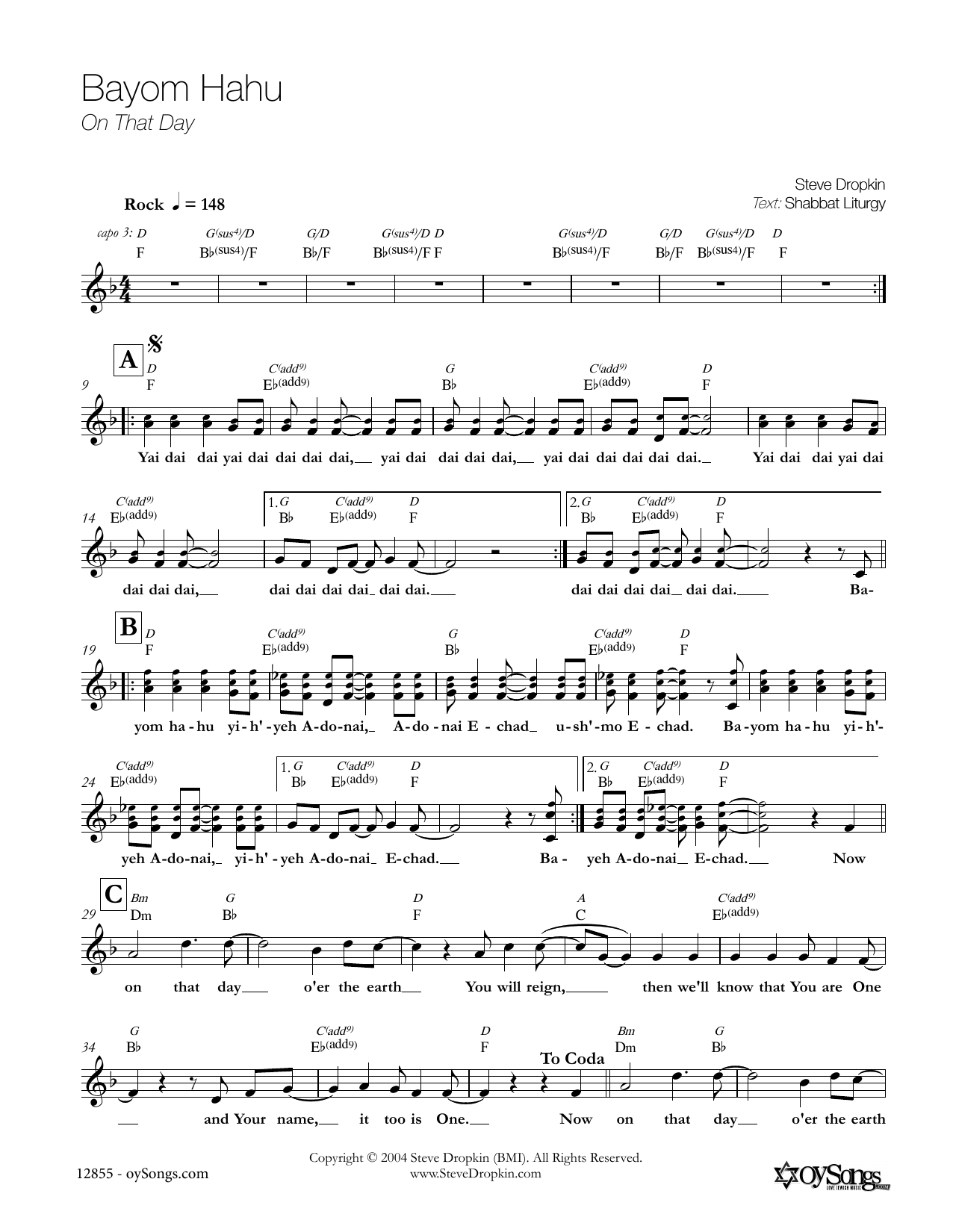
Bayom Hahu: Lead Sheet / Fake Book

Arranged by Steve Dropkin

Item: 35-DS00405442

Digital Download
$3.99
Description

Bayom Hahu: Lead Sheet / Fake Book isn't in MakeMusic Cloud just yet...but it could be. Let us know you'd like to see it, and you'll help shape what comes next. In the meantime, start a free trial and dive into thousands of interactive titles your students can play along with today.

Sample Audio
No sample audio found.
Sample Video
Additional Details
Publisher: Hal Leonard
Page Count: 2
SKU: 35-DS00405442

More about this title

Why we love this

This lead sheet captures a meaningful piece of Jewish liturgical tradition in a format that invites collaboration across voices and instruments. The straightforward notation makes it accessible for pianists accompanying singers or leading ensemble arrangements, while leaving room for personal interpretation and stylistic choice.

What to expect

A piece rooted in spiritual tradition and contemplative warmth. The format invites intimate collaboration between voice and piano, allowing both musicians to bring their own understanding of the text and melody into the performance.

Who it's for

Pianists and keyboardists who accompany singers in Jewish worship settings, interfaith programs, or educational contexts about world music traditions. This works equally well for solo vocalists preparing material for recital or recording, or for musicians building arrangements in real time.

How to get the most out of it

  • Establish the harmonic foundation clearly on piano while leaving space for the voice to sit naturally in the melodic line rather than competing with accompaniment texture
  • Pay attention to how the melody phrases to understand where breaths would feel organic; lead sheets often suggest phrasing through bar grouping and harmonic rhythm
  • Explore the emotional quality of the harmonic movement to inform your tempo and dynamic shape, since lead sheets rely on the performer's interpretive choices to bring out musical meaning

How to use it

Include this in a concert celebrating Jewish musical heritage, interfaith community events, or programs exploring folk and liturgical traditions. It also serves as a teaching tool for students learning to read and interpret lead sheets in a culturally grounded context.

Skills your students will build

  • Reading lead sheet notation (melody, chord symbols, chord voicings)
  • Harmonic accompaniment techniques on keyboard
  • Phrase shaping and interpretive decision-making from skeletal notation
  • Accompanying vocalists with sensitivity to text and vocal range

You May Also Like