Bavarian Rhapsody: Piano Sheet Music Preview

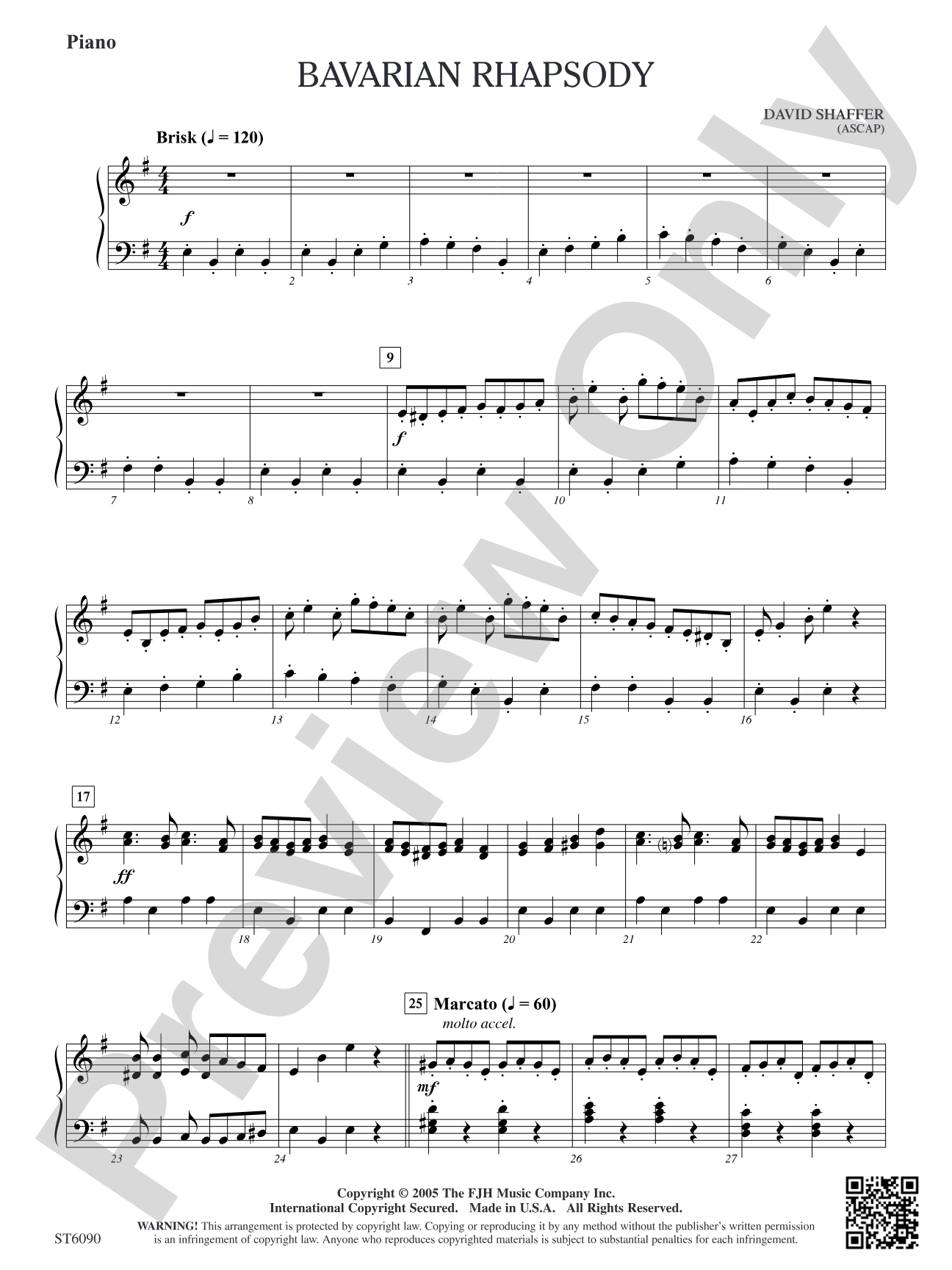
Bavarian Rhapsody: Piano

By David Shaffer

Grade: 3

Item: 98-PC-DST6090_K

Digital Download
$7.00
Description
Drawing inspiration from several famous Hungarian rhapsodies, David Shaffer offers this exciting new addition to the string repertoire. Plenty of countermelodies, tempo changes, and even some solo work all combine to make this an interesting piece that your students and audience will truly enjoy.

Bavarian Rhapsody: Piano isn't in MakeMusic Cloud just yet...but it could be. Let us know you'd like to see it, and you'll help shape what comes next. In the meantime, start a free trial and dive into thousands of interactive titles your students can play along with today.

Sample Audio
0:00
0:00
Sample Video
Additional Details
Series: FJH String Orchestra
Publisher: The FJH Music Company, Inc.
SKU: 98-PC-DST6090_K

More about this title

About the Composer: David Shaffer

David Shaffer is a prolific composer and arranger whose work spans educational ensembles across multiple instruments. His catalog demonstrates a consistent gift for writing parts that engage every section while maintaining musical substance, and his arrangements of international styles have become staples in school music programs.

Why we love this

Shaffer taps into the rhapsodic tradition without requiring your students to tackle a transcription or historical arrangement. The layered countermelodies keep every section engaged, and the strategized solo passages give your strongest players moments to shine while the ensemble navigates supportive material. This is concert programming that doesn't sacrifice educational value.

What to expect

Rhapsodic energy propels the piece forward as melodies unfold across the section, with enough rhythmic variety and harmonic color to feel substantial rather than formulaic. Hungarian and Central European inflections give it character without demanding exotic tuning or unconventional playing techniques.

Who it's for

Grade 3 string orchestras ready for multi-layered textures and expressive flexibility. This works for groups that have solid intonation in ensemble playing and can handle independent parts running alongside each other.

How to get the most out of it

  • Mark the tempo changes clearly in all parts and conduct them with deliberate gesture shifts; students will track these transitions more reliably if you establish distinct pulse characters for each new section.
  • Balance the solo passages against the accompanying voices by rehearsing the supporting lines at fuller dynamic levels first, then bringing soloists in to find the right blend.
  • Shape the countermelodies with slight dynamic emphasis so they register without overwhelming the primary line; this textures the sound without asking for extreme contrasts.

How to use it

Program this as a centerpiece for a spring or fall concert, or as a competition piece where the engaging writing and clear technical requirements sit at an approachable level. Its stylistic focus pairs well alongside other world music selections or works that celebrate folk melody.

Skills your students will build

  • Balancing counter-melodies within ensemble texture
  • Responding to frequent tempo changes
  • Shaping lyrical lines with appropriate phrasing and vibrato
  • Managing solo passages with confidence and musicality
  • Reading varied rhythmic figures across multiple parts simultaneously

You May Also Like