Battlestar!: 2nd Percussion Sheet Music Preview

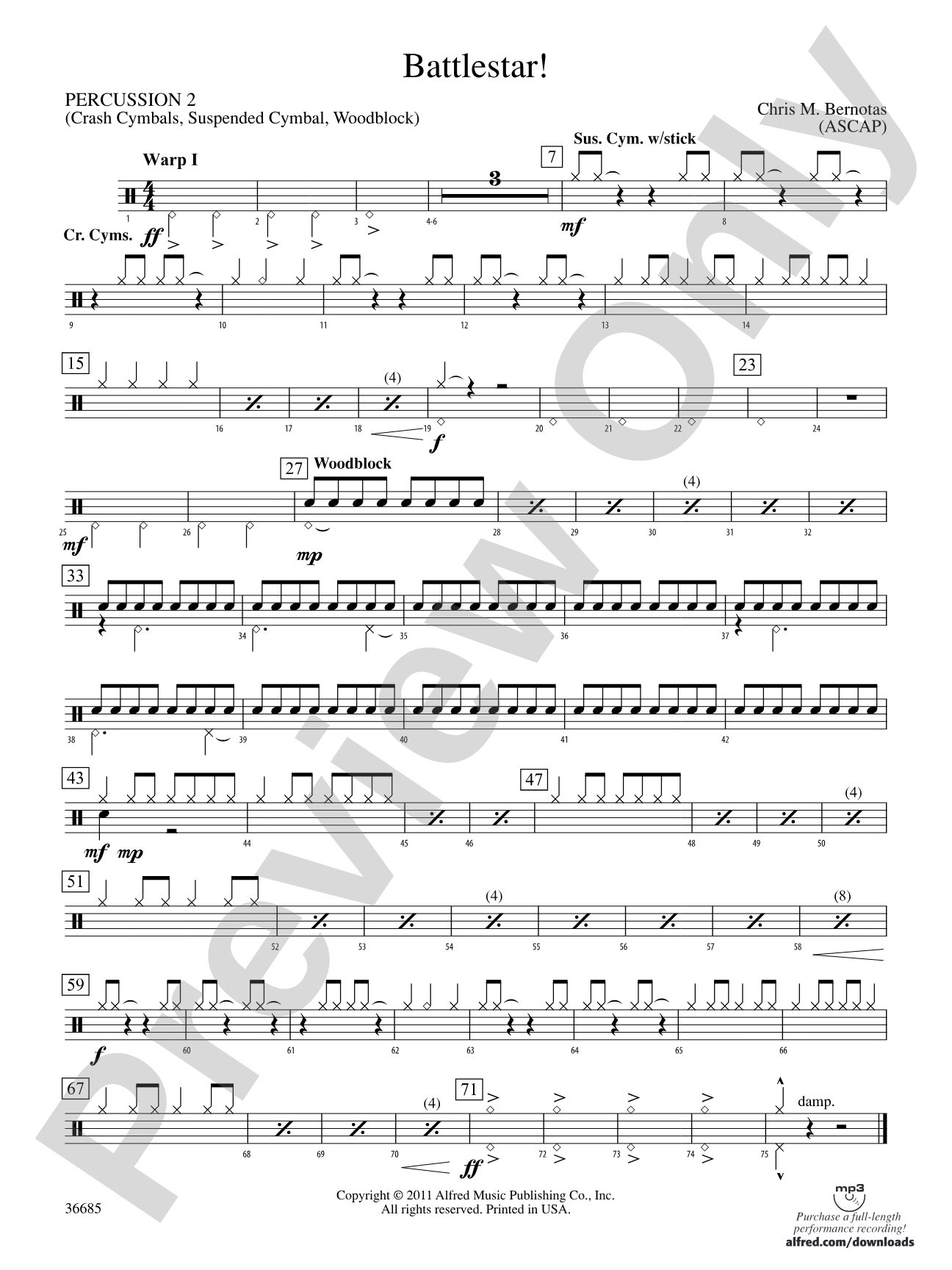
Battlestar!: 2nd Percussion

By Chris M. Bernotas

Grade: 1.5 (Easy)

Item: 00-PC-0015113_PC2

Digital Download
$3.00
Description
Battlestar! is a piece intended to spark imagery in your students' minds. The beginning features driving rhythms and an exciting, dramatic melody followed by a battle scene and victory! Send your students into the galaxy with this cinematic piece. (2:15)

Don't just read it, hear it, play along with it, and watch your students grow with it. In MakeMusic Cloud, Battlestar!: 2nd Percussion comes alive with professional accompaniment, adjustable tempo, and built-in practice tools that turn solo practice into real progress.

Sample Audio
0:00
0:00
Sample Video
Additional Details
Series: Alfred Debut Series
Publisher: Alfred Music
Page Count: 126
SKU: 00-PC-0015113_PC2

More about this title

About the Composer: Chris M. Bernotas

Chris M. Bernotas

Chris M. Bernotas directs instrumental publications for Alfred Music, where he shapes educational resources for band and orchestra programs across the globe. With more than 25 years of classroom and conducting experience, he understands the real needs of music teachers and the developmental arc of young musicians. His compositions balance accessibility with genuine musical substance, earning regular performance by ensembles from beginning bands to advanced groups.

Beyond the page, Bernotas works actively as a guest conductor and clinician, leading workshops that challenge directors to think freshly about repertoire and pedagogy. He has co-authored several influential resources including Sound Innovations Ensemble Development and Sound Artistry, and remains deeply committed to creating music that sparks both student engagement and teacher confidence.

Why we love this

Bernotas writes openers that actually work. Battlestar! grabs attention immediately with propulsive rhythms and clear melodic storytelling, then sustains interest through its narrative arc without losing the band's focus or control. At Grade 1.5, it delivers genuine cinematic excitement without requiring virtuosity, giving every section something satisfying to play.

What to expect

Battlestar! launches with the energy of a spaceship igniting its engines, the rhythm propulsive and the melody soaring. A battle erupts in the middle section, full of tension and dramatic urgency. By the end, victory arrives decisively, leaving the band and audience alike energized and satisfied.

Who it's for

Beginning and early intermediate concert bands seeking a programmatic opener that engages students emotionally while respecting their technical limitations. Directors who want their ensembles to experience storytelling through music without getting bogged down in complexity.

How to get the most out of it

  • Establish the driving eighth-note pulse early in rehearsal and keep it metronomic throughout the opening. This rhythmic foundation anchors the entire piece and allows the melody to soar above it.
  • Balance the melody across multiple voice parts as it passes between instruments. Mark entrances clearly so students understand when they carry the primary line and when they support it.
  • Shape the dramatic battle section with dynamic contrast. Bring out the lower voices during intensifying moments to deepen the tension before the final victory statement.
  • Consider the piece's cinematic pacing. Transitions between sections should feel inevitable rather than abrupt; think in terms of scenes rather than isolated musical ideas.

How to use it

Open a fall or winter concert with this piece to set an immediate, exciting tone. It works equally well as a season opener or as a bridge between full-band repertoire and a longer concert program. The brief duration (2:15) makes it ideal for festivals where momentum and audience engagement matter.

Skills your students will build

  • Maintaining rhythmic precision in fast-moving ensemble passages
  • Passing primary melodic material between voice parts and sections
  • Interpreting programmatic narrative through dynamic and tempo choices
  • Balancing rhythmic accompaniment figures with melodic lines
  • Responding to sudden dynamic and textural changes

You May Also Like