
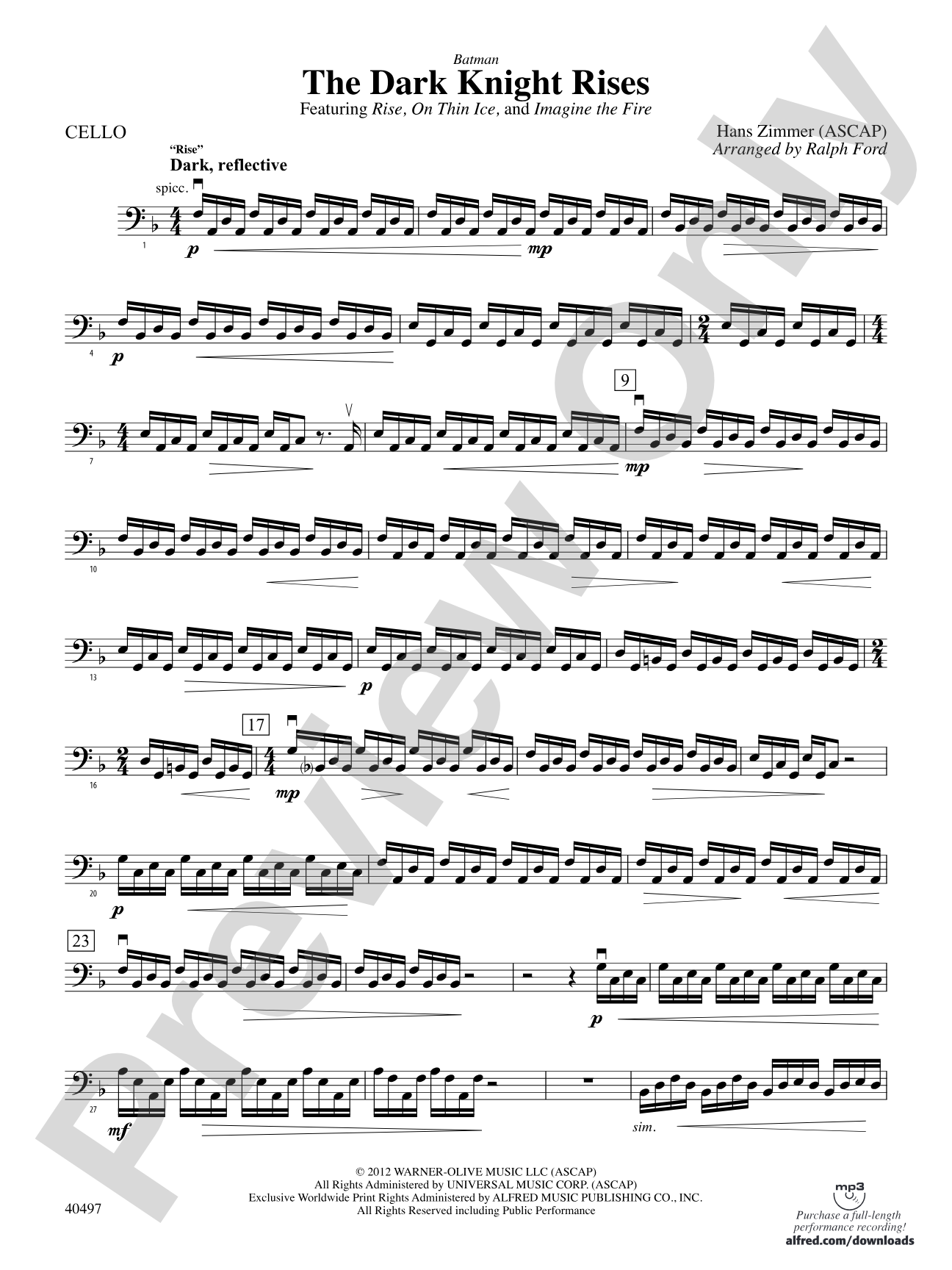

Batman: The Dark Knight Rises: Cello
Featuring: Rise / On Thin Ice / Imagine the Fire
By Hans Zimmer / arr. Ralph Ford
Grade: 3.5
Item: 00-PC-0016026_VC1
$5.99
Pickup currently not available
Description
From the highly anticipated finale of Christopher Nolan's Batman trilogy, Zimmer's dynamic and exciting music brings the story to life. This medley will thrill your orchestra and audiences alike. (6:30) This title is available in MakeMusic Cloud.


Don't just read it, hear it, play along with it, and watch your students grow with it. In MakeMusic Cloud, Batman: The Dark Knight Rises: Cello comes alive with professional accompaniment, adjustable tempo, and built-in practice tools that turn solo practice into real progress.
Open in the Player
Jump straight in and assign it today.
Start Your Free Trial
Open this title and explore the full library in minutes.
Sample Audio
1
Audio File
--:--
0:00
0:00
Sample Video
No sample videos found.
Additional Details
Series:
Pop Concert Full Orchestra
Publisher:
Alfred Music
Page Count:
226
SKU:
00-PC-0016026_VC1
More about this title
About the Composer: Hans Zimmer
Hans Zimmer redefined film scoring for a generation by treating orchestral music as a character in its own right. His approach combines classical orchestration with electronic textures and rhythmic precision, creating soundtracks that drive narrative tension while remaining musically substantial. In the classroom and rehearsal hall, his work has become essential repertoire for teaching how contemporary composers extend traditional instrumental writing.
Zimmer's collaborations with director Christopher Nolan on the Dark Knight trilogy produced some of the most performed film music in schools today. His scores demand rigorous technique from orchestras and reward conductors and musicians who treat the material with the same seriousness as concert hall classics.
Why we love this
This arrangement captures the propulsive urgency and harmonic complexity that made Zimmer's Dark Knight scores so influential, but at a Grade 3.5 level that keeps the technical demands manageable. The 6:30 runtime gives your orchestra enough material to develop genuine excitement without sacrificing coherence. Directors consistently report that film music this engaging motivates both strong players and developing musicians to commit fully.
What to expect
The music pulses with controlled intensity, moving between brooding, minor-key passages and soaring heroic themes. Zimmer's orchestration creates layers of sound that feel cinematic and propulsive, building momentum that carries the ensemble and audience forward.
Who it's for
This is ideal for orchestras ready to tackle contemporary film music with symphonic ambitions. Your musicians should be comfortable with modern compositional techniques, steady ensemble playing, and the kind of precision that film scores demand.
How to get the most out of it
- Establish a rock-solid pulse with your rhythm section before worrying about balance elsewhere. Zimmer's orchestrations sit on top of driving rhythmic foundations, and any slippage there undermines the entire architecture.
- Pay close attention to dynamic contrasts in the string writing. Zimmer frequently uses sudden volume shifts to heighten dramatic intensity; playing these transitions cleanly and with clear intention makes the difference between exciting and sloppy.
- Mark your cues and section letter changes during rehearsal. At 6:30, there are multiple thematic arrivals and transitions. Conducting through these without losing your orchestra's focus requires preparation.
- Balance the brass carefully in climactic moments so the themes remain audible rather than buried. Full orchestra writing at this level can mask important lines if your brass section doesn't adjust dynamics for the context.
How to use it
Program this as the centerpiece of a concert that explores how film composers extend classical orchestration. It pairs well alongside traditional pops fare while signaling to audiences that your orchestra takes contemporary music seriously. The runtime also makes it work as a high-impact opener or closer without dominating the entire concert.
Skills your students will build
- Reading complex modern orchestrations with multiple independent lines
- Maintaining rhythmic precision in syncopated ensemble passages
- Balancing dense texture scoring where multiple instruments carry equal weight
- Executing sudden dynamic shifts for dramatic effect
- Responding to rapid tempo and character changes across multiple sections