
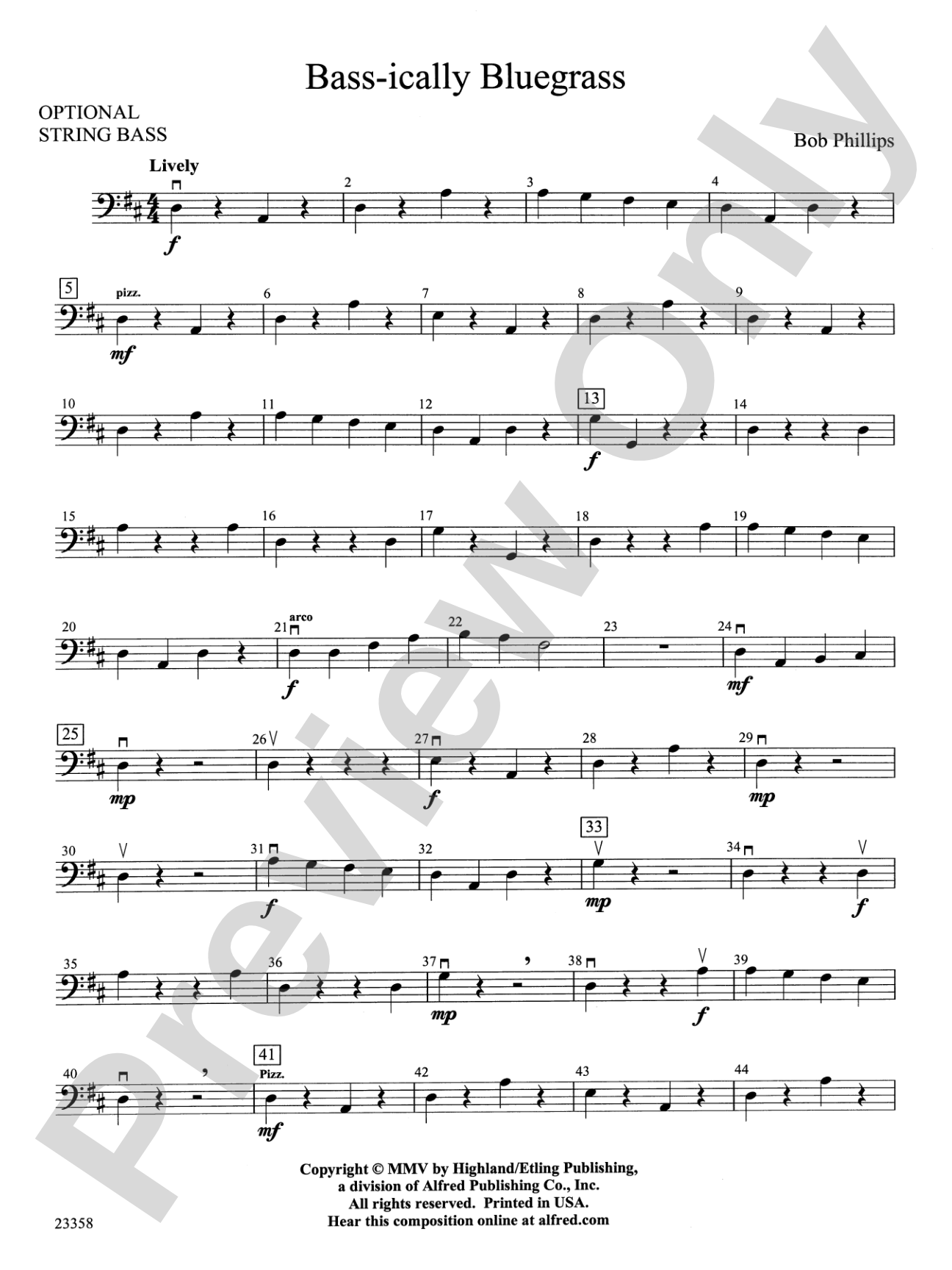

Bass-ically Bluegrass: String Bass
Bass Solo or Section Feature
By Bob Phillips
Grade: 2
Item: 00-PC-0000703_SB
$5.99
Pickup currently not available
Description
Based on the old-time melody to "Buffalo Gals," Bass-ically Bluegrass will showcase your bass section and the orchestra will look their best! In this classical setting reflecting bluegrass influences, the orchestra "trades licks" with the bass section. The bass solo uses a one-octave D scale, while the other sections remain in first-position throughout. The bass features may be played by a solo bassist or by your entire bass section--a sure audience pleaser! (2:30)


Don't just read it, hear it, play along with it, and watch your students grow with it. In MakeMusic Cloud, Bass-ically Bluegrass: String Bass comes alive with professional accompaniment, adjustable tempo, and built-in practice tools that turn solo practice into real progress.
Open in the Player
Jump straight in and assign it today.
Start Your Free Trial
Open this title and explore the full library in minutes.
Sample Audio
1
Audio File
--:--
0:00
0:00
Sample Video
Additional Details
Series:
Highland/Etling String Orchestra
Publisher:
Alfred Music
Page Count:
132
SKU:
00-PC-0000703_SB
More about this title
About the Composer: Bob Phillips

Bob Phillips has spent his career designing string music that captures the way students actually learn and the repertoire they find exciting. Since 1953, he has built an international reputation as both a composer and pedagogue, authoring 25+ instructional series and creating over 200 published works for orchestras and bands. His innovations span eclectic styles, from the Fiddlers Philharmonic series to jazz and Latin-influenced compositions that have earned him ASCAP recognition and regular performances at the Midwest Clinic.
For 27 years, Phillips directed the string program in Saline, Michigan, growing it to over 700 students while establishing it as a national model for excellence across classical and contemporary styles. He founded the Saline Fiddlers Philharmonic, which performed internationally more than 80 times annually and appeared at the White House. Phillips has served as conductor, arranger, and clinician for youth symphonies, all-state orchestras, and prestigious summer programs including Interlochen and Blue Lake Fine Arts Camp.
Why we love this
This arrangement takes a familiar fiddle tune and reimagines it as a structured conversation between your bass section and the orchestra, giving lower voices the spotlight they rarely receive at this level. The one-octave D scale keeps the bass line playable for developing musicians while the rest of the ensemble stays in first position, making this genuinely teachable without sacrificing musicality. The bluegrass flavor gives students a fresh context for classical technique, and whether you spotlight a solo bassist or feature your entire bass section, the piece delivers that satisfying moment when the audience realizes your "foundation" players can steal the show.
What to expect
Friendly and foot-tapping, with the energy of a fiddle tune played in concert dress. The orchestral framework keeps things polished while the bluegrass melody and bass riffs bring a playful, slightly mischievous character that makes audiences smile.
Who it's for
Grade 2 string orchestras with a developing bass section and the confidence to let those players take a featured role. This works equally well in schools where you have a single strong bass soloist or where you want to celebrate the entire lower voice section as ensemble contributors.
How to get the most out of it
- Allow the bass section extra rehearsal time on the D scale passages and their rhythmic figurations; Phillips writes in a style that swings, so encourage your basses to feel the pulse rather than count mechanically.
- Shape the trading sections with clear dynamic contrast between the bass licks and the ensemble responses; this dialogue only lands if both sides are listening and reacting to each other's phrasing.
- If using a solo bassist, ensure they have performance space (visually and acoustically) where the audience can hear the detail of their playing; a player sightline matters as much as a clear sound.
- Bring out the bluegrass character through articulation rather than tempo changes; light, crisp bowstrokes in the ensemble parts will frame the bass's funkier approach without rushing.
How to use it
Program this as the centerpiece of a "strings in styles" concert or pair it with other Phillips eclectic works to show the range of your orchestra's voice. It also works as a standalone concert opener that engages the audience immediately and sets a relaxed, accessible tone for the rest of your program.
Skills your students will build
- Playing a solo melody with ensemble accompaniment
- Trading rhythmic and melodic phrases between sections
- Navigating one-octave D major scales (bass section)
- First-position coordination across string voices
- Articulation techniques suited to blues and bluegrass idioms
- Listening and responding to dynamic contrast between featured and supporting sections