

Basic Rhythms for the Club-Date Drummer
By Ted Reed
Item: 00-PB-0002111
$6.99
Pickup currently not available
Related Items
Basic Rhythms for the Club-Date Drummer: Drumset Book |
$6.99
|
View |
Description
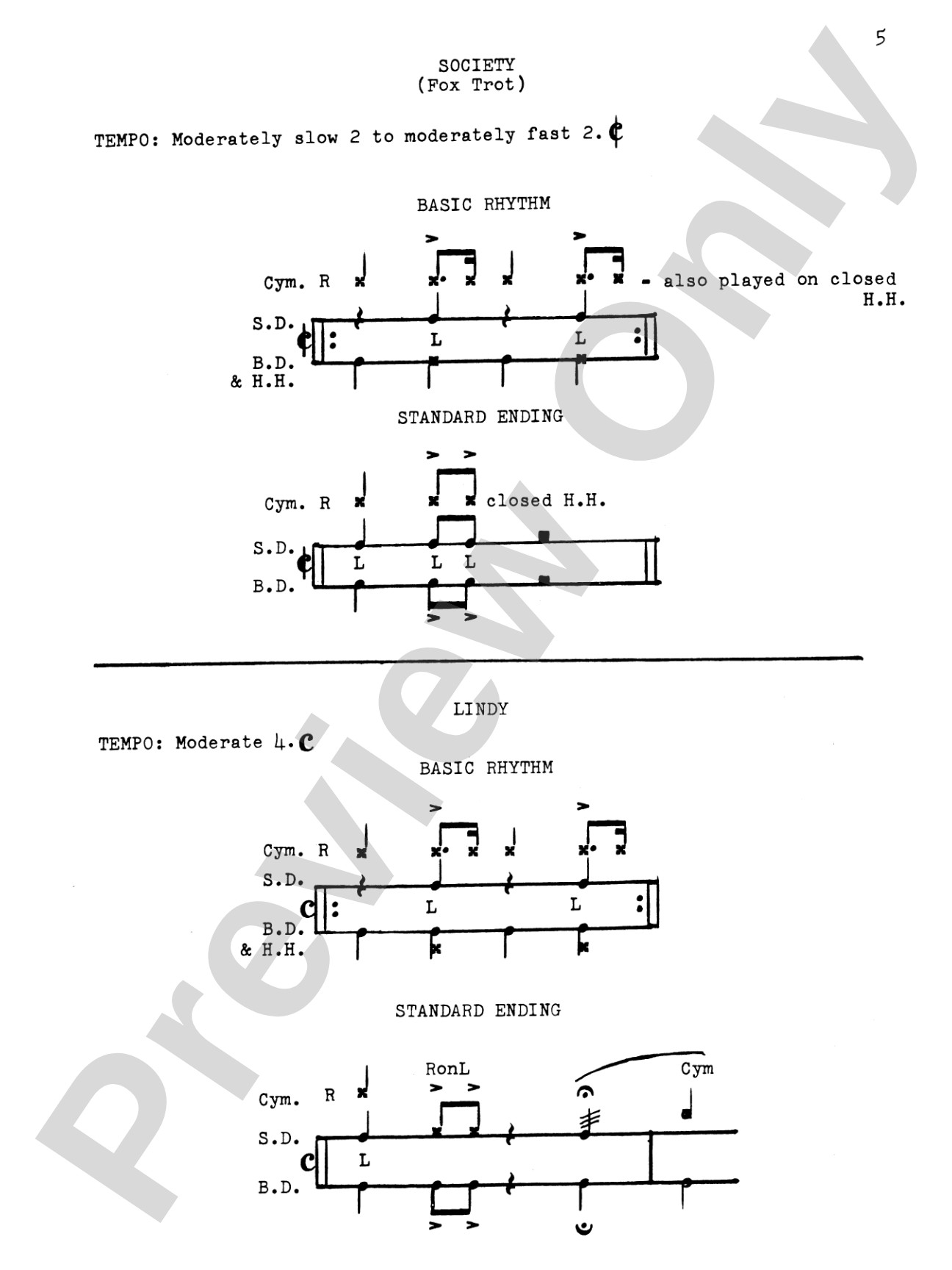
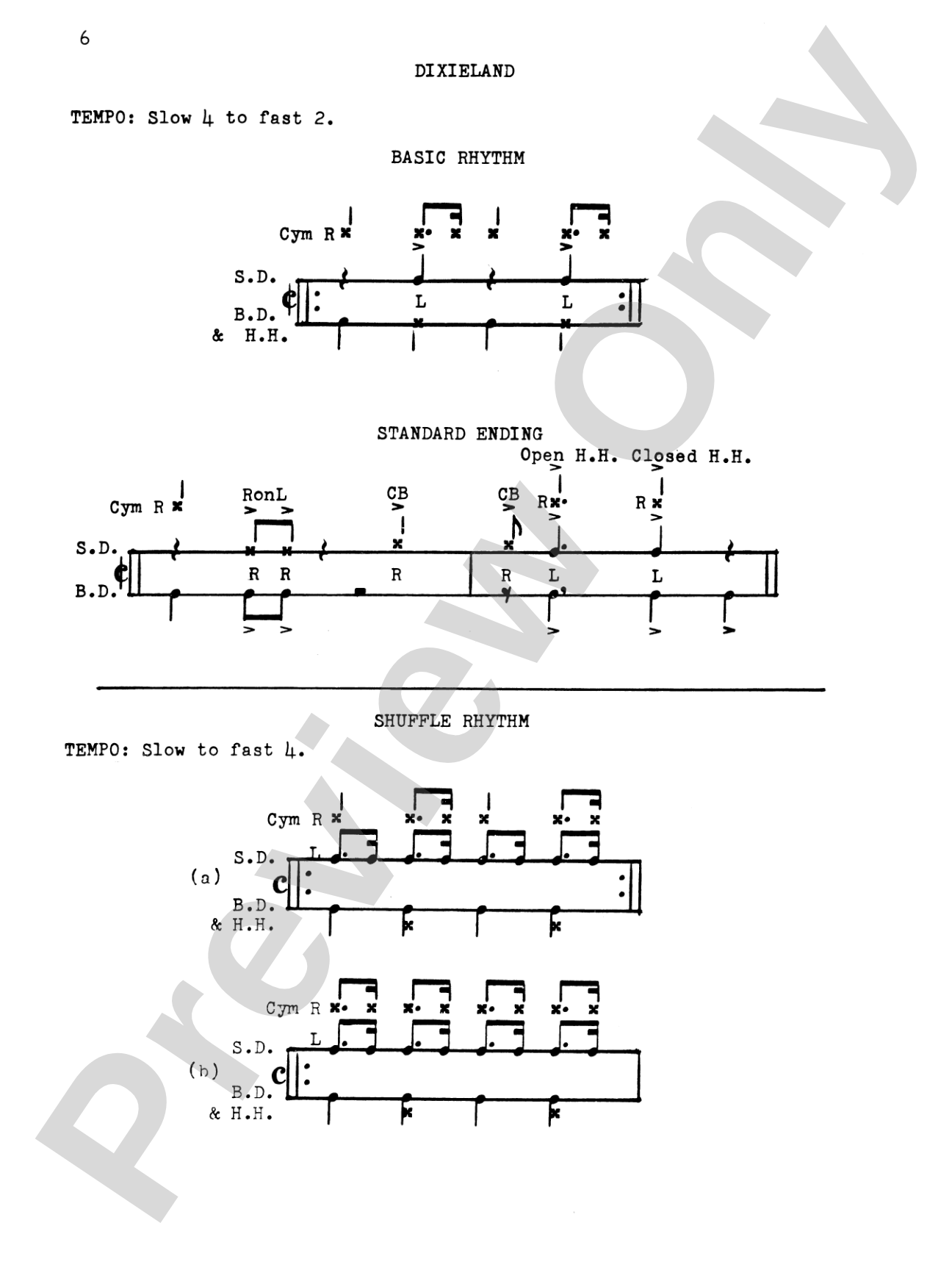
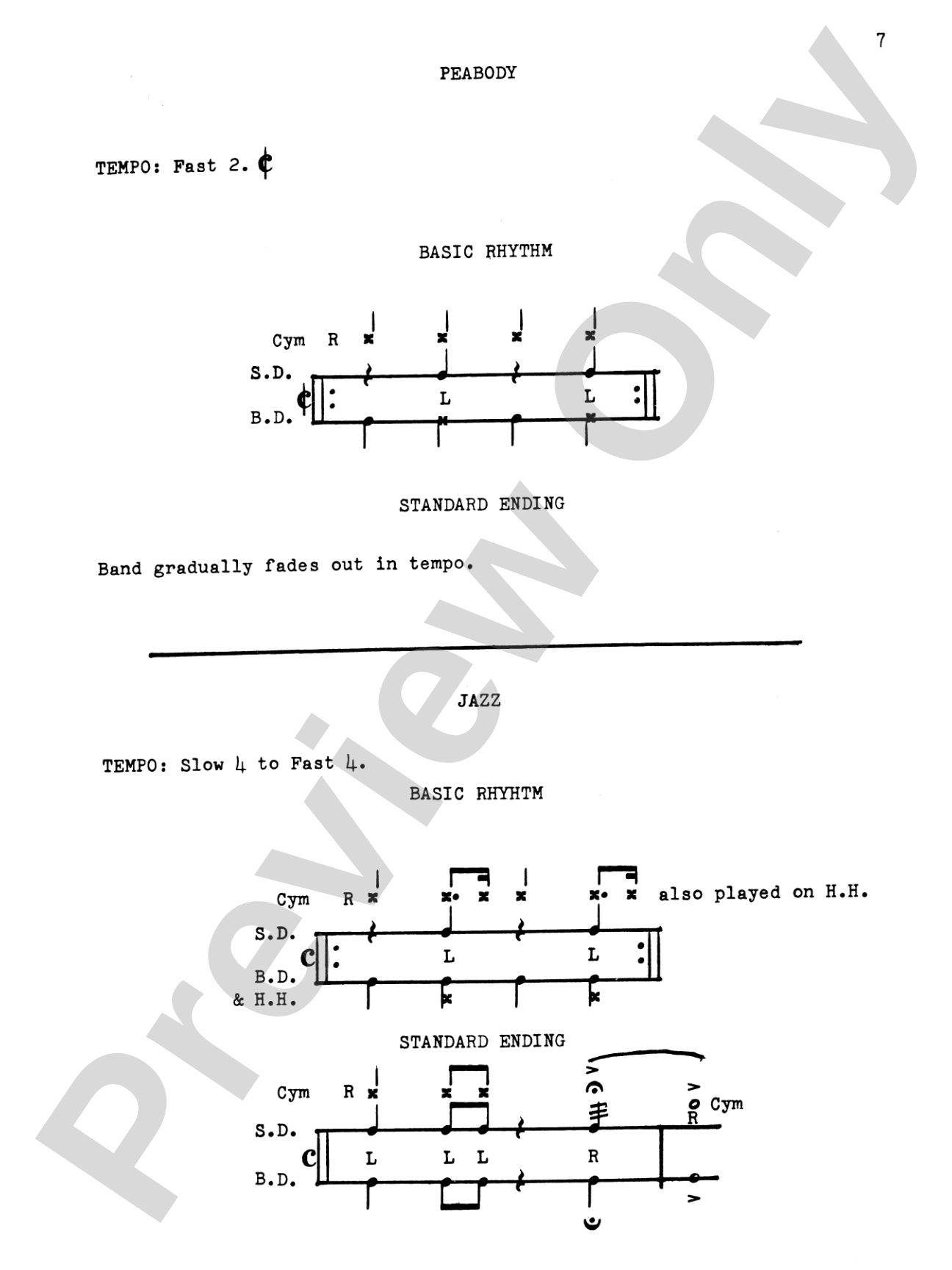
Basic rhythms for society, Dixieland, jazz, waltz, tango, bolero, pachanga, guarach, rumba, merengue, samba, la raspa, conga, beguine, lindy, Charleston, bossa nova and many other ethnic dances.


Basic Rhythms for the Club-Date Drummer isn't in MakeMusic Cloud just yet...but it could be. Let us know you'd like to see it, and you'll help shape what comes next. In the meantime, start a free trial and dive into thousands of interactive titles your students can play along with today.
Request This Title
Tell us you want it.
Start Your Free Trial
Explore everything that's ready to play right now.
Sample Audio
No sample audio found.
Sample Video
No sample videos found.
Additional Details
Series:
Ted Reed Publications
Publisher:
Alfred Music
Page Count:
28
SKU:
00-PB-0002111
More about this title
About the Composer: Ted Reed
Ted Reed stands as one of the most influential percussion pedagogues in American music education. His method books and collections have shaped how generations of drummers approach rhythm, technique, and musical versatility across multiple genres and performance contexts.
Reed's work reflects a deep understanding of the working drummer's real world needs. Rather than isolating technique from application, his materials place rhythmic patterns directly into the musical situations where drummers actually encounter them, making his publications enduringly practical for students and professionals alike.
Why we love this
This collection cuts straight to what club-date and working drummers actually need to know. Twenty-eight pages of authentic rhythmic patterns spanning two dozen dance styles and musical traditions means your students get exposure to genuine repertoire contexts rather than abstract exercises. The breadth here is remarkable: from Dixieland to samba, each pattern arrives with clear notation and real-world applicability.
What to expect
Jumping from one musical world to another with each page. The collection moves with the energy of a working band playing everything from Charleston to bossa nova in a single night, keeping both player and listener alert and engaged. Each style brings its own rhythmic flavor while remaining rooted in clear, teachable patterns.
Who it's for
Drummers preparing for working band situations, whether high school percussion students building versatility or serious players expanding their club-date and dance band repertoire. Directors building percussion students' stylistic literacy will find this especially useful for cross-genre programming and for developing drummers who can adapt across multiple musical contexts.
How to get the most out of it
- Start with the foundational patterns before attempting variations. Each dance style establishes core vocabulary that makes more complex syncopations accessible.
- Listen to recordings of each style before drilling the notation. Your muscle memory will lock in faster when your ear already knows what the groove should sound and feel like.
- Practice slowly and deliberately at first. The tempos in club-date playing vary wildly depending on the bandleader and the dancers, so building control at a range of speeds matters more than speed itself.
- Pay attention to the relationship between bass drum, snare, and cymbal in each pattern. The coordination demands shift significantly across these different styles.
How to use it
Assign specific patterns when your ensemble tackles repertoire in different styles, giving drummers the foundational vocabulary to understand the rhythmic DNA of what they are playing. This works equally well as a systematic method for percussion students rotating through world music units or as a reference collection for building fast preparedness when a guest band or special concert requires rhythmic flexibility.
Skills your students will build
- Reading and executing rhythmic patterns across eight or more distinct dance and cultural styles
- Coordinating multiple limbs with confidence across jazz waltzes, Latin grooves, and swing forms
- Understanding the relationship between written rhythm and authentic performance feel
- Building versatility in cymbal and bass drum articulation for club-date and ballroom contexts
- Recognizing and applying characteristic rhythmic signatures of Dixieland, samba, rumba, bossa nova, and other ethnic traditions