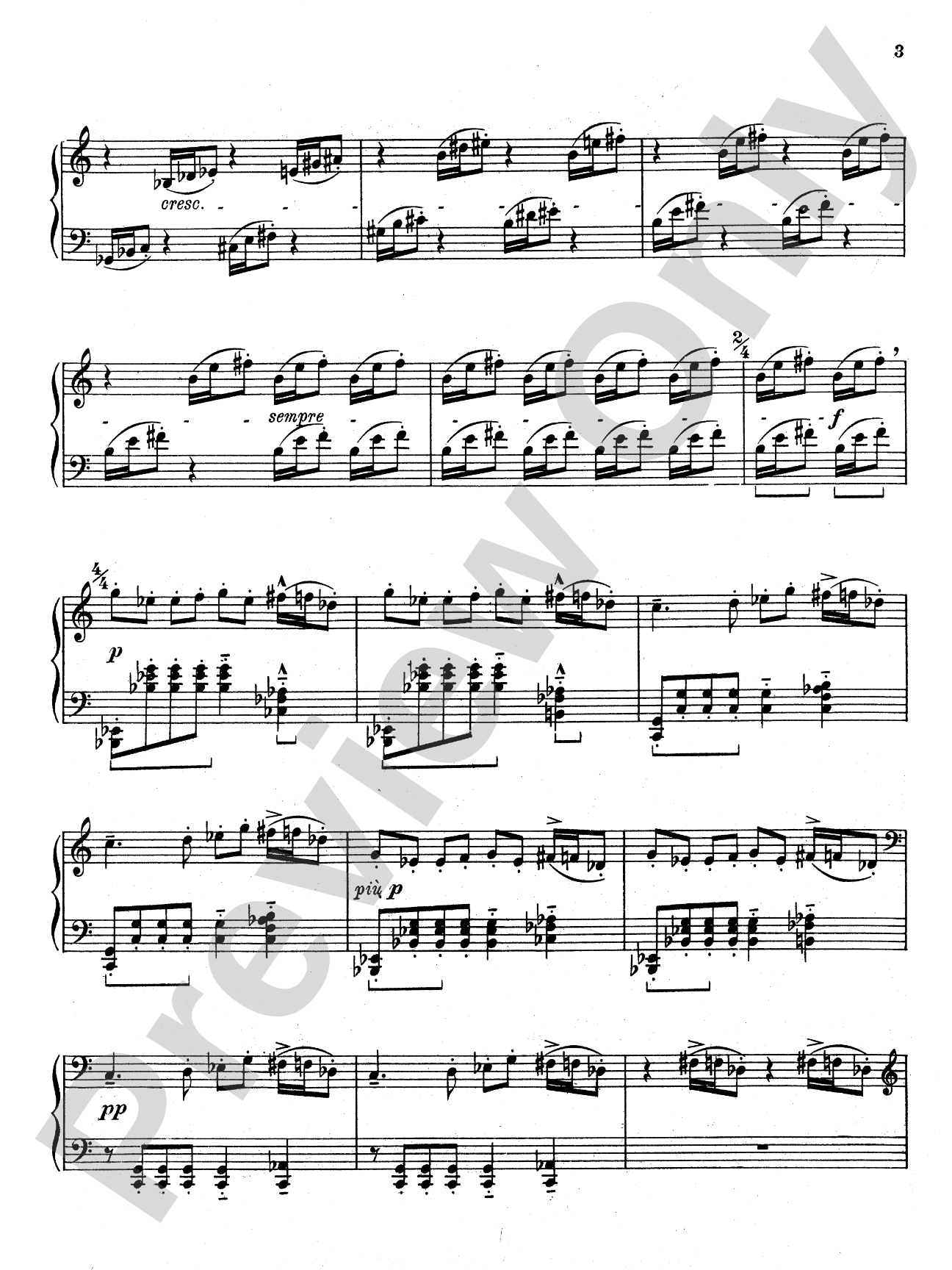
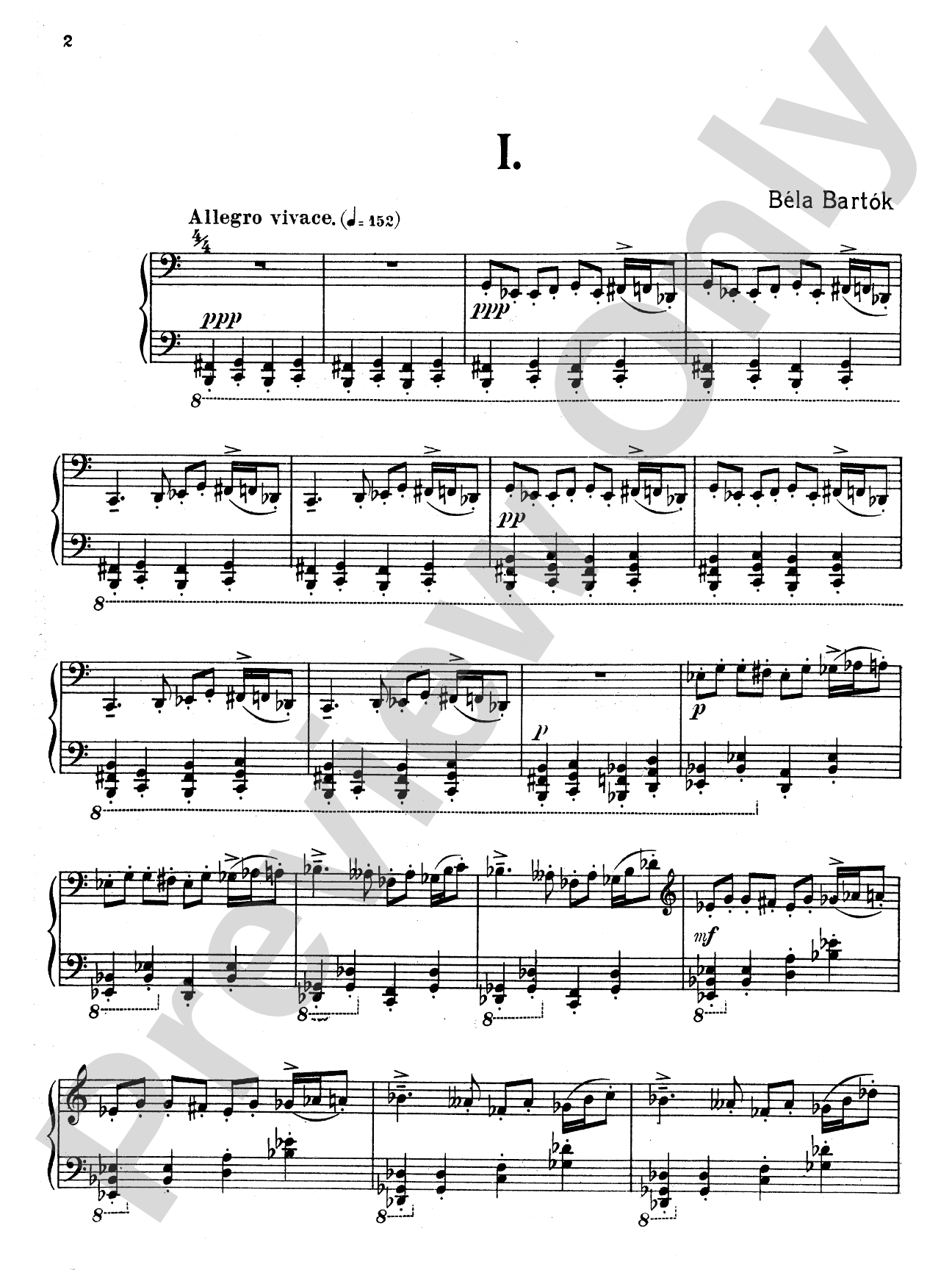
Bartók: Two Roumanian Dances, Op. 8A Sheet Music Preview

Bartók: Two Roumanian Dances, Op. 8A

By Béla Bartók

Level: Intermediate / Advanced

Item: 00-PC-0005091

Digital Download
$3.99
Description
The Two Romanian Folk Dances, Opus 8A, are a piano work written by Béla Bartók, based on Romanian folk music. Written in 1910, they date from the beginning of his interest in folk music.

Don't just read it, hear it, play along with it, and watch your students grow with it. In MakeMusic Cloud, Bartók: Two Roumanian Dances, Op. 8A comes alive with professional accompaniment, adjustable tempo, and built-in practice tools that turn solo practice into real progress.

Sample Audio
No sample audio found.
Sample Video
Additional Details
Series: Kalmus Edition
Publisher: Alfred Music
Page Count: 20
SKU: 00-PC-0005091

More about this title

About the Composer: Béla Bartók

Béla Bartók (1881–1945) was a Hungarian composer and pianist whose systematic exploration of Eastern European folk music fundamentally shaped his compositional voice. He undertook extensive field research across Hungary, Romania, and neighboring regions, collecting and analyzing thousands of folk songs to understand their melodic, rhythmic, and harmonic structures.

Bartók's integration of folk material into concert music created a bridge between vernacular tradition and modernist technique. His piano works span from accessible folk-inspired pieces to complex studies in harmony and rhythm, making him essential to both pedagogical and advanced concert repertoires. He remains a touchstone for composers seeking authenticity and innovation simultaneously.

Why we love this

These dances capture Bartók at a pivotal moment when his ear was freshly attuned to Romanian folk idioms, yet his harmonic language was already distinctly modern. The writing sits at an ideal intersection for intermediate-advanced pianists: the folk material feels immediate and singable, but the dissonance, rhythmic displacement, and hand independence demand real sophistication. Programming these alongside early 20th-century masterworks or pairing them with contemporary pieces creates compelling contrasts that audiences and students both recognize as historically significant.

What to expect

Earthy and energetic, with a bright folk character that refuses to stay predictable. The dances pulse with rhythmic vitality and modal color, but Bartók's harmonic language keeps the listener slightly off balance, creating an almost electric tension between the familiar and the strange. The piano writing feels both idiomatic and challenging, full of surprising doublings and contrapuntal interplay that rewards close listening.

Who it's for

Intermediate-advanced pianists ready to engage with early modernist piano writing and interested in the relationship between folk source material and composed art music. Students and recitalists who want to perform substantial 20th-century works that are shorter and more approachable than Bartók's full Romanian Folk Dances collection.

How to get the most out of it

  • Allow the folk melody to sing through even when it's buried in complex texture. Bartók's piano writing often requires judicious pedaling and voice projection rather than even touch.
  • Attend to the rhythmic displacement between the hands. The folk idioms can pull toward a lilting, flexible pulse; anchor yourself to the notated meter and let metric tension emerge naturally.
  • Study the harmonic language away from the keyboard. Understanding how Bartók stacks diatonic melody against chromatic bass or bitonal harmonies will inform your voicing choices.
  • Balance authenticity with clarity. These dances reference real folk sources, but your role is to reveal Bartók's compositional logic, not to approximate folk performance.

How to use it

Feature these as a companion to other Bartók piano works or as a bridge in a concert spanning folk sources and modernism. They work particularly well preceding or following 20th-century nationalist works by Kodály, Falla, or Copland, or as a point of comparison when programming folk-inspired music across multiple eras.

Skills your students will build

  • Balancing folk melody with dissonant harmonic accompaniment
  • Reading and executing rhythmic displacement between the hands
  • Understanding modal melody and bitonal harmony
  • Projecting independent voices in a complex two-handed texture
  • Interpreting articulation and pedaling in early 20th-century piano writing

You May Also Like