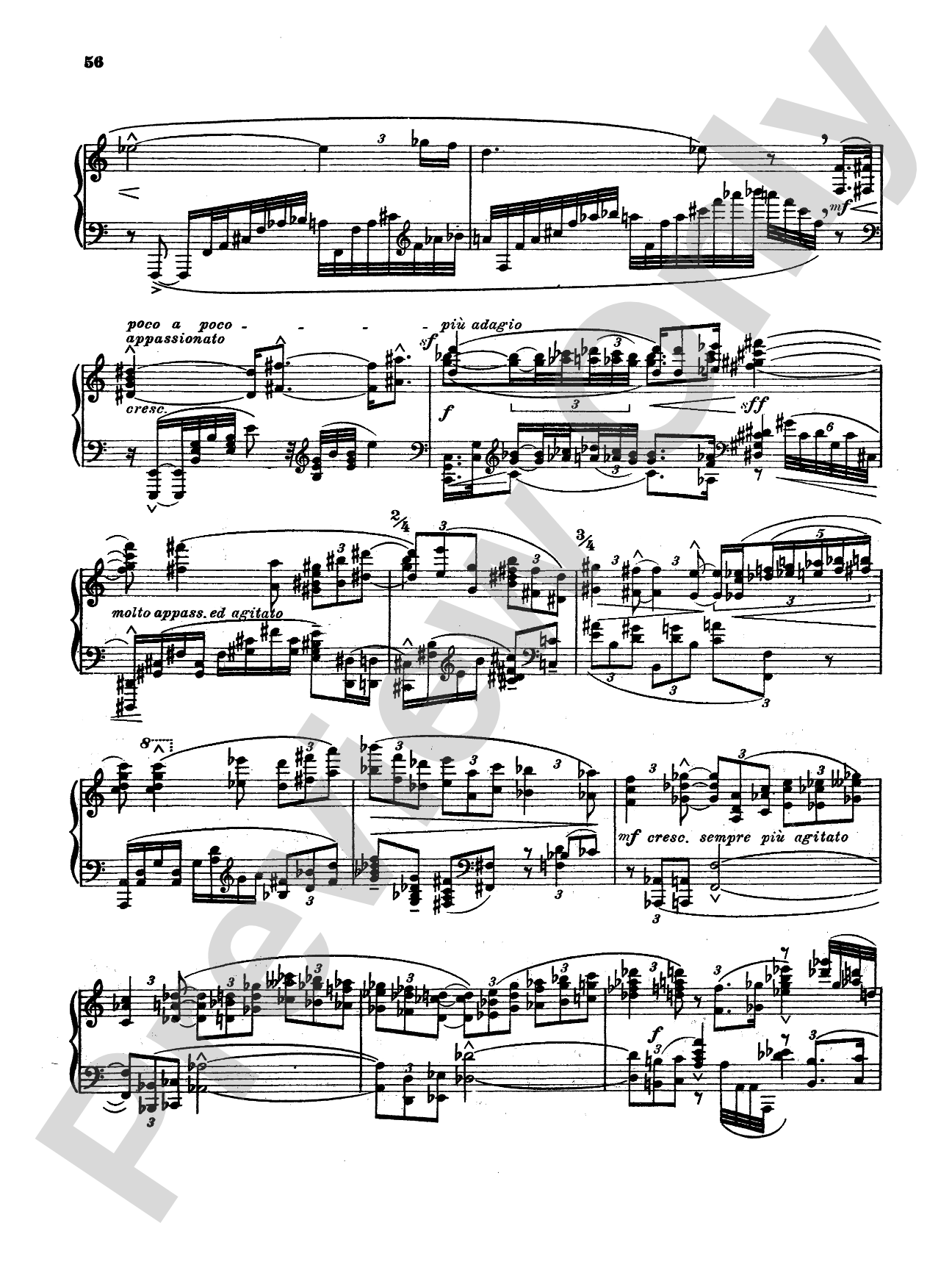
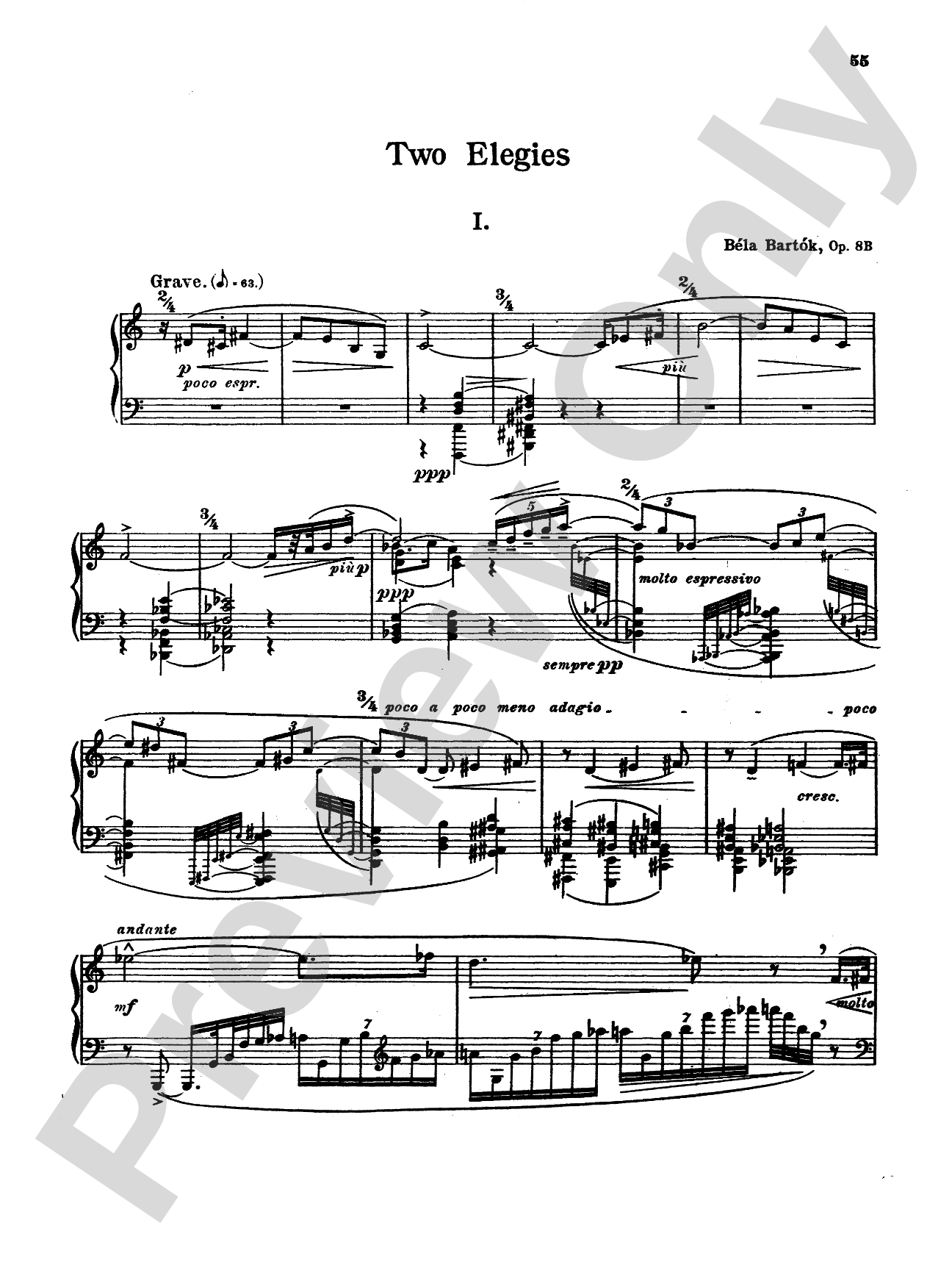
Bartók: Two Elegies, Op. 8B Sheet Music Preview

Bartók: Two Elegies, Op. 8B

By Béla Bartók

Item: 00-PC-0005080

Digital Download
$2.99
Description
Expertly arranged piano solo from our Kalmus Edition.

Don't just read it, hear it, play along with it, and watch your students grow with it. In MakeMusic Cloud, Bartók: Two Elegies, Op. 8B comes alive with professional accompaniment, adjustable tempo, and built-in practice tools that turn solo practice into real progress.

Sample Audio
No sample audio found.
Sample Video
Additional Details
Series: Kalmus Edition
Publisher: Alfred Music
Page Count: 24
SKU: 00-PC-0005080

More about this title

About the Composer: Béla Bartók

Béla Bartók (1881–1945) was a Hungarian composer and pianist whose investigations into Eastern European folk music fundamentally shaped his compositional voice. Rather than merely quoting folk melodies, Bartók absorbed their rhythmic vitality, modal inflections, and structural principles, synthesizing them with avant-garde harmonic language to create a body of work that feels both rooted and radically modern.

Why we love this

These two elegies sit at a pivotal moment in Bartók's early career, written when he was still synthesizing Romanticism with his emerging modernist voice. The Kalmus Edition presents them with clarity and authority, making these introspective works accessible to pianists ready to move beyond standard repertoire without requiring avant-garde virtuosity.

What to expect

These elegies unfold with an introspective, lamenting quality that never becomes sentimental. The harmonies feel simultaneously searching and anchored, with moments of stark beauty that emerge from dissonance rather than consonance. The writing respects the piano's capacity for both delicate resonance and percussive clarity.

Who it's for

This work suits advanced intermediate to advanced pianists who have developed secure technique and are ready to engage with 20th-century compositional language. Teachers often program these elegies for students preparing auditions or recitals where they need to demonstrate both sensitivity and musical sophistication beyond Romanticism.

How to get the most out of it

  • Study the score's dissonant harmonic language first without the instrument; map the tonal centers and unexpected resolutions so you understand the architecture rather than playing it by ear.
  • Approach rubato with restraint. Bartók's modernism depends on rhythmic precision even when the surface seems impressionistic; emotional pull comes from harmonic tension, not tempo manipulation.
  • Differentiate the two elegies sharply in character and tempo. Use the contrasts between them to clarify the overall arc of the 24-page work.
  • Balance the sustain pedal carefully. The open harmonies need air and resonance, but muddying will obscure Bartók's precise voice-leading.

How to use it

Pair these elegies with other early 20th-century solo works (Debussy, Ravel, or Schoenberg) to create a coherent recital section that traces modernism's early trajectory. They also work effectively as the introspective core of a student recital that opens with Romantic sonata and closes with contemporary material.

Skills your students will build

  • Reading complex harmonic language and non-functional harmony
  • Controlling pedal in modernist contexts where resonance and clarity compete
  • Executing rhythmic precision while maintaining expressive intent
  • Balancing contrapuntal texture in pieces with lean orchestration
  • Interpreting performance markings and tempo relationships in unfamiliar musical language

You May Also Like