Bartók: Three Hungarian Folksongs Sheet Music Preview

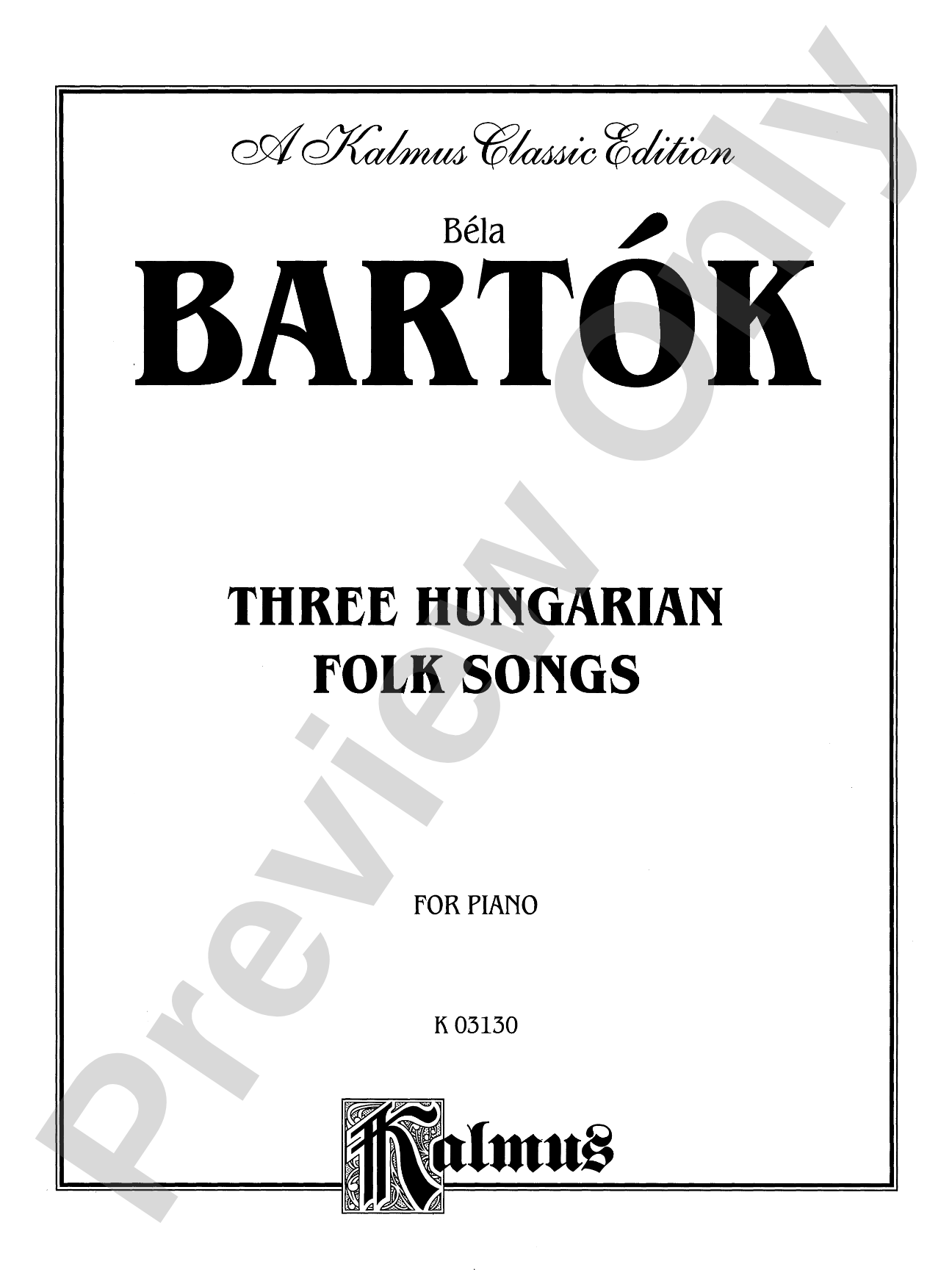
Bartók: Three Hungarian Folksongs

By Béla Bartók

Item: 00-PC-0005085

Digital Download
$3.99
Description
Bela Bartók collected folk tunes beginning in 1906, and the three melodies on which these pieces are based were arranged a year later. These are short, simple songs, written in modal styles, each with an expressive character. Includes: 1. Rubato * 2. L'istesso tempo * 3. Poco vivo.

Don't just read it, hear it, play along with it, and watch your students grow with it. In MakeMusic Cloud, Bartók: Three Hungarian Folksongs comes alive with professional accompaniment, adjustable tempo, and built-in practice tools that turn solo practice into real progress.

Sample Audio
No sample audio found.
Sample Video
Additional Details
Series: Kalmus Edition
Publisher: Alfred Music
Page Count: 4
SKU: 00-PC-0005085

More about this title

About the Composer: Béla Bartók

Béla Bartók (1881–1945) was a Hungarian composer and pianist who fundamentally changed how classical composers engaged with folk music. Beginning in 1906, he undertook systematic fieldwork across Eastern Europe, recording thousands of authentic folk melodies with scholarly rigor. This wasn't romantic nostalgia; Bartók treated folk tunes as primary musical material worthy of deep structural analysis, and his arrangements reveal the harmonic and modal richness buried in these traditions.

Bartók's approach to folk melody shaped twentieth-century composition across Europe. He proved that accessibility and innovation could coexist, and that a piece could honor its source material while expanding what pianists and audiences understood as modern music. His arrangements remain essential repertoire for pianists seeking to build interpretive maturity and historical awareness.

Why we love this

These arrangements sit at a sweet spot for intermediate pianists: each piece is genuinely short and playable, yet they demand real musical thinking. Bartók's modal harmonies and rhythmic flexibility are introduced here without the technical overload of his larger works, making this an ideal entry point to his compositional language.

What to expect

Each piece carries the stillness of a remembered tune, rendered in Bartók's distinctive harmonic light. The modal melodies feel both ancient and modern at once; the accompaniments never overshadow the song itself, but they give it unexpected color and depth. There's an intimate quality to these arrangements, as though you're hearing someone recite a cherished memory.

Who it's for

Pianists at the intermediate to early-advanced level who are ready to step into twentieth-century repertoire without intimidating technical demands. These pieces work well for students studying folk music traditions, comparative music cultures, or composers who built on non-Western sources.

How to get the most out of it

  • Treat the tempo markings as character directives, not metronomic strictness. 'Rubato' invites flexibility within the phrase; 'Poco vivo' should feel buoyant but never rushed.
  • Modal melodies often need clarity of line over harmonic weight. Keep the melody singing forward even when the accompaniment grows dense.
  • Listen to folk recordings of these same melodies before rehearsing. Knowing the source tune helps shape your interpretation and grounds the arrangement in its cultural context.
  • Pay attention to Bartók's articulation markings and dynamic shaping. They guide the modal character and distinguish each piece's expressive world.

How to use it

Program these as a standalone group (all three take roughly 8–10 minutes) when you want to highlight folk heritage or introduce twentieth-century composition to a general audience. They also work beautifully as a bridge between Romantic-era character pieces and more experimental modern work, or alongside other folk-based repertoire by Kodály or Bartók himself.

Skills your students will build

  • Reading and executing modal harmony and voice leading
  • Interpreting tempo flexibility and rubato in written notation
  • Balancing melody projection over chromatic or polytonal accompaniment
  • Recognizing folk melody as material for structural development
  • Performing short-form pieces with clear emotional shape

You May Also Like