Bartók: Ten Easy Pieces Sheet Music Preview

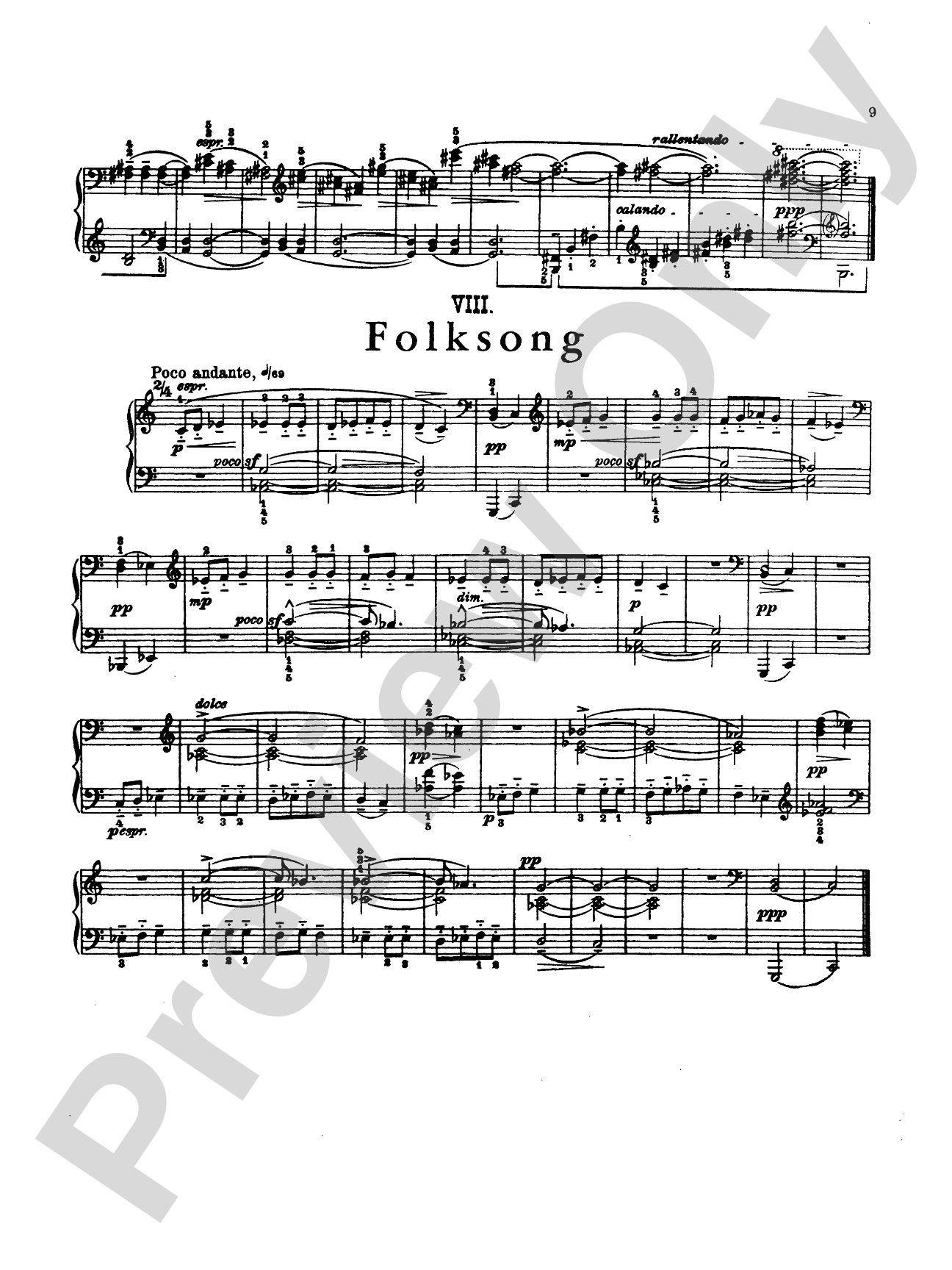
Bartók: Ten Easy Pieces

By Béla Bartók

Item: 00-PC-0005044

Digital Download
$0.99
Description
A collection of piano solos composed by Béla Bartók.

Don't just read it, hear it, play along with it, and watch your students grow with it. In MakeMusic Cloud, Bartók: Ten Easy Pieces comes alive with professional accompaniment, adjustable tempo, and built-in practice tools that turn solo practice into real progress.

Sample Audio
No sample audio found.
Sample Video
Additional Details
Series: Kalmus Edition
Publisher: Alfred Music
Page Count: 16
SKU: 00-PC-0005044

More about this title

About the Composer: Béla Bartók

Béla Bartók (1881-1945) was a Hungarian composer and pianist who revolutionized twentieth-century classical music by systematically collecting and studying folk melodies from Eastern Europe. His compositional voice synthesized these authentic regional sounds with modernist harmonic language, creating work that felt both rooted in tradition and startlingly contemporary.

Bartók's piano writing shaped how generations of musicians approached the instrument. His Ten Easy Pieces exemplify his belief that music for students need not be simplistic; even accessible works contain sophisticated compositional ideas and genuine artistic substance. He taught at the Hungarian Academy of Music for nearly three decades and remained committed to music education throughout his life.

Why we love this

These pieces prove that student repertoire and real compositional substance are not mutually exclusive. Bartók refuses to condescend, offering genuine musical ideas wrapped in technically manageable packaging, which makes them excellent for building both confidence and musicianship. Each piece stands alone as a complete artistic statement rather than serving as mere technical exercise.

What to expect

The collection moves between pensive introspection and rhythmic vitality, drawing on the modal character of Eastern European folk music. Bartók's harmonic palette feels both modern and organic, as if a traditional melody has been gently shifted through a prism that reveals new colors without destroying its essential shape.

Who it's for

These pieces suit intermediate pianists seeking repertoire with real artistic depth but without virtuosic technical demands. They work equally well in recital, studio practice, or classroom settings where students are ready to engage with twentieth-century compositional thinking.

How to get the most out of it

  • Pay attention to Bartók's specific dynamic markings and articulation choices. His notation is deliberate; a staccato marking in one phrase and legato in another creates the piece's character and should not be homogenized.
  • Approach the folk-influenced melodies with clarity of line. These pieces often feature simple, direct thematic material that gains power through clean voicing and unhurried phrasing rather than excessive pedal.
  • Listen for the harmonic language beneath the surface. Bartók frequently uses unexpected chord movements and modal inflections that sound fresh when brought out through careful voice leading rather than glossed over.

How to use it

Program these pieces as a cohesive set in a student or chamber recital to introduce audiences to early twentieth-century piano writing. They work especially well alongside other modernist works or as a bridge between Romantic and contemporary repertoire. Consider pairing them with folk music in its original form to help listeners understand Bartók's compositional process.

Skills your students will build

  • Reading twentieth-century harmonic language and modal inflection
  • Interpreting minimalist notation and finding expression through articulation rather than excessive romanticism
  • Building interpretive clarity with limited technical requirements
  • Understanding the relationship between folk melody and modernist composition

You May Also Like