





Bartók: Sonatina: Piano
By Béla Bartók
Item: 00-PK-0002904

$6.99
Pickup currently not available
Parts Added to Cart!
Related Items
Sonatina: Piano |
$6.95
|
View |
Description
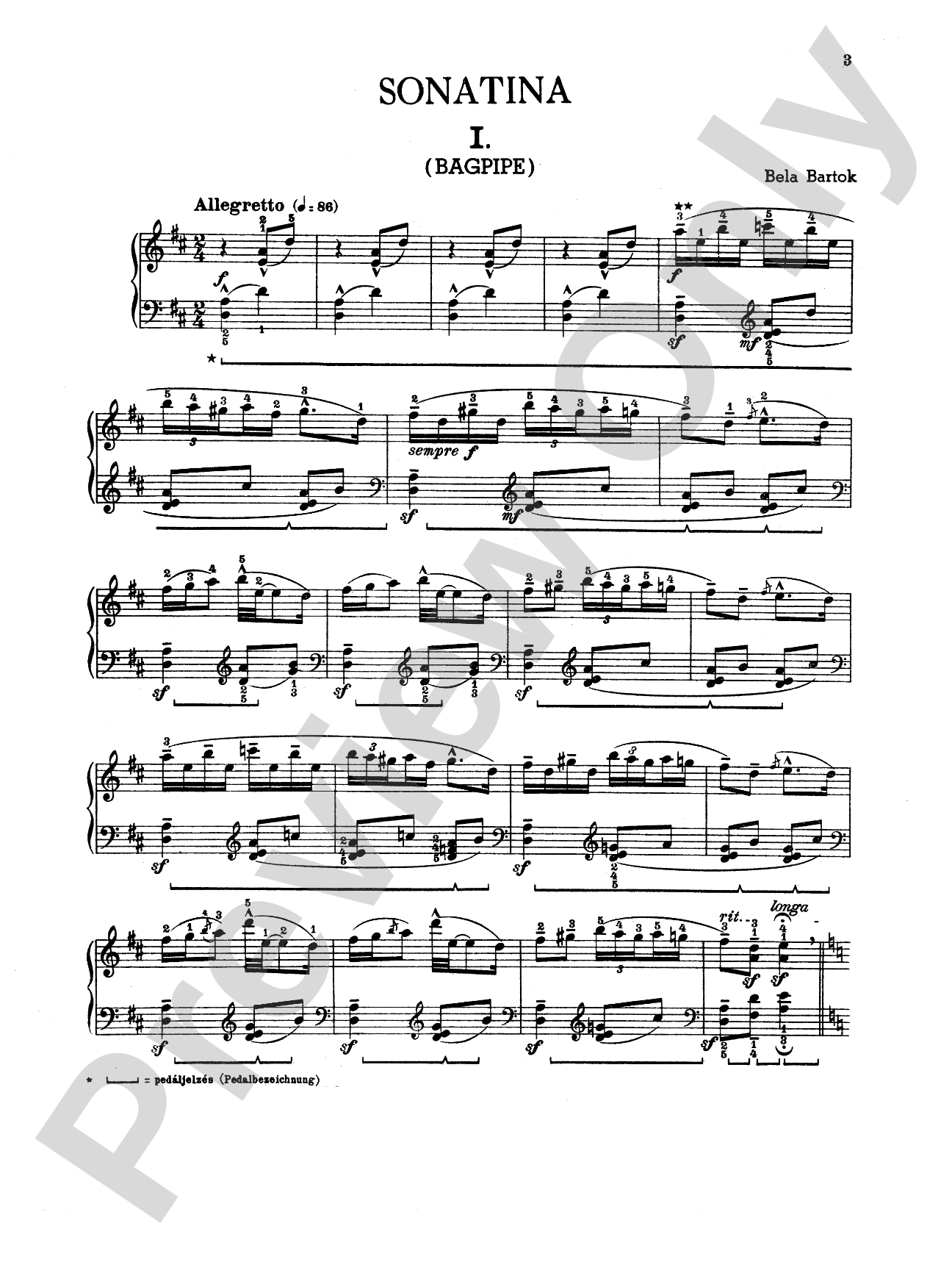
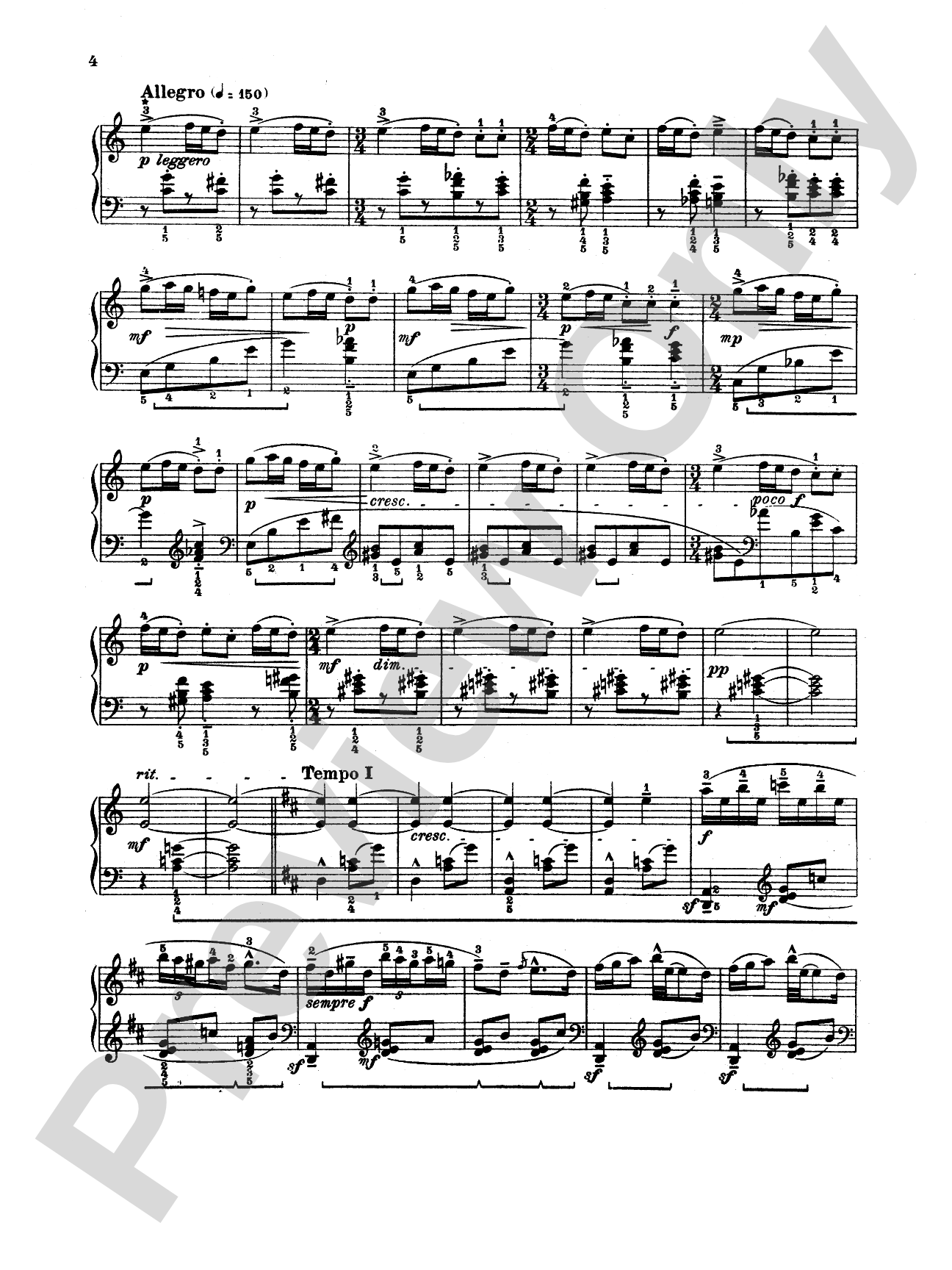
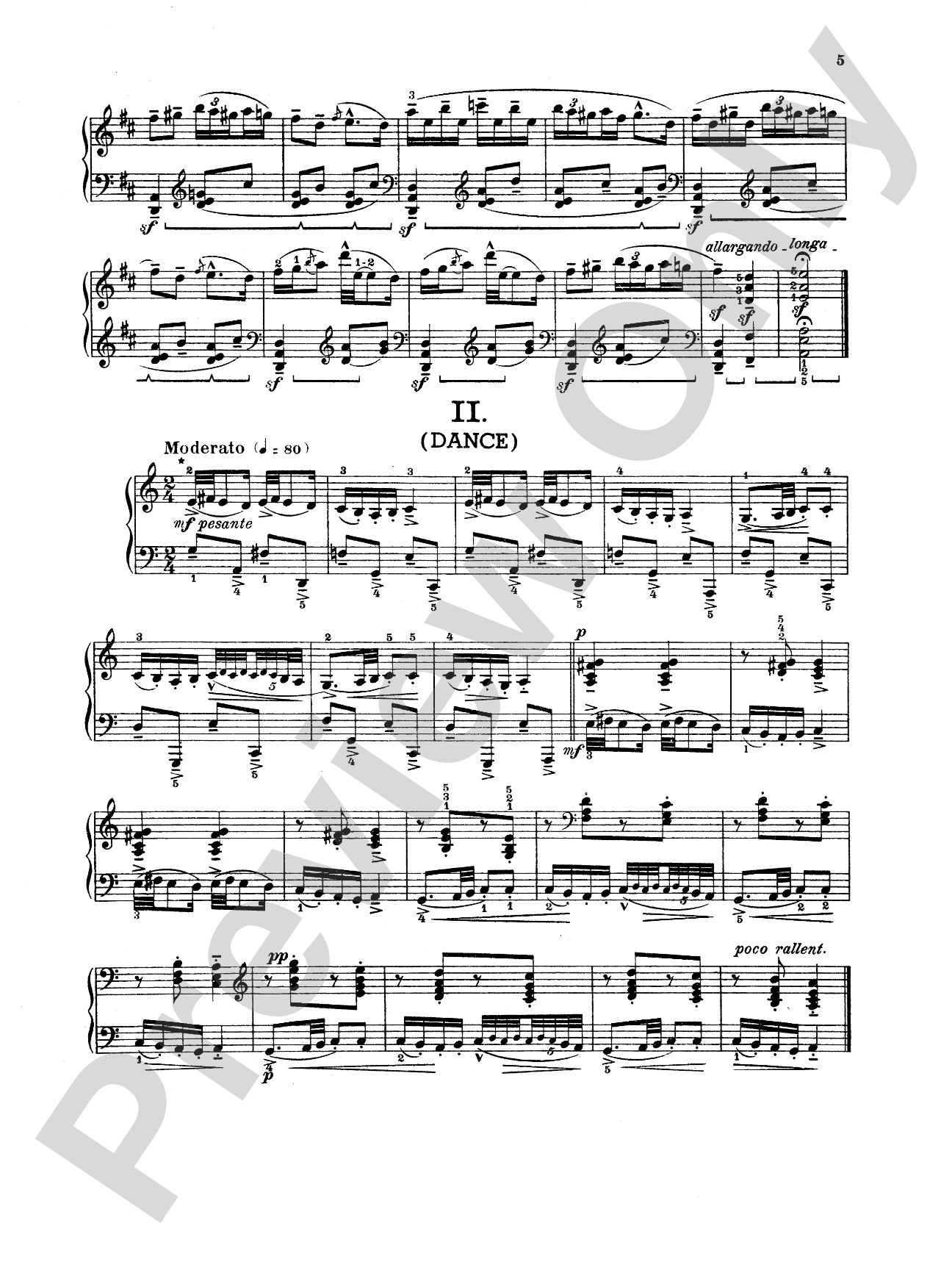
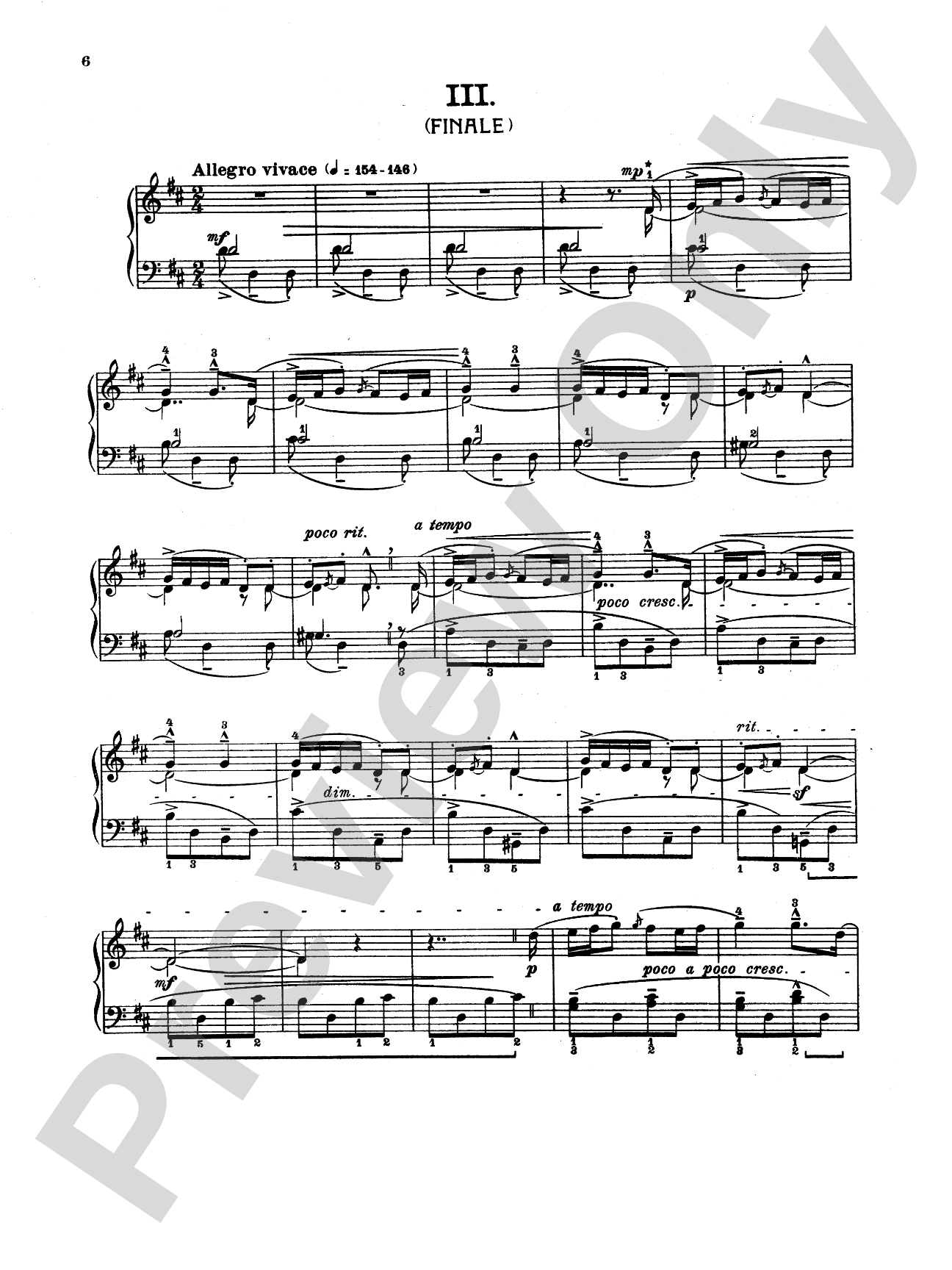
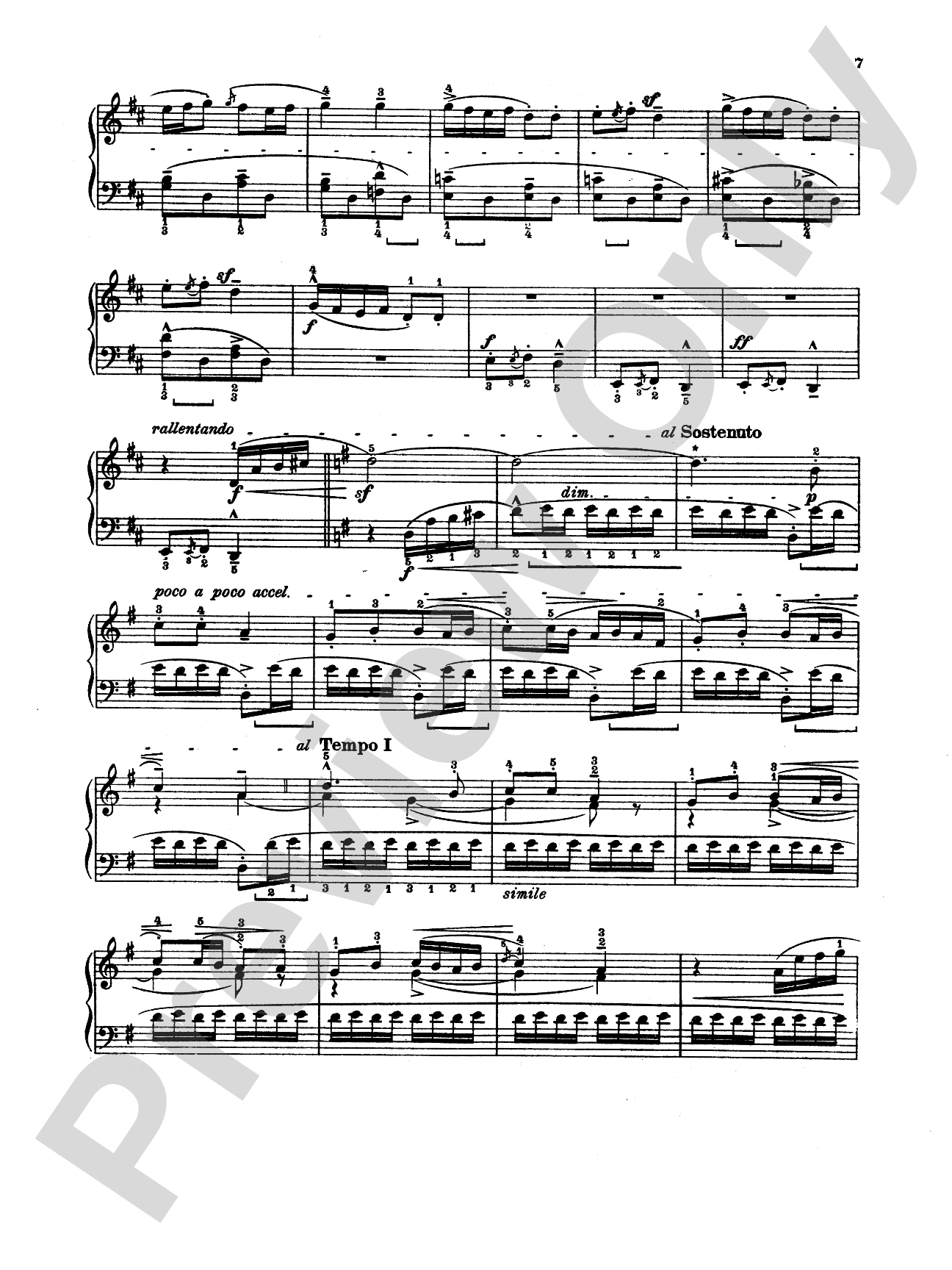
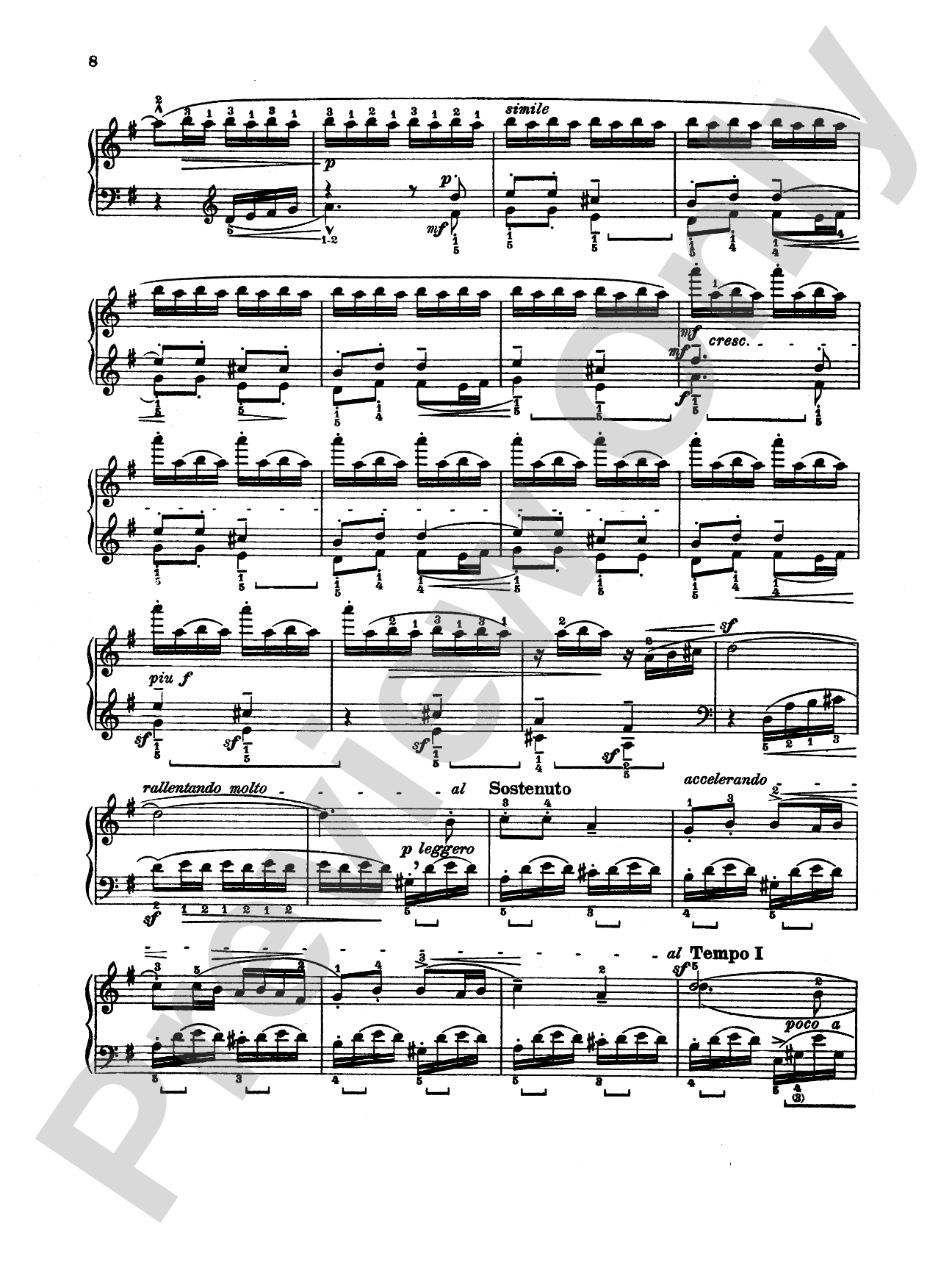
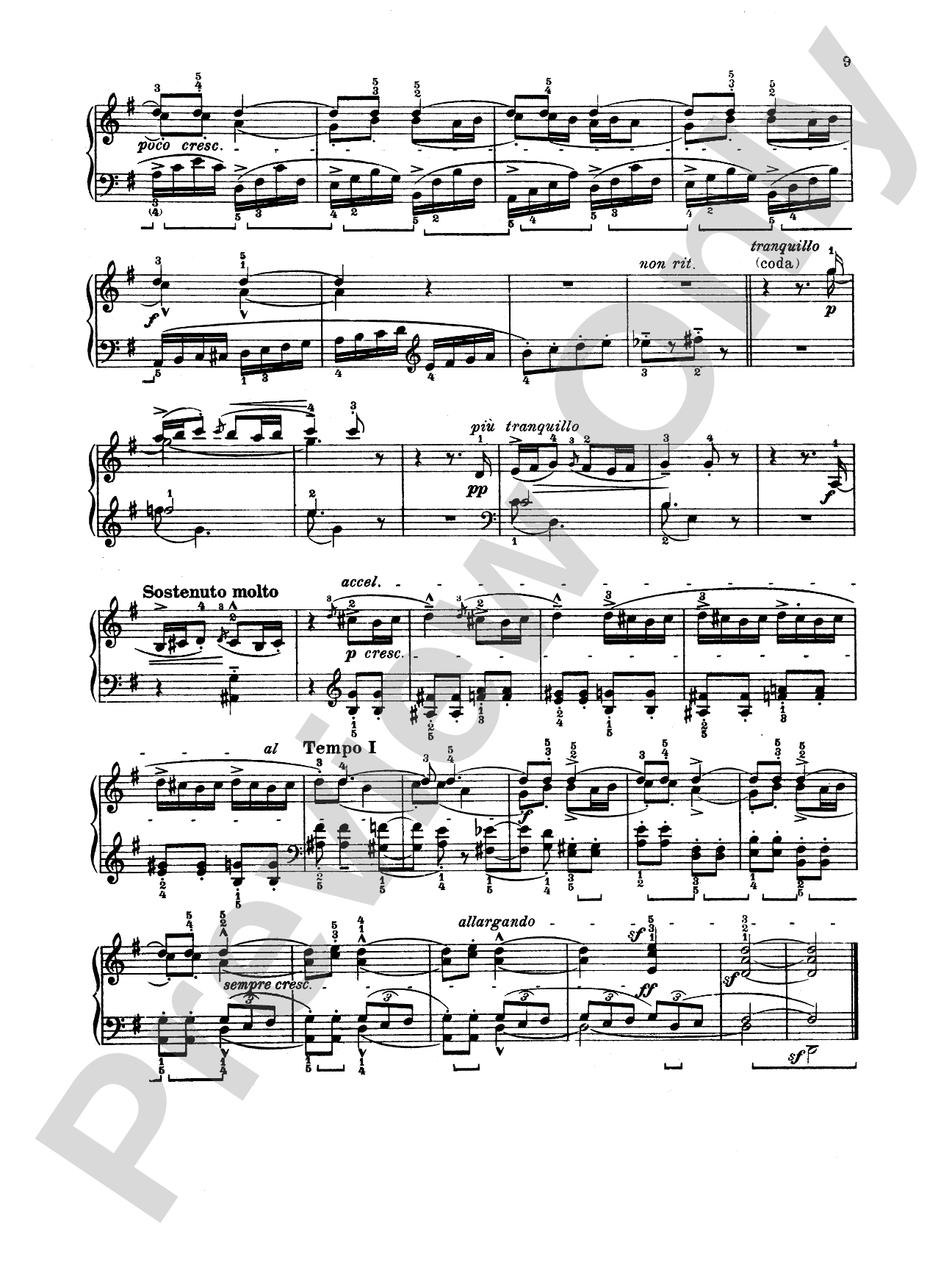
Bela Bartok's Sonatina for piano consists of five different folk tunes. In a radio broadcast of the Sonatina in 1944, Bartók described the piece: "This sonatina was originally conceived as a group of Rumanian folk dances for piano . . . The first movement, which is called "Bagpipers", is a dance---these are two dances played by two bagpipe players, the first by one and the second by another. The second movement is called "Bear Dance"---this was played for me by a peasant violinist on the G and D string, on the lower strings in order to have it more similar to a bear's voice . . . And the last movement contains also two folk melodies played by peasant violin players." Includes: I. Dudások (Bagpipes) Allegretto * II. Medvetánc (Bear Dance) Moderato * III. Finale. Allegro vivace.


Don't just read it, hear it, play along with it, and watch your students grow with it. In MakeMusic Cloud, Bartók: Sonatina: Piano comes alive with professional accompaniment, adjustable tempo, and built-in practice tools that turn solo practice into real progress.
Open in the Player
Jump straight in and assign it today.
Start Your Free Trial
Open this title and explore the full library in minutes.
Sample Audio
No sample audio found.
Sample Video
No sample videos found.
Additional Details
Series:
Kalmus Edition
Publisher:
Alfred Music
Page Count:
12
SKU:
00-PK-0002904
More about this title
About the Composer: Béla Bartók
Béla Bartók (1881, 1945) was a Hungarian composer and pianist who fundamentally changed how the modern world understood folk music. Rather than simply quoting peasant melodies, he absorbed their rhythmic complexity, modal structures, and raw expressive power into his own compositional language. His research across Eastern Europe yielded thousands of recordings and transcriptions that became the foundation for works spanning solo piano to large ensembles.
Bartók's music education legacy runs deep. He believed that folk materials weren't decorative but rather the bedrock of musical thinking, and his teaching compositions, especially the Mikrokosmos series and works like this Sonatina, demonstrate how to build sophisticated musicianship from authentic sources. For students, Bartók offers a pathway into modern music that feels rooted and human rather than abstract.
Why we love this
Bartók gives us three distinct folk dances in crystalline, intelligible forms that reveal how folk melody and modern harmony can coexist without compromise. The Sonatina's brevity (just twelve pages) makes it an ideal stepping stone into twentieth-century piano literature, offering genuine compositional substance without overwhelming length. Each movement has its own character and technical focus, so pianists gain exposure to multiple aspects of Bartók's aesthetic in one compact work.
What to expect
Immediate and grounded. The Sonatina pulses with the energy of village dance music, yet Bartók's harmonic language (modal colors, unexpected dissonances, sparse textures) keeps it from feeling nostalgic or sentimental. The piece is alive with peasant vigor and instrumental character: bagpipes drone and wheeze, a bear lumbers through lower registers, fiddles spin out rapid melodies. You inhabit these folk scenes rather than observe them from a distance.
Who it's for
Intermediate to advancing pianists ready to engage with twentieth-century idioms. This work suits students who have mastered Romantic repertoire and are beginning to explore modern composition, as well as adult pianists seeking substantial yet focused contemporary works for recital programming.
How to get the most out of it
- Study the opening bagpipe melody in the first movement with attention to its natural phrasing; let the two-voice texture suggest two independent pipes rather than playing it as harmonically unified.
- Approach the Bear Dance's lower register writing as genuinely percussive and gruff, using heavier arm weight and a slightly more deliberate touch to suggest the peasant violinist's intentionally coarse sound.
- Balance clarity with forward momentum in the Finale's rapid figuration; the folk tune should remain audible beneath the rhythmic drive, not disappear into empty virtuosity.
- Pay close attention to Bartók's dynamic and articulation markings, which are essential to the folk character of each movement; these aren't merely decorative but define the dance itself.
How to use it
The Sonatina works beautifully as a modern-era anchor in a recital that spans centuries, offering a natural bridge between late Romantic works and more adventurous contemporary music. It also pairs well in a concert devoted to folk-influenced composition, or as a standalone set that showcases how a single composer transforms traditional material. Consider programming it toward the middle of a recital, where its clarity and rhythmic directness can reset the listener's ear before moving into more complex or introspective works.
Skills your students will build
- Interpreting modal harmony and twentieth-century pitch organization
- Characterizing dance rhythms through touch, weight, and phrasing
- Managing rapid repeated figuration with clarity and control
- Reading and executing unconventional articulation and dynamic markings
- Understanding folk melody as both source material and compositional subject