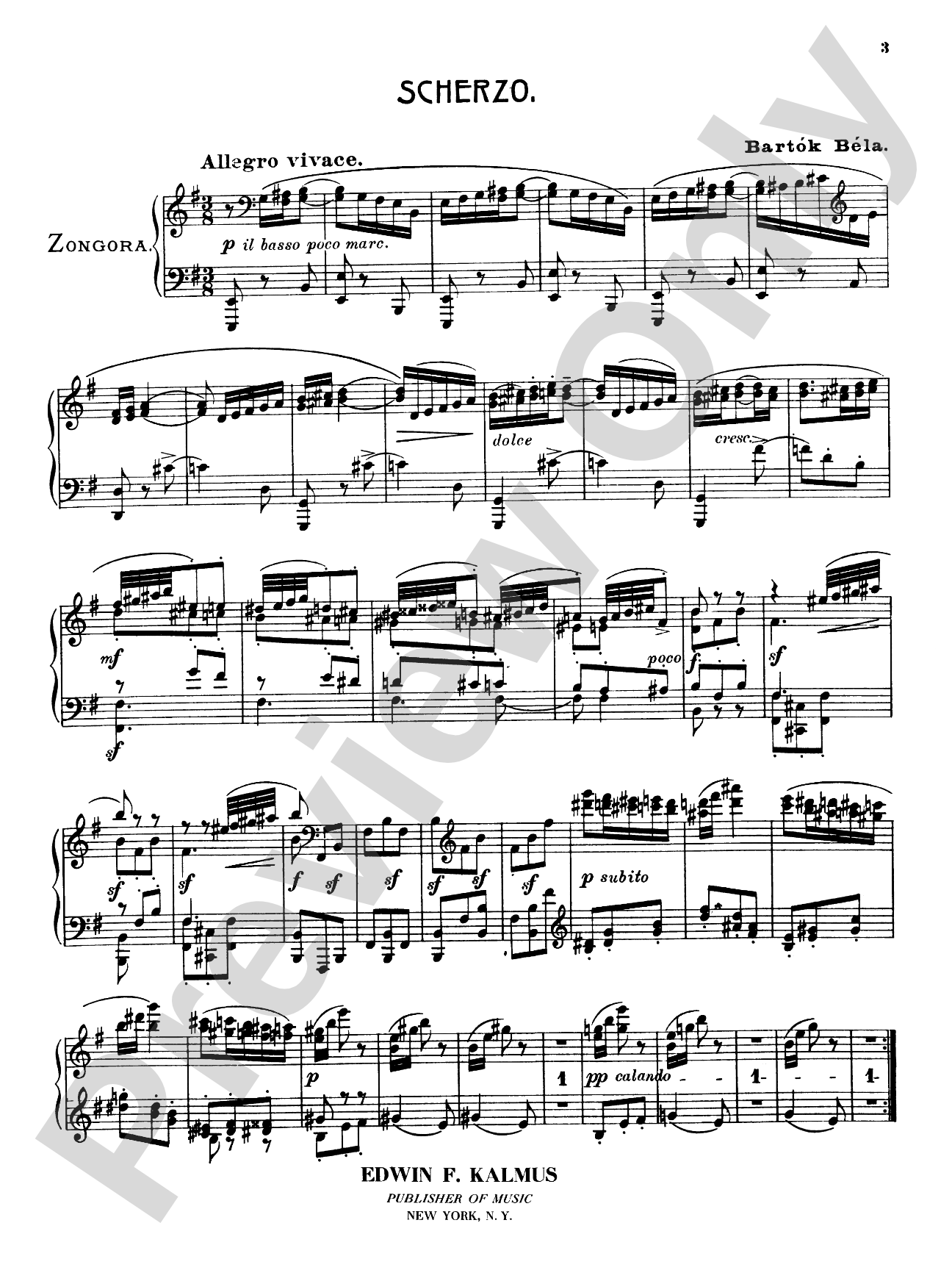
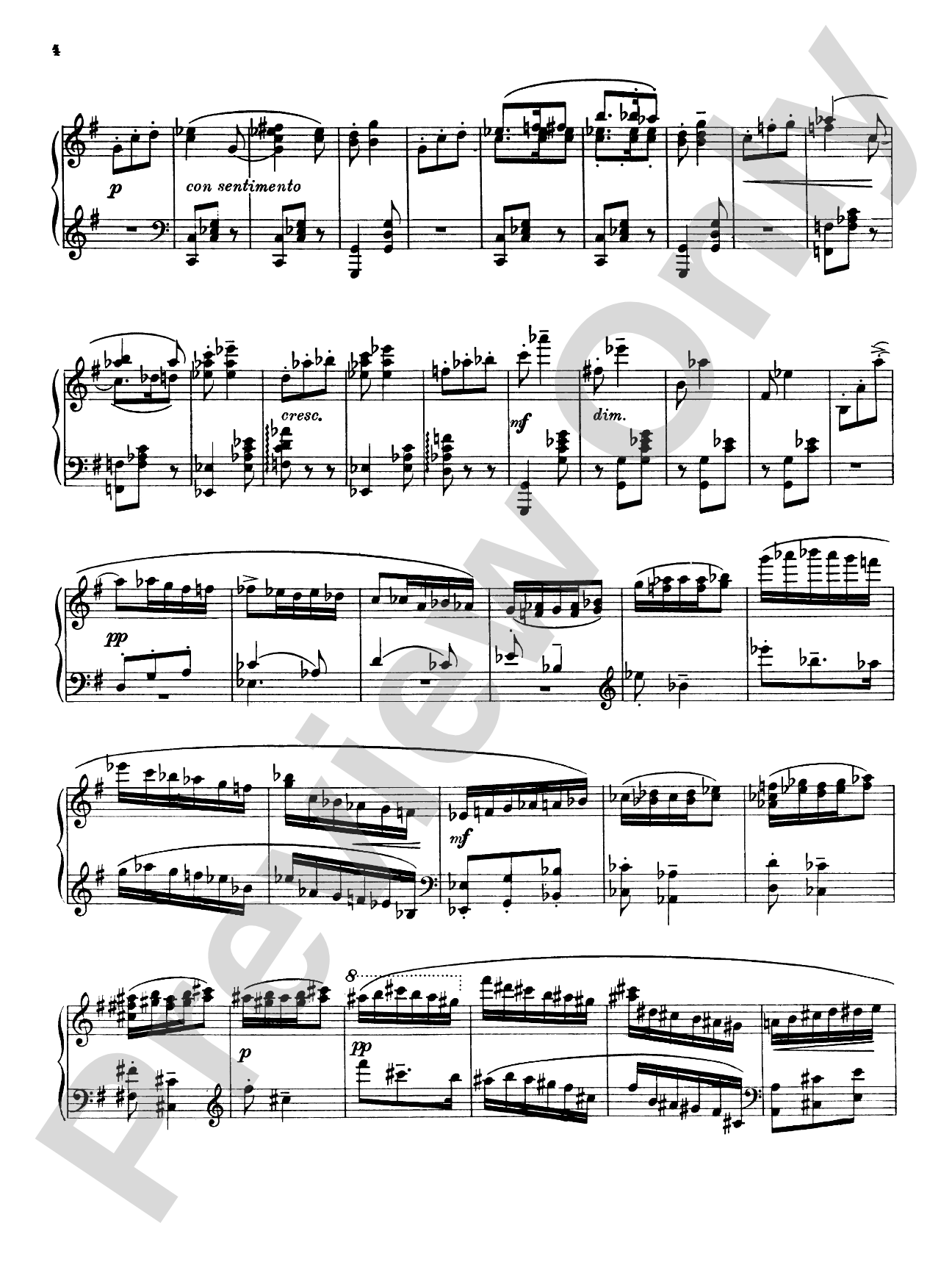
Bartók: Scherzo (Gmunden 1903) Sheet Music Preview

Bartók: Scherzo (Gmunden 1903)

By Béla Bartók

Item: 00-PC-0005093

Digital Download
$5.99
Description
Bela Bartok's Scherzo for piano in E Minor. Allegro vivace.

Don't just read it, hear it, play along with it, and watch your students grow with it. In MakeMusic Cloud, Bartók: Scherzo (Gmunden 1903) comes alive with professional accompaniment, adjustable tempo, and built-in practice tools that turn solo practice into real progress.

Sample Audio
No sample audio found.
Sample Video
Additional Details
Series: Kalmus Edition
Publisher: Alfred Music
Page Count: 20
SKU: 00-PC-0005093

More about this title

About the Composer: Béla Bartók

Béla Bartók (1881-1945) stands as one of the defining voices of twentieth-century music, a composer who bridged the worlds of folk research and modernist composition. His systematic collection of Eastern European folk melodies informed every layer of his musical language, giving his works a rhythmic vitality and harmonic originality that still feels fresh nearly a century later.

Bartók's piano works occupy a central place in his output. From his early Allegro barbaro through his later Mikrokosmos teaching pieces, he demanded that pianists engage with novel techniques, complex rhythms, and unconventional harmonies. He approached the piano not as a vehicle for romantic sentiment alone, but as a laboratory for investigating sound itself.

Why we love this

This Scherzo captures Bartók at a pivotal moment, just before his ethnographic investigations would reshape his entire compositional vocabulary. The writing combines Classical form with biting rhythmic energy and harmonic color that announces a major voice without requiring the listener to abandon melody entirely. It sits perfectly in the repertoire of pianists ready to move beyond Romantic conventions but not yet prepared for his later, more austere works.

What to expect

Mercurial and sharp-edged, this Scherzo skitters across the keyboard with rhythmic wit and surprising harmonic turns. It maintains the lightness and playfulness of the traditional scherzo form while injecting moments of angular intensity that interrupt any sense of comfort, creating a piece that delights in catching the listener off balance.

Who it's for

This work belongs in the hands of pianists who have mastered the standard Romantic and early twentieth-century repertoire and are ready to engage with Bartók's modernist language while still encountering relatively approachable forms. Conservatory students, serious amateur pianists, and recitalists building contemporary repertoire will find both challenge and immediate reward here.

How to get the most out of it

  • Establish a clear metrical pulse from the opening: the Allegro vivace tempo marking demands buoyancy, not breathless speed. Lock into the rhythmic figure and let it carry the piece forward without rushing.
  • Shape the left hand as an equal partner. Bartók often distributes melodic material across both hands; resist the temptation to treat accompaniment figures as mere support.
  • Honor the dynamic contrasts sharply. The sudden shifts from forte to piano demand clean articulation and genuine changes in weight, not just volume.
  • Lean into the folk-inflected passages, where the harmonic language becomes most pungent. These moments benefit from slight agogic freedom, though never at the expense of the underlying pulse.

How to use it

Program this alongside other early twentieth-century piano works to demonstrate how composers were reimagining traditional forms. It pairs naturally with Ravel or Prokofiev from the same period, or serve it as a bridge between Brahms and the more experimental Bartók that audiences encounter later in the recital.

Skills your students will build

  • Navigating twentieth-century harmonic language while maintaining phrase clarity
  • Rhythmic precision in folk-inflected meters and syncopated patterns
  • Balance and voice distribution across both hands in complex textures
  • Dynamic control and articulation in rapid, non-legato passages
  • Interpreting Early Bartók without sacrificing structural integrity

You May Also Like