
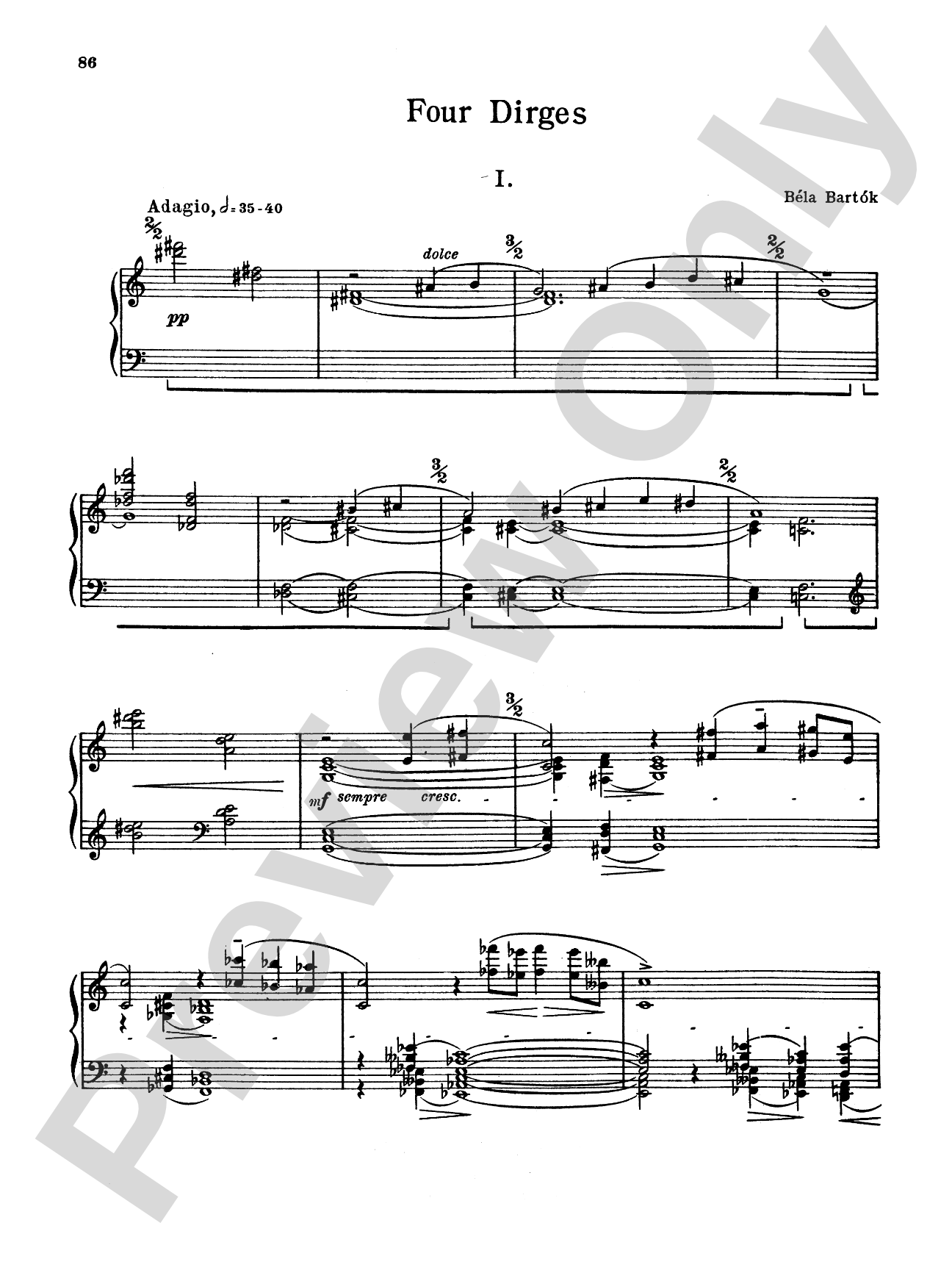
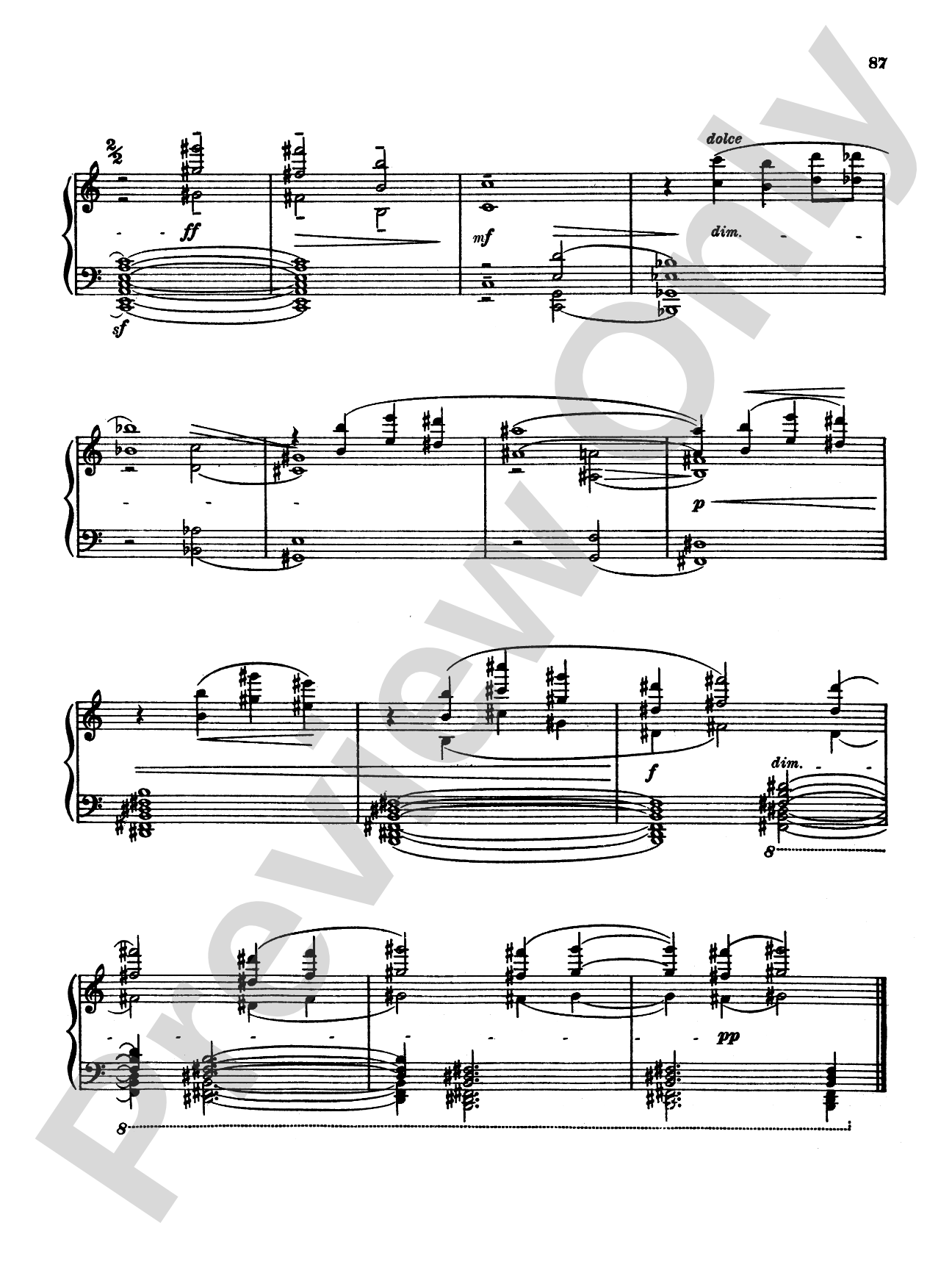

Bartók: Four Nenies, Op. 8: Piano
By Béla Bartók
Item: 00-PK-0002899

$5.99
Pickup currently not available
Buy Extra Parts (Digital PDF Download)
| Product | Price | Quantity |
|---|---|---|
| Bartók: Four Nenies, Op. 8 | $0.99 | |
| Bartók: Four Nenies, Op. 8 | $0.99 | |
| Bartók: Four Nenies, Op. 8 | $0.99 | |
| Bartók: Four Nenies, Op. 8 | $0.99 |
Parts Added to Cart!
Description
Expertly arranged piano solo from our Kalmus Edition.


Don't just read it, hear it, play along with it, and watch your students grow with it. In MakeMusic Cloud, Bartók: Four Nenies, Op. 8: Piano comes alive with professional accompaniment, adjustable tempo, and built-in practice tools that turn solo practice into real progress.
Open in the Player
Jump straight in and assign it today.
Start Your Free Trial
Open this title and explore the full library in minutes.
Sample Audio
No sample audio found.
Sample Video
No sample videos found.
Additional Details
Series:
Kalmus Edition
Publisher:
Alfred Music
Page Count:
12
SKU:
00-PK-0002899
More about this title
About the Composer: Béla Bartók
Béla Bartók (1881-1945) was a Hungarian composer and pianist who fundamentally reshaped twentieth-century music by integrating folk melodies and rhythms from Eastern Europe into modernist compositional techniques. His early works, including the Four Nenies, reveal his fascination with authentic folk material and his willingness to challenge harmonic and formal conventions. Bartók's influence on music education remains profound; his later pedagogical works like Mikrokosmos demonstrated his belief that serious artistic exploration could coexist with accessibility for developing musicians.
Bartók's approach to composition emphasized structural clarity and logical development, even when employing dissonance and unconventional scales. He spent decades collecting and analyzing folk songs across Hungary, Romania, and the Balkans, treating this ethnographic work with the same rigor he applied to concert music. Teachers and pianists value Bartók's output for its combination of intellectual substance and genuine musical expression.
Why we love this
These elegiac, concentrated pieces sit at a perfect intersection of accessibility and substance for advanced pianists. Bartók's Four Nenies demand interpretive sophistication, nuanced pedaling, textural clarity, emotional restraint, without requiring the virtuosic fireworks that can overshadow musical thinking in other contemporary works.
What to expect
The Four Nenies unfold with the spare, direct quality of folk expression filtered through a modernist sensibility. These pieces carry emotional weight without sentimentality, their melodies often modal and their harmonies both surprising and inevitable. The overall effect is introspective and sometimes austere, with moments of stark beauty that reward patient listening.
Who it's for
Advanced pianists preparing a twentieth-century recital program or exploring Bartók's early compositional voice will find this collection essential. Teachers introducing serious students to modernism and folk-influenced writing benefit from having an affordable, reliable score. This work suits conservatory-level study and advanced high school pianists ready to engage with harmonic complexity beyond the Romantic canon.
How to get the most out of it
- Approach the folk-inflected melodies with the same care you would bring to a folk song transcription; clarity of line matters more than decorative pedal.
- Study the harmonic language separately from the melodic line. Bartók's chords often result from voice-leading logic rather than functional harmony, so understanding each voice's independence sharpens your interpretation.
- Allow the modal and pentatonic scales to influence your tone color and phrasing; these melodies often benefit from a cooler, more objective sound than Romantic-era piano writing demands.
- Lock into the rhythmic patterns early. Bartók's meters and accent patterns derive from folk music; precision here grounds the piece's modernist elements.
How to use it
Sequence one or more of these pieces on a recital program alongside other twentieth-century repertoire to establish a coherent artistic statement about modern piano literature. They pair effectively with other nationalist or folk-influenced works, or they can anchor a program exploring Bartók's evolving voice from his early period into maturity. Consider them for a recital themed around Eastern European music or modernism's relationship to tradition.
Skills your students will build
- Reading and performing modal and pentatonic melodic writing
- Interpreting non-functional harmony and voice-leading based chord progressions
- Executing rhythmic patterns derived from folk music idioms
- Balancing modernist dissonance with lyrical expression
- Understanding twentieth-century compositional techniques rooted in ethnographic research