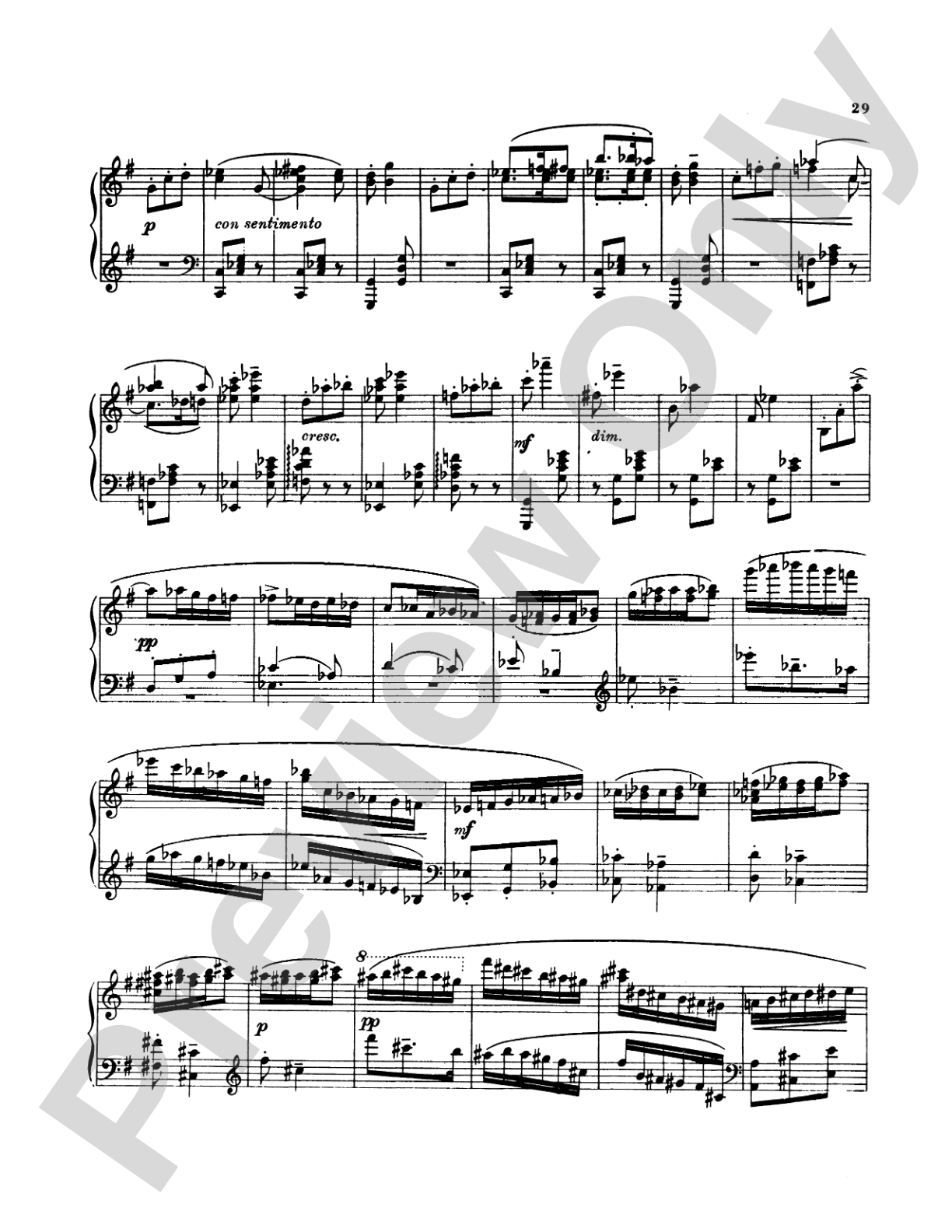
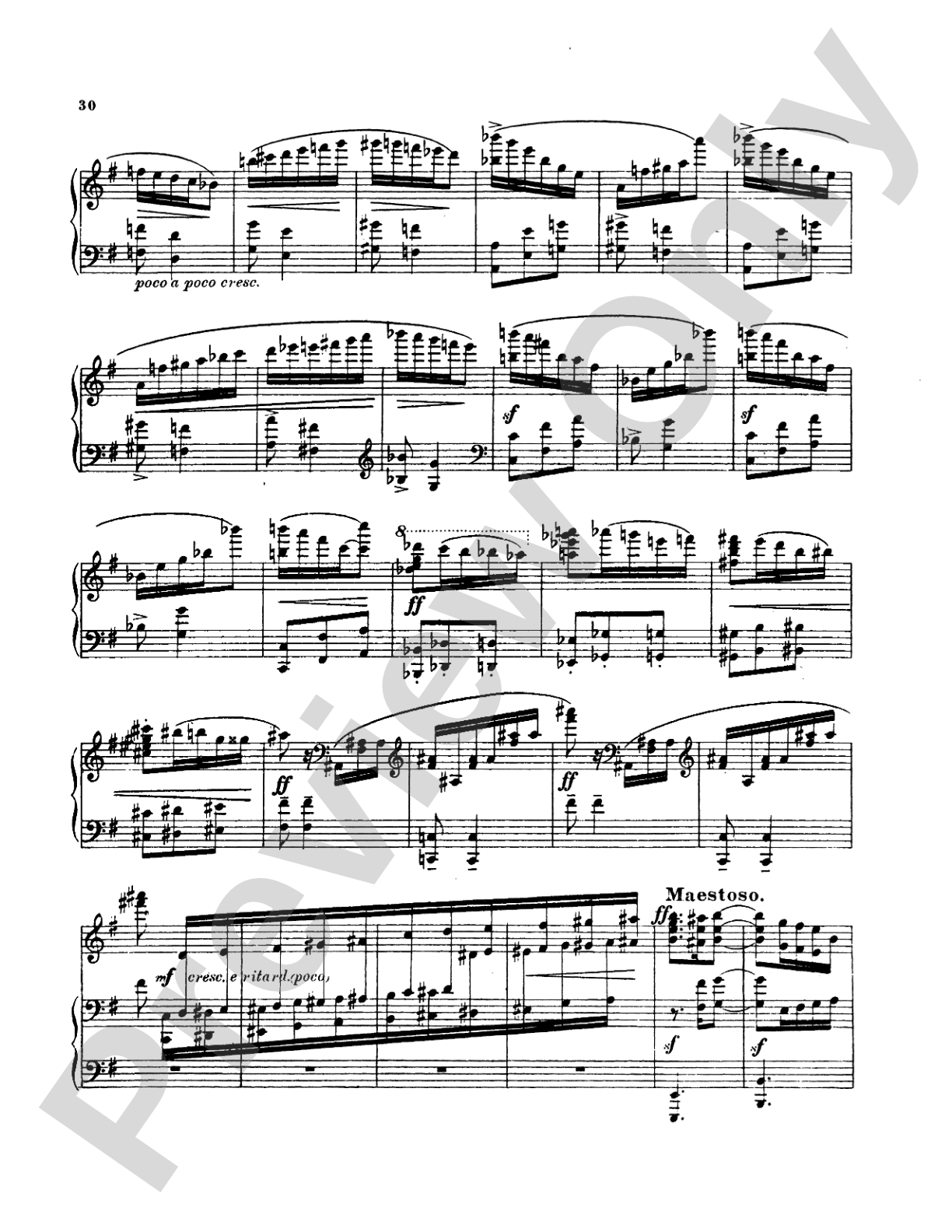
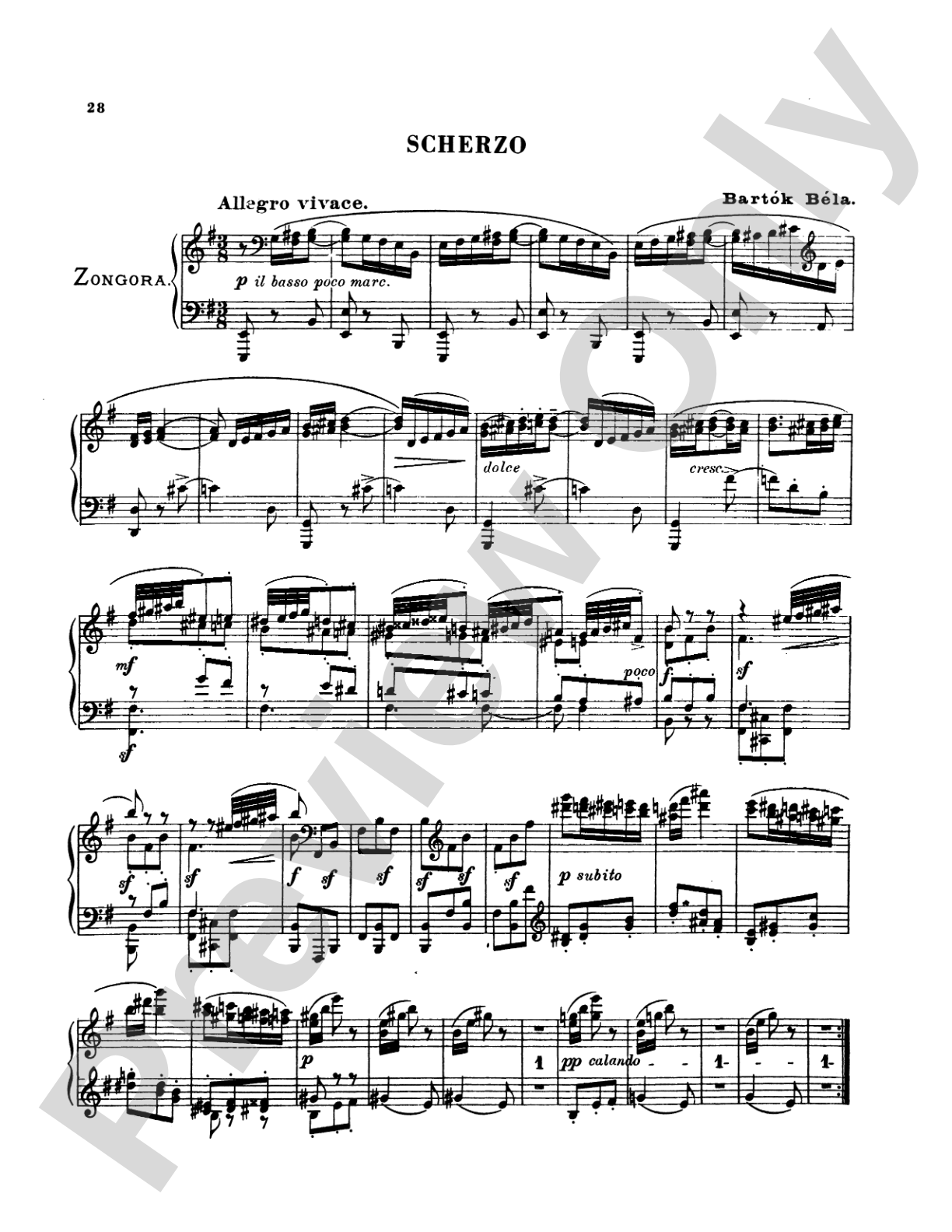
Bartók: Album for Piano Sheet Music Preview

Bartók: Album for Piano

By Béla Bartók

Item: 00-PC-0005031

Digital Download
$0.99
Description
This collection of the piano works of Bela Bartok represents a wide variety of the composer's work. 101 pages. The comb binding creates a lay-flat book that is perfect for study and performance. Includes: 2 Roumanian Dances * 3 Hungarian Folksongs * 14 Bagatelles * Bear Dance * Fantasy (1903) * Scherzo * Sketches Op. 9 * Sonatina.

Don't just read it, hear it, play along with it, and watch your students grow with it. In MakeMusic Cloud, Bartók: Album for Piano comes alive with professional accompaniment, adjustable tempo, and built-in practice tools that turn solo practice into real progress.

Sample Audio
No sample audio found.
Sample Video
Additional Details
Series: Kalmus Edition
Publisher: Alfred Music
Page Count: 104
SKU: 00-PC-0005031

More about this title

About the Composer: Béla Bartók

Béla Bartók (1881–1945) was a Hungarian composer and pianist who fundamentally reshaped twentieth-century music by integrating folk idioms into modernist forms. He conducted extensive field research across Eastern Europe, collecting and analyzing thousands of folk songs, which became the foundation of his compositional language. His work bridges nationalism and internationalism, creating music that sounds both rooted in specific cultures and universally expressive.

For piano students and teachers, Bartók's output spans an extraordinary range. His pedagogical works (particularly the Mikrokosmos) have become standard repertoire for developing technique alongside contemporary musical literacy. The pieces in this album represent his full creative scope, from intimate miniatures to ambitious structures, making them essential for pianists seeking to understand modernism at the keyboard.

Why we love this

This collection captures Bartók's complete vision for solo piano in one volume. The comb binding allows you to study the progression from his early Roumanian Dances and Hungarian Folksongs through the more complex Bagatelles and Sonatina without juggling multiple scores, and the pieces themselves balance accessibility with genuine compositional substance—no filler, no shortcuts.

What to expect

Bartók's piano writing combines the tactile physicality of folk gesture with the harmonic and structural innovations of the twentieth century. You hear authentic dance rhythms and melodic shapes alongside polytonal harmonies and compressed forms that demand intense concentration. The sound is direct, sometimes austere, never decorative.

Who it's for

This album serves pianists with intermediate-advanced technique who are ready to engage with twentieth-century modernism through music that never loses connection to human expression. Teachers can draw individual pieces for students at different levels: simpler folksong arrangements for intermediates, Bagatelles for advanced players building contemporary repertoire.

How to get the most out of it

  • Approach the folk-derived pieces (Roumanian Dances, Hungarian Folksongs) with rhythmic flexibility and ornamentation. Bartók notated these carefully, but they demand a conversational phrasing that honors their origin without sounding stiff.
  • The Bagatelles require clarity of texture and independence of hands. These pieces often distribute melody and accompaniment in unexpected ways; practice each hand separately and listen for balance rather than assuming the top note always dominates.
  • In the Bear Dance and other character pieces, commit fully to the affect Bartók specifies. These aren't subtle works; they benefit from unapologetic tone color and rhythmic conviction.
  • The Sonatina rewards attention to harmonic function beneath the surface dissonance. Mark structural points (first theme, transition, second theme) to shape long-line architecture across the three movements.

How to use it

Program the Roumanian Dances as an intermission piece or late-recital opener; their energy and brevity work well in mixed concert contexts. Reserve the Sonatina for a full-length student or professional recital where you want a substantial three-movement anchor. The Bagatelles function as excellent chamber-recital programming when paired with twentieth-century vocal or instrumental works that share similar aesthetic territory.

Skills your students will build

  • Reading polytonal harmony and twentieth-century pitch organization
  • Rhythmic interpretation of folk-based material with notated ornamentation
  • Balancing transparent textures where melody and accompaniment roles shift across hands
  • Three-movement sonata architecture condensed into modern formal structures
  • Tone production for both percussive and lyrical passages in the same piece

You May Also Like