Baroque Fanfare: String Bass Sheet Music Preview

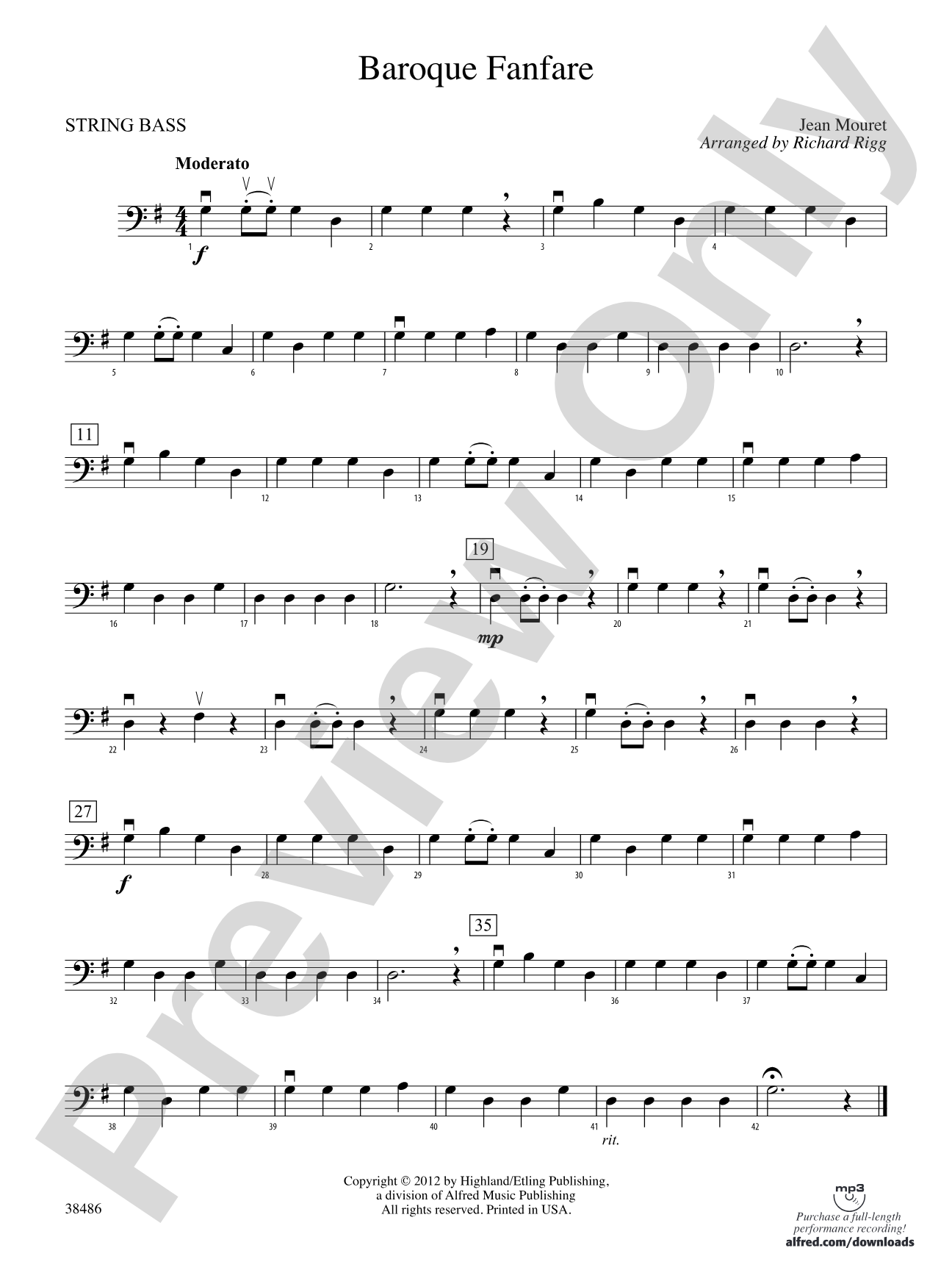
Baroque Fanfare: String Bass

By Jean Mouret / arr. Richard Rigg

Grade: 1

Item: 00-PC-0015534_SB

Digital Download
$5.99
Description
A great festival piece that, while simple, retains an authentic Baroque sound! The melody moves between sections and all sections remain in first position using mainly three strings. Slurs, bow-lifts, double up-bow, and contrasting dynamics provide wonderful technical development in a fabulous setting in the key of G. This title is available in MakeMusic Cloud.

Don't just read it, hear it, play along with it, and watch your students grow with it. In MakeMusic Cloud, Baroque Fanfare: String Bass comes alive with professional accompaniment, adjustable tempo, and built-in practice tools that turn solo practice into real progress.

Sample Audio
0:00
0:00
Sample Video
Additional Details
Series: Highland/Etling String Orchestra
Publisher: Alfred Music
Page Count: 62
SKU: 00-PC-0015534_SB

More about this title

About the Composer: Jean Mouret

Jean Mouret (1682-1738) was a French Baroque composer whose fanfares and instrumental works became staples of French court music. His gift for memorable melodies and orchestral color made him a favorite among ensembles of his era, and his fanfares remain some of the most recognizable baroque instrumental music performed in schools today.

Mouret's style emphasizes clarity, straightforward harmony, and elegant phrasing, qualities that make his works ideal for teaching string technique and musical style. His understanding of what instrumental groups could accomplish with limited means speaks directly to modern music education, where effective repertoire must be both musically rewarding and pedagogically sound.

Why we love this

This arrangement captures authentic Baroque character without overwhelming young players. Richard Rigg's adaptation keeps the melody moving through the ensemble so everyone gets time in the spotlight, while the technical challenges—slurs, bow-lifts, double up-bows, and dynamic contrast—give string players real work to do in a piece that doesn't demand extended position shifts or complicated rhythms.

What to expect

A bright processional with fanfare-like energy, all courtly gestures and spirited momentum. The melody dances from violins to violas to cellos, creating a sense of pageantry and delight that feels both grand and approachable, never heavy or overly complex.

Who it's for

String orchestras at the beginning level who are ready to add style and character to their playing. This works well for groups that have solidified basic posture and bow control and are starting to explore how slurs, articulation, and dynamics shape the musical line.

How to get the most out of it

  • Shape the phrasing by thinking in two-bar or four-bar units rather than note-to-note; let the melody breathe at natural phrase breaks with slight bow lifts and light dynamic release.
  • Lock in the double up-bows cleanly by having the section watch the concertmaster for precision and consistency; isolate these in rehearsal so the articulation feels deliberate, not accidental.
  • Use the dynamic contrast to define form and maintain energy; avoid the trap of playing everything at one volume by planning crescendos and decrescendos that propel the piece forward.
  • Keep first position playing clean and in tune by focusing on left-hand stability and consistent finger placement rather than worrying about fast position changes that aren't needed here.

How to use it

Perfect as a festival opener or a spring concert encore that sends audiences out smiling. It also works beautifully at the beginning of a concert program to set an elegant tone, or paired with other Baroque or Renaissance pieces to create a mini-unit on historical style and period articulation.

Skills your students will build

  • Baroque style and period articulation (slurs, bow-lifts, and contrasting dynamics)
  • Double up-bow technique and control
  • First position intonation and stability across the full string section
  • Passing melodies between instruments (balance, awareness of when to support vs. lead)

You May Also Like