Bang Bang (arr. Frank de Vreeze) Sheet Music Preview

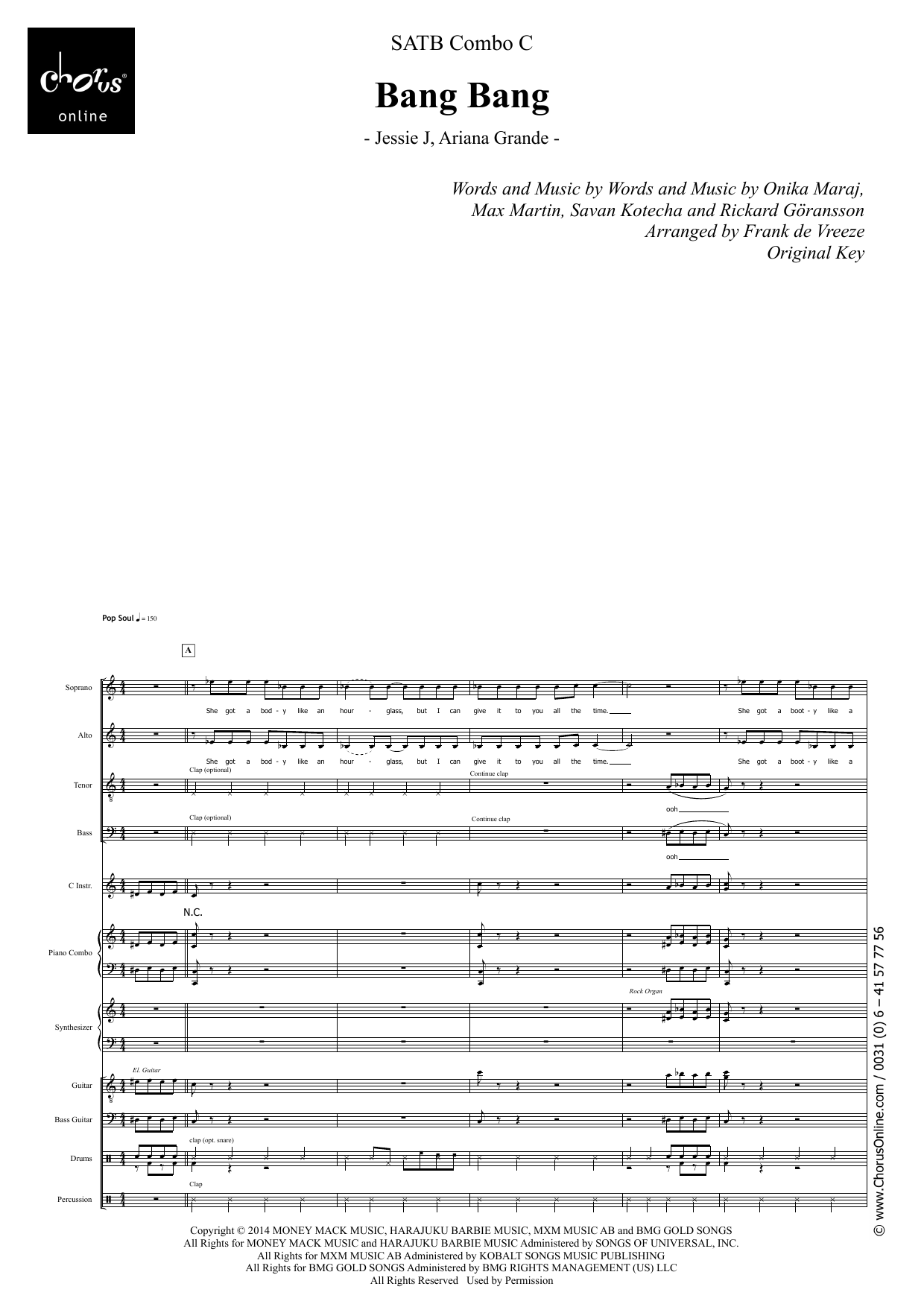
Bang Bang (arr. Frank de Vreeze): SATB Choral Octavo

As performed by Jessie J Ariana Grande / Arranged by Frank de Vreeze

Item: 35-DS01146469

Digital Download
$2.99
Description

Bang Bang (arr. Frank de Vreeze): SATB Choral Octavo isn't in MakeMusic Cloud just yet...but it could be. Let us know you'd like to see it, and you'll help shape what comes next. In the meantime, start a free trial and dive into thousands of interactive titles your students can play along with today.

Sample Audio
No sample audio found.
Sample Video
Additional Details
Publisher: Hal Leonard
Page Count: 11
SKU: 35-DS01146469

More about this title

About the Artist: Jessie J Ariana Grande

Jessie J burst onto the music scene in 2011 with her debut album Who You Are, establishing herself as a powerhouse vocalist with a gift for both introspective ballads and infectious pop anthems. Her influence spans R&B, soul, and pop, and she's known for live performances that showcase genuine vocal range and emotional authenticity. Ariana Grande rose to prominence through Nickelodeon before becoming one of pop's most commercially dominant artists, recognized for her four-octave whistle register and ability to bend and shape melody with remarkable control. Together on "Bang Bang," their 2014 collaboration with Nicki Minaj became a defining moment in pop, blending sharp rhythm with vocal fireworks.

Why we love this

Frank de Vreeze's arrangement captures the infectious energy of the original while making it accessible for mixed choirs without oversimplifying the vocal personality. The arrangement preserves the song's rhythmic swagger and layered vocal textures that make the piece feel contemporary and engaging to singers who grew up with this track. Programming this gives your choir immediate credibility with younger audiences and demonstrates that contemporary pop can be arranged with genuine musical sophistication.

What to expect

Confident and playful, with a swagger that never loses vocal sophistication. The arrangement bounces with the original's rhythmic personality while layering harmonies that feel earned rather than merely decorative. It's the sound of a choir that's equally comfortable in pop idiom and harmonic complexity.

Who it's for

Mixed choirs seeking repertoire that bridges pop sensibility with legitimate vocal writing. Directors building a contemporary season will find this accessible enough for intermediate ensembles while sophisticated enough to interest advanced singers. High school and college choirs performing pop and contemporary music festivals will recognize this as a smart programming choice.

How to get the most out of it

  • Lock the rhythmic precision in the rhythm section before layering upper voices; the groove only lands when soprano and alto lines sit confidently over a rock-solid bass and tenor foundation
  • Emphasize the call-and-response moments between sections, allowing each voice part to claim its own character and letting the dialogue drive the arrangement's forward momentum
  • Capture the original recording's vocal texture by encouraging singers to explore different articulation weights in the rap-influenced passages, creating clarity without sounding stiff
  • Shape phrases toward natural peak moments rather than singing straight through; this piece rewards dynamic storytelling and allows the arrangement's layers to emerge distinctly

How to use it

Pair this with other contemporary pop arrangements in a spring concert focused on current music, or use it as an unexpected closer that sends audiences out energized. It also works well in a program exploring vocal collaboration and ensemble interplay, particularly alongside jazz or musical theater numbers. Consider programming it where you want to showcase your ensemble's range and remind listeners that choral music lives in multiple genres.

Skills your students will build

  • Rhythmic precision in hip-hop and syncopated pop idioms
  • Call-and-response singing and sectional independence
  • Contemporary vocal articulation and groove sensitivity
  • Layered texture management across four parts
  • Interpretation of recorded arrangements and stylistic authenticity

You May Also Like