

Balbastre: Noels, Volume I: Organ Book
By Claude Balbastre
Item: 00-PK-0002888

$8.99
Pickup currently not available
Buy Extra Parts (Digital PDF Download)
| Product | Price | Quantity |
|---|---|---|
| Balbastre: Noels, Volume I | $0.99 | |
| Balbastre: Noels, Volume I | $0.99 | |
| Balbastre: Noels, Volume I | $0.99 | |
| Balbastre: Noels, Volume I | $0.99 | |
| Balbastre: Noels, Volume I | $0.99 | |
| Balbastre: Noels, Volume I | $0.99 | |
| Balbastre: Noels, Volume I | $0.99 |
Parts Added to Cart!
Related Items
Noels, Volume I: Organ Book |
$8.95
|
View |
Description
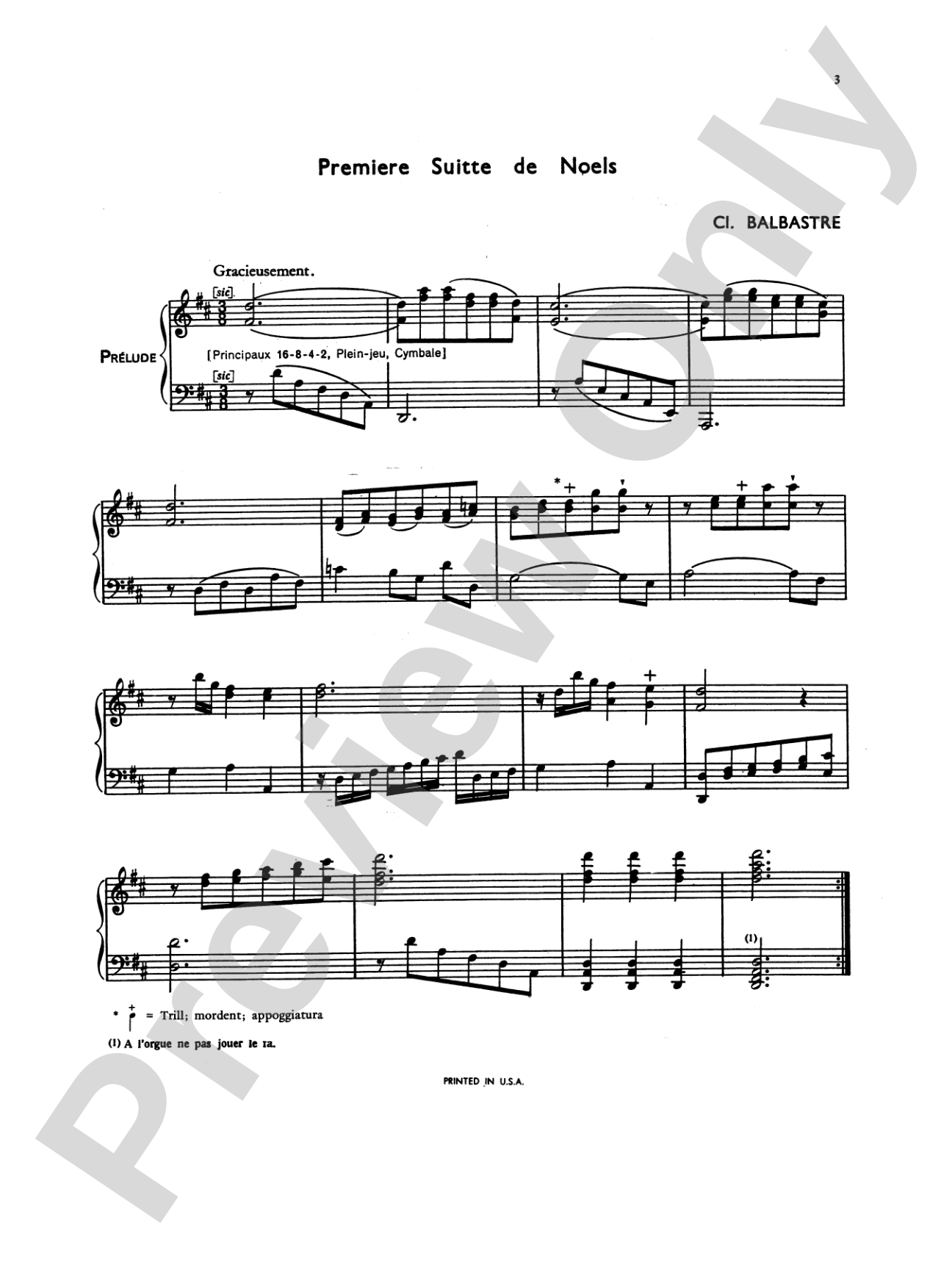
Titles: Premiere Suite de Noels * A la Venue de Noel * Joseph est bien Marié * Ah ma Voisine es tu fachée * Tous les Bourgeois de Châtres * Quand Jesus naquit à Noel


Don't just read it, hear it, play along with it, and watch your students grow with it. In MakeMusic Cloud, Balbastre: Noels, Volume I: Organ Book comes alive with professional accompaniment, adjustable tempo, and built-in practice tools that turn solo practice into real progress.
Open in the Player
Jump straight in and assign it today.
Start Your Free Trial
Open this title and explore the full library in minutes.
Sample Audio
No sample audio found.
Sample Video
No sample videos found.
Additional Details
Series:
Kalmus Edition
Publisher:
Alfred Music
Page Count:
24
SKU:
00-PK-0002888
More about this title
About the Composer: Claude Balbastre
Claude Balbastre (1724-1799) was a French organist and composer who shaped the sound of Parisian church music during the late 18th century. He served as organist at the Chapelle Royale and held prestigious positions at major Parisian churches, where he composed extensively for the organ. His Noels (Christmas variations on popular melodies) represent a vital tradition in French organ literature, blending virtuosity with accessibility and helping define the repertoire that organists still perform today.
Why we love this
Balbastre's Noels offer organists a collection rooted in genuine French tradition rather than later Romantic interpretations of Christmas music. These pieces sit perfectly at the intersection of technical interest and liturgical function, giving your program an authoritatively historical voice while remaining rewarding to play and hear. The melodies are instantly recognizable to any congregation familiar with classic carols, yet the harmonic language and ornamental treatment feel fresh and sophisticated.
What to expect
These variations sparkle with elegance and restraint, treating well-loved carol tunes as vehicles for harmonic exploration and decorative counterpoint. The writing often feels intimate and conversational, with moments of gentle humor and surprise harmonic turns that catch the ear without overwhelming the familiar melodies. There is warmth here, but it emerges through craft and clarity rather than romantic sentiment.
Who it's for
Organists comfortable with Classical-era keyboard music and ready to explore French repertoire will find these pieces both musically rewarding and liturgically useful. Church musicians planning Christmas services will appreciate the direct connection to carol melodies and the range of moods across the collection. Advanced students of organ repertoire benefit from exposure to an important national tradition and the technical demands Balbastre places on both hands and feet.
How to get the most out of it
- Observe the character markings and articulation carefully; Balbastre's use of staccato and legato serves both textural variety and the clarity of the underlying tune
- Balance the melody against accompaniment figures by adjusting registration thoughtfully rather than relying on dynamic control alone
- Shape phrases with attention to the harmonic rhythm, which often moves more quickly than the surface melody might suggest
- Practice registration changes in advance so transitions between movements feel seamless and intentional
How to use it
Program one or more Noel movements as part of a Christmas Eve service or a secular holiday concert to anchor the program in authentic period practice. The individual variations work well as processional or recessional music, or you might sequence several movements to create a longer suite that showcases the breadth of Balbastre's invention. Pairing this collection with other French organ music from the same period strengthens the historical and stylistic context.
Skills your students will build
- Handling ornaments and decorative figuration in the Classical style
- Registration technique and timbre control on the organ
- Interpretation of French harpsichord and organ notation conventions
- Maintaining formal structure while varying surface material
- Coordination of independent melodic lines between hands and pedals