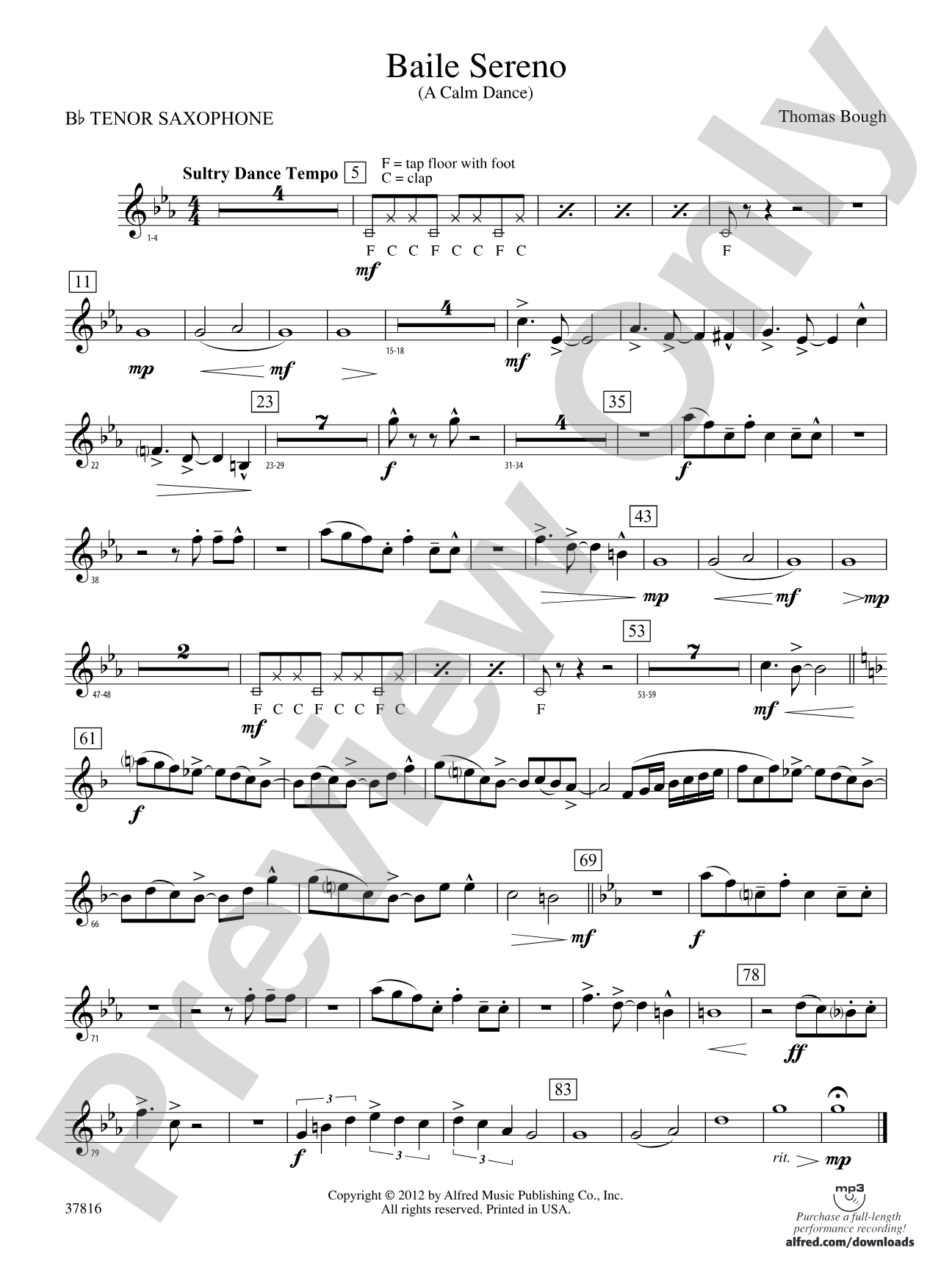
Baile Sereno: B-flat Tenor Saxophone Sheet Music Preview

Baile Sereno: B-flat Tenor Saxophone

By Thomas Bough

Grade: 2.5 (Medium Easy)

Item: 00-PC-0015346_TX1

Digital Download
$3.00
Description
Beginning as a stately Latin dance which builds into a vibrant celebration, all performers get involved and set the mood by combining foot taps and clapping to produce a memorable start to this piece. Carefully notated percussion parts contribute authentic sounds and provide students an opportunity to play congas, bongos, and timbales using traditional notation. Performers and audiences alike will enjoy the multicultural content and the emotional rise and fall of this engaging composition.

Don't just read it, hear it, play along with it, and watch your students grow with it. In MakeMusic Cloud, Baile Sereno: B-flat Tenor Saxophone comes alive with professional accompaniment, adjustable tempo, and built-in practice tools that turn solo practice into real progress.

Sample Audio
0:00
0:00
Sample Video
Additional Details
Series: Young Symphonic
Publisher: Alfred Music
Page Count: 198
SKU: 00-PC-0015346_TX1

More about this title

Why we love this

Bough gives every section genuine musical work here, not just rhythmic filler. The integration of body percussion and authentic percussion writing transforms a standard Latin chart into something students will remember performing, and the emotional arc from stately opening to full celebration rewards both ensemble and audience.

What to expect

The piece opens with restrained elegance, inviting the ensemble into a rhythmic conversation through hand and foot sounds before blossoming into infectious, joyful motion. Throughout, the writing maintains clarity and genuine musical purpose, never sacrificing substance for the novelty of its percussive elements.

Who it's for

This score works well for Grade 2.5 bands seeking multicultural repertoire that engages the entire ensemble without requiring advanced technical facility. Directors looking to build percussion section confidence and add body percussion to their toolkit will find this piece both accessible and musically satisfying.

How to get the most out of it

  • Establish the foot taps and clapping with precision during early rehearsals; lock this foundation before layering instrumental parts, as the ensemble ensemble will use it as their temporal anchor throughout.
  • Have percussionists practice their conga, bongo, and timbale figures separately from the full score to internalize the authentic rhythmic feels before integrating them with winds and brass.
  • Shape the dynamic rise deliberately across the form; resist the impulse to jump to full volume too quickly, which will rob the later climactic moments of their impact.
  • Bring a recorded reference of authentic Latin percussion if possible; even a brief listen in rehearsal helps students hear what the traditional sounds should feel like in context.

How to use it

Position this as a mid-concert energizer that gives the audience a tangible way to feel included through the ensemble's rhythmic interplay. It serves equally well as a concert opener that establishes an upbeat, accessible tone for the program.

Skills your students will build

  • Reading and performing Latin rhythmic patterns with precision
  • Coordinating body percussion (foot taps and clapping) while playing instruments
  • Playing conga, bongo, and timbales using traditional notation and technique
  • Shaping dynamic arcs across multi-section forms
  • Understanding and performing in multicultural musical contexts

You May Also Like