Bagatelle: Violoncello Sheet Music Preview

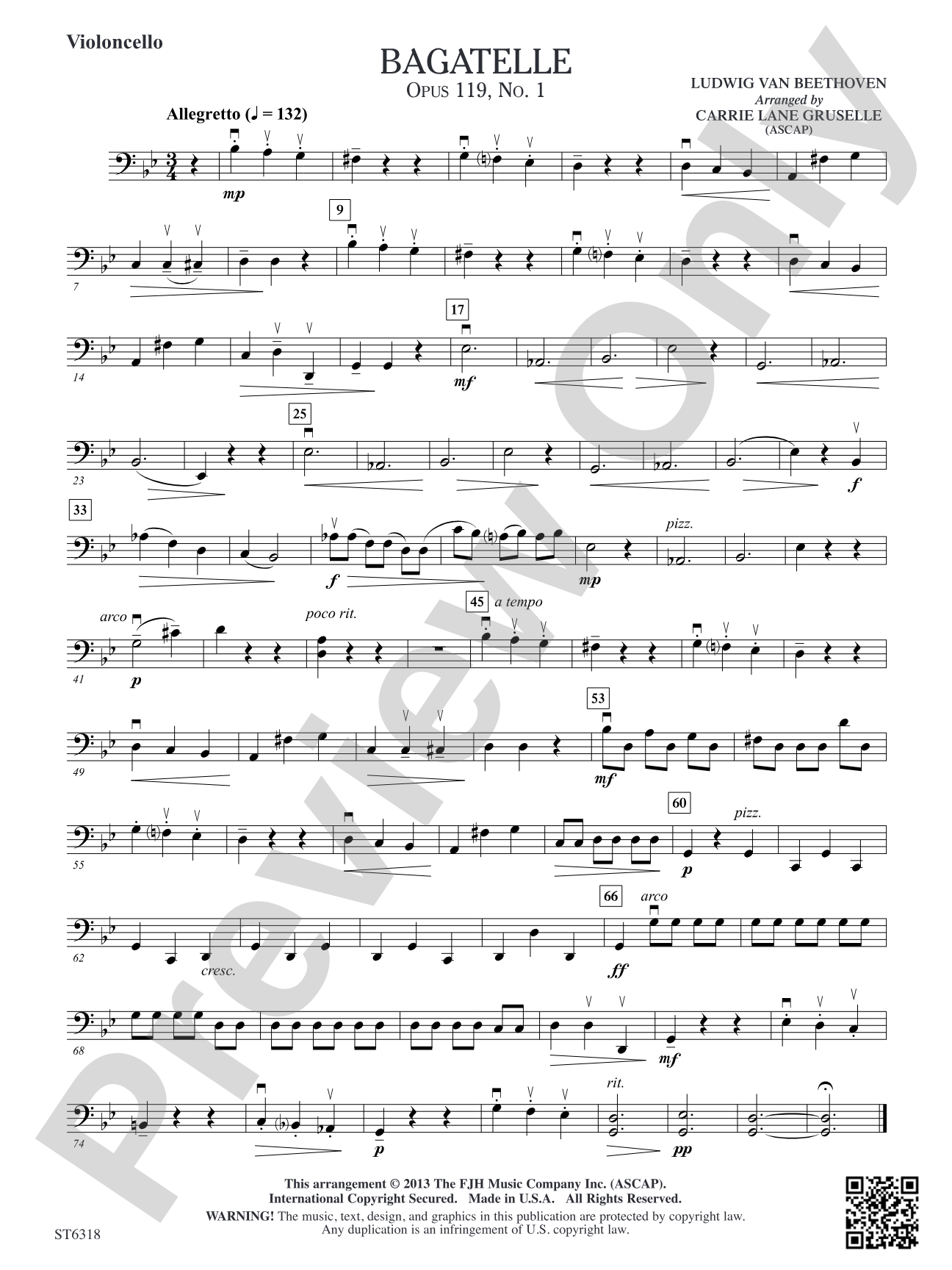
Bagatelle: Violoncello

By Ludwig van Beethoven / arr. Carrie Lane Gruselle

Grade: 3

Item: 98-PC-DST6318_VC1

Digital Download
$7.00
Description
The grace and simplicity of the bagatelle (light character piece) meets the intensity and passion of Beethoven in this arrangement for strings. Elegant articulations, light dynamics and fluid, soaring melodies shift to powerful driving eighth notes before a return to the quiet simplicity of the opening. A great way to feature a different side of Beethoven!

Don't just read it, hear it, play along with it, and watch your students grow with it. In MakeMusic Cloud, Bagatelle: Violoncello comes alive with professional accompaniment, adjustable tempo, and built-in practice tools that turn solo practice into real progress.

Sample Audio
0:00
0:00
Sample Video
Additional Details
Series: FJH String Orchestra
Publisher: The FJH Music Company, Inc.
SKU: 98-PC-DST6318_VC1

More about this title

About the Composer: Ludwig van Beethoven

Ludwig van Beethoven (1770–1827) stands as the pivotal figure who bridged Classical and Romantic music, expanding the expressive range and structural possibilities of every genre he touched. His innovations in harmony, orchestration, and formal development set the trajectory for nineteenth-century music and remain central to the string orchestra repertoire.

Beyond his symphonies and concertos, Beethoven's smaller works reveal a master craftsperson at play. His bagatelles showcase his gift for economy of material and emotional directness, proving that profound musical statements need not require grand scale.

Why we love this

This arrangement gives orchestras access to authentic Beethoven writing without the demands of a full symphony, and the contrast between delicate opening material and the driving rhythmic section creates genuine dramatic shape. Carrie Lane Gruselle's orchestration honors Beethoven's voice while making the piece sit perfectly under student hands at the Grade 3 level.

What to expect

The opening unfolds with quiet grace, almost tentative, as if Beethoven is gently introducing a musical thought. Then energy gathers; the driving eighth notes pulse forward with unexpected intensity and purpose. When the opening returns, it carries the memory of what came before, landing softer and more reflective than it began.

Who it's for

String orchestras at Grade 3 level preparing for festival or contest performance, as well as conductors seeking to program a Beethoven work that builds musicianship without overwhelming younger players. This arrangement works equally well for schools building their fall concert repertoire or ensembles looking to deepen their understanding of Classical-era compositional technique.

How to get the most out of it

  • Shape the opening melody with a singing bow stroke; the elegance of a bagatelle depends on lyrical phrasing, not surface perfection. Let the phrase breathe.
  • The shift to driving eighth notes requires unified articulation across all sections. Rehearse this transition in isolation until the rhythmic propulsion feels inevitable, not abrupt.
  • Balance the return to the opening with restraint. Avoid the temptation to rush back to familiar material; let it land with quiet authority.
  • Support soloists who may carry the melody by asking accompanying voices to listen actively. The dynamic shifts from light to powerful demand ensemble awareness.

How to use it

Position this as a contrasting piece alongside larger ensemble works or more dramatic repertoire, where its refined simplicity and compact form offer a change of pace. It also serves as an effective pedagogical bridge for orchestras encountering Beethoven for the first time, introducing his voice and harmonic language before tackling a full symphony.

Skills your students will build

  • Phrasing in Classical style with attention to articulation and weight
  • Dynamic contrast between sustained, delicate textures and rhythmically driven passages
  • Unified articulation in rapid string figures
  • Listening and balance within an ensemble, particularly when melody and accompaniment shift between sections
  • Recognizing and executing transitions between contrasting material

You May Also Like