
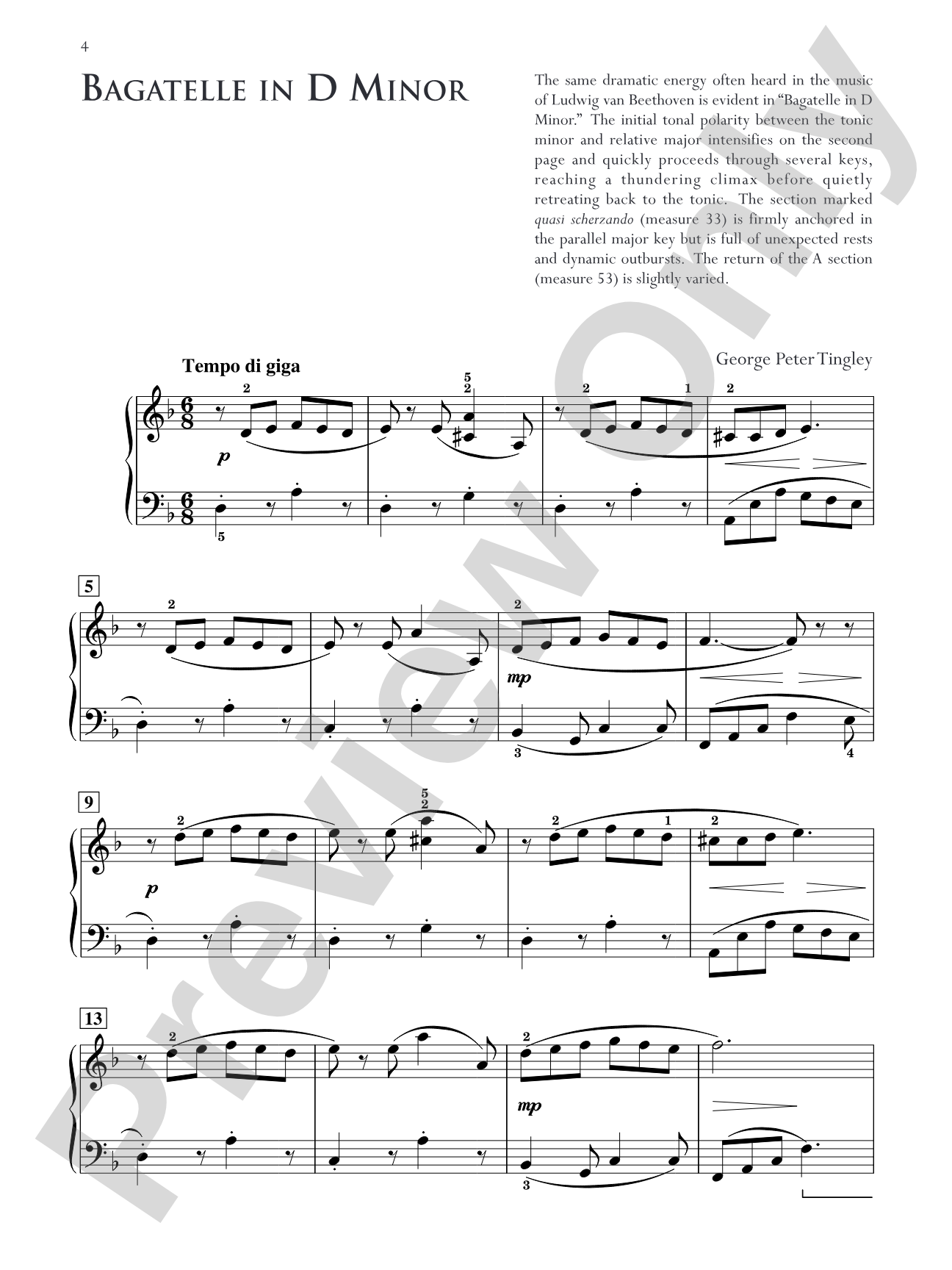

Bagatelle in D Minor: Piano
7 Intermediate to Late Intermediate Piano Solos That Reflect and Celebrate Styles of Past Masters
By George Peter Tingley
Level: Intermediate / Late Intermediate
Item: 00-PS-0016689
$4.99
Pickup currently not available
Description
Reflect and celebrate the styles of past masters with these pieces ranging from early to late intermediate in level. One might hear echoes of such composers as Beethoven, Tchaikovsky and sounds suggestive of European folk music. Program notes are included explaining the construction of the solos and specific influences.


Bagatelle in D Minor: Piano isn't in MakeMusic Cloud just yet...but it could be. Let us know you'd like to see it, and you'll help shape what comes next. In the meantime, start a free trial and dive into thousands of interactive titles your students can play along with today.
Request This Title
Tell us you want it.
Start Your Free Trial
Explore everything that's ready to play right now.
Sample Audio
No sample audio found.
Sample Video
No sample videos found.
Additional Details
Publisher:
Alfred Music
Page Count:
24
SKU:
00-PS-0016689
More about this title
About the Composer: George Peter Tingley
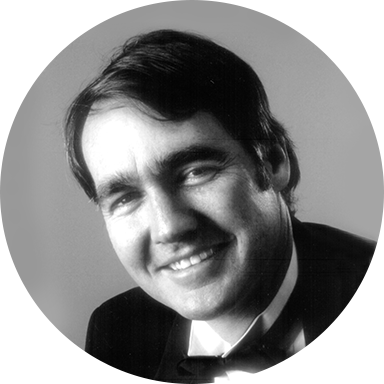
George Peter Tingley grew up in Oakland, California, where he began violin at four and picked up piano at ten. He pursued formal training at California State University, Hayward (Bachelor of Arts in Piano Performance) and the University of Southern California (Bachelor and Master of Music degrees in Music Theory). During the 1970s, he studied composition privately with Nadia Boulanger in Paris, an education that shaped his approach to form and harmonic language.
After returning to the United States, Tingley established himself as a private piano teacher and composer for the educational market. He has published over 75 piano pieces, including the widely performed Reverie and Fiddle and the Tuba, a piano duet collection recognized by the National Federation of Music Clubs. His work extends beyond the concert stage: in 1992 he composed Kristi's Theme for Olympic figure-skating champion Kristi Yamaguchi, which was arranged for full orchestra and recorded with Tingley as soloist. He continues to live and work in Point Richmond, California.
Why we love this
Tingley writes music that teaches without sounding didactic. This collection captures genuine compositional craft at an intermediate level, drawing inspiration from recognizable musical traditions without pastiche. The included program notes show students exactly how composers build pieces and what to listen for, making these pieces a window into compositional thinking as much as performance repertoire.
What to expect
These pieces breathe with the confidence of someone who knows his craft. Echoes of Beethoven and Tchaikovsky surface naturally within Tingley's own voice, and folk melody occasionally surfaces in unexpected harmonic contexts. The collection invites reflection: these are pieces meant to be lived with, not conquered.
Who it's for
Intermediate to late intermediate pianists ready to engage with pieces that reference established musical traditions. Students benefit from the program notes that explain construction and influences, making this collection valuable for pianists beginning to understand how composers draw inspiration and structure ideas.
How to get the most out of it
- Study the program notes before beginning technical work; understanding the compositional gesture and its historical reference will shape your interpretation and make the piece feel coherent rather than episodic.
- Pay careful attention to voice leading within the texture. These pieces echo Romantic and Classical models, so inner voices matter as much as the melody.
- Approach the folk music references with rhythmic clarity and character. European folk idioms require precision in articulation and phrasing, not looseness.
How to use it
Program individual pieces as recital selections that appeal to audiences familiar with the Classical and Romantic repertoire. The collection works equally well as a teaching resource, pairing each piece with its program notes as students develop stronger listening and analytical skills.
Skills your students will build
- Stylistic awareness of Classical and Romantic harmonic language
- Phrase structure and formal coherence across short solo forms
- Voice leading and inner texture awareness
- Interpretation of folk-influenced melodic material
- Connection between historical reference and personal compositional voice