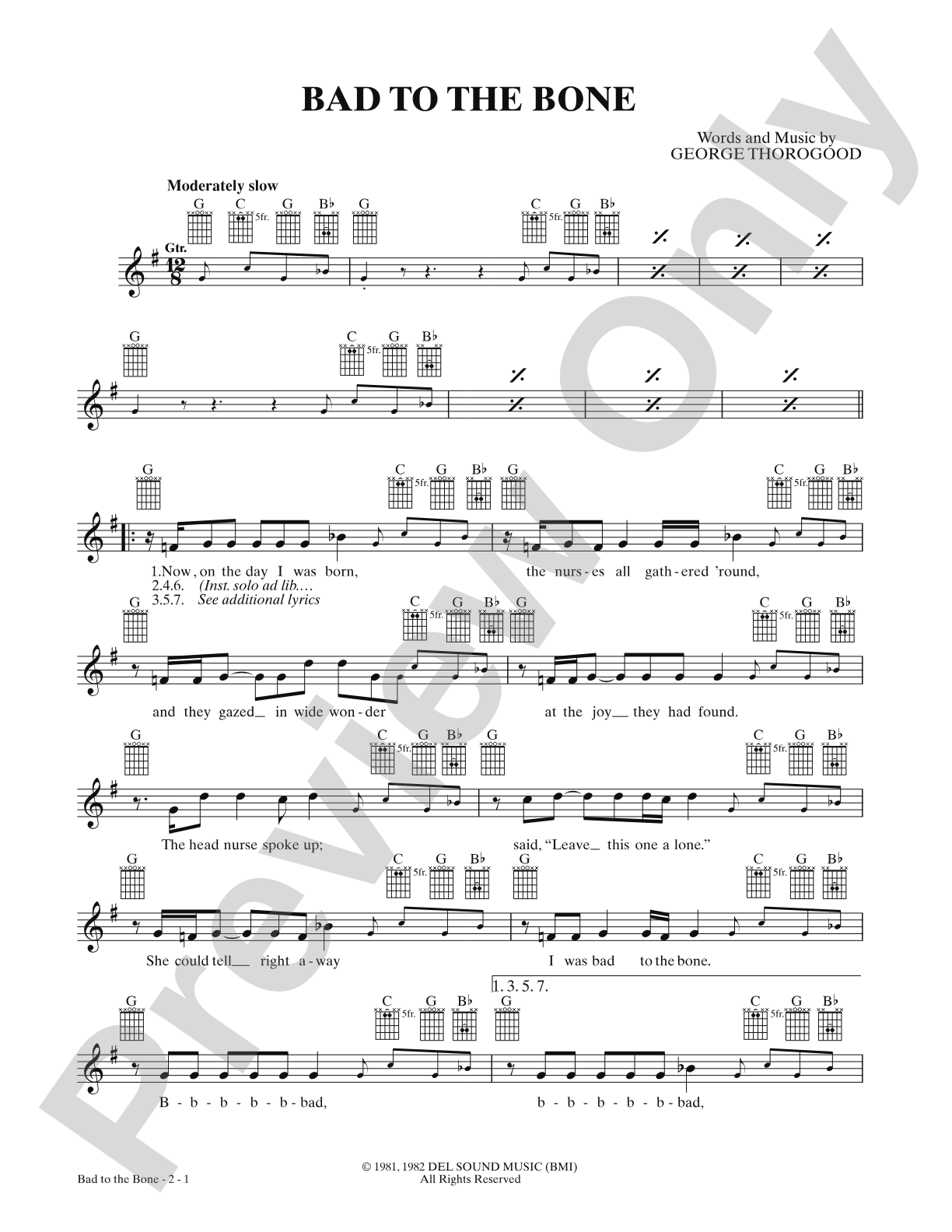
George Thorogood burst onto the blues-rock scene in the mid-1970s with an unmistakable swagger and a stripped-down guitar style that proved you didn't need complexity to move a crowd. Born in Delaware in 1950, he absorbed the raw energy of earlier blues giants like John Lee Hooker and Elmore James, then channeled that influence through his own aggressive, rhythmically driven approach. His breakthrough came with the 1977 album "Move It On Over," but "Bad to the Bone" (1982) cemented his place in rock history, delivering stadium-filling anthems that blend blues fundamentals with rock attitude.
Thorogood's playing is deceptively straightforward. He builds entire songs around tight, repetitive riffs and thick power chords, proving that economy of notes and relentless groove can be more powerful than technical virtuosity. His live performances are legendary for their energy and his ability to engage an audience, making him a fixture of rock radio and concert stages for nearly five decades.