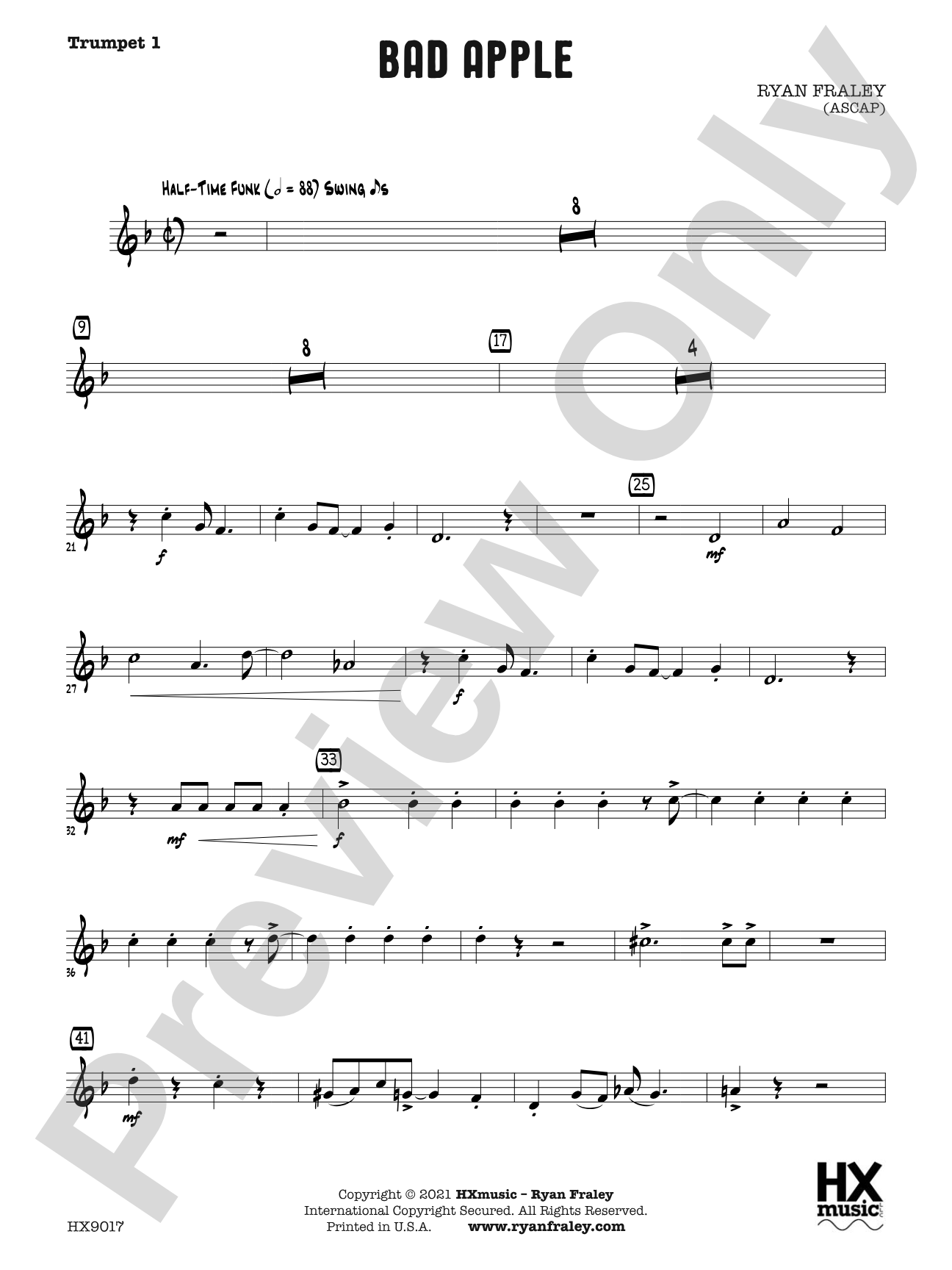
Let the rhythm section lay down an earthy groove in half-time funk. The horns ride along with a bluesy melody that builds to a great stop-time. Modest ranges all around with reduced instrumentation (3 Saxes, 2 Trumpets, 1 Bone) keep it within reach of smaller groups, while extra parts for Flute, Clarinet, Horn, Baritone T.C., and Tuba add flexibility. Solo transcriptions are provided that match the recording, along with easier versions of those solos to give younger players a starting point. A hip, fun, and memorable chart. (Top Trumpet Note: D5)
Discover MakeMusic Cloud: thousands of interactive titles your students can play along with today.
Ryan Fraley has written an arrangement that respects what makes funk and blues engaging: the pocket. Rather than overcomplicating the harmony or requiring stretched ranges, he lets the groove breathe and gives soloists room to express themselves. The included solo transcriptions paired with simplified versions mean your section can learn from the recording while still feeling prepared to tackle the chart, no matter their experience.
What to expect
Bad Apple is earthy and unforced. The half-time funk groove sits in your bones rather than demands technical flashiness, and the bluesy melody carries the kind of swagger that makes musicians want to find their own voice within it. When the stop-time hits, the space opens up and reminds everyone why they chose jazz in the first place.
Who it's for
Smaller jazz ensembles and groups just building their instrumentation will appreciate the modest core ensemble (3 saxes, 2 trumpets, 1 trombone) paired with the flexibility to add flute, clarinet, horn, baritone, and tuba as your roster grows. This works equally well for Grade 1.5 groups wanting accessible material with character as for younger high school players learning to navigate jazz comping and blues phrasing.
How to get the most out of it
Lock the half-time feel in your rhythm section first. The groove lives in how the drums and bass communicate that pocket, not in rushing the front line.
Have soloists listen repeatedly to the provided transcriptions before attempting the easier versions. Hearing the phrasing and attitude matters more than reading the notes cleanly.
Build the stop-time section deliberately. This moment needs contrast to land, so pull back the dynamics in the measures leading up to it.
Let the bluesy melody breathe. These kinds of melodies live in their space and timing, not in mechanical precision.
How to use it
Program this as a standalone feature for a spring concert or festival set where you want to showcase your ensemble's ability to swing and groove without heavy classical lifting. It also pairs naturally with other blues-based charts or modern pieces where you want to establish a cohesive vibe across a set.
Skills your students will build
Reading and executing half-time funk grooves
Phrasing and interpretation in blues-inflected melodies
Stop-time ensemble synchronization
Jazz comping and soloing with transcription models
Listening and responding to rhythm section pocket
You May Also Like
Scan to Complete Your Purchase
Use your phone's camera to scan the code below
You'll log in on your phone and the order will be added to your account