
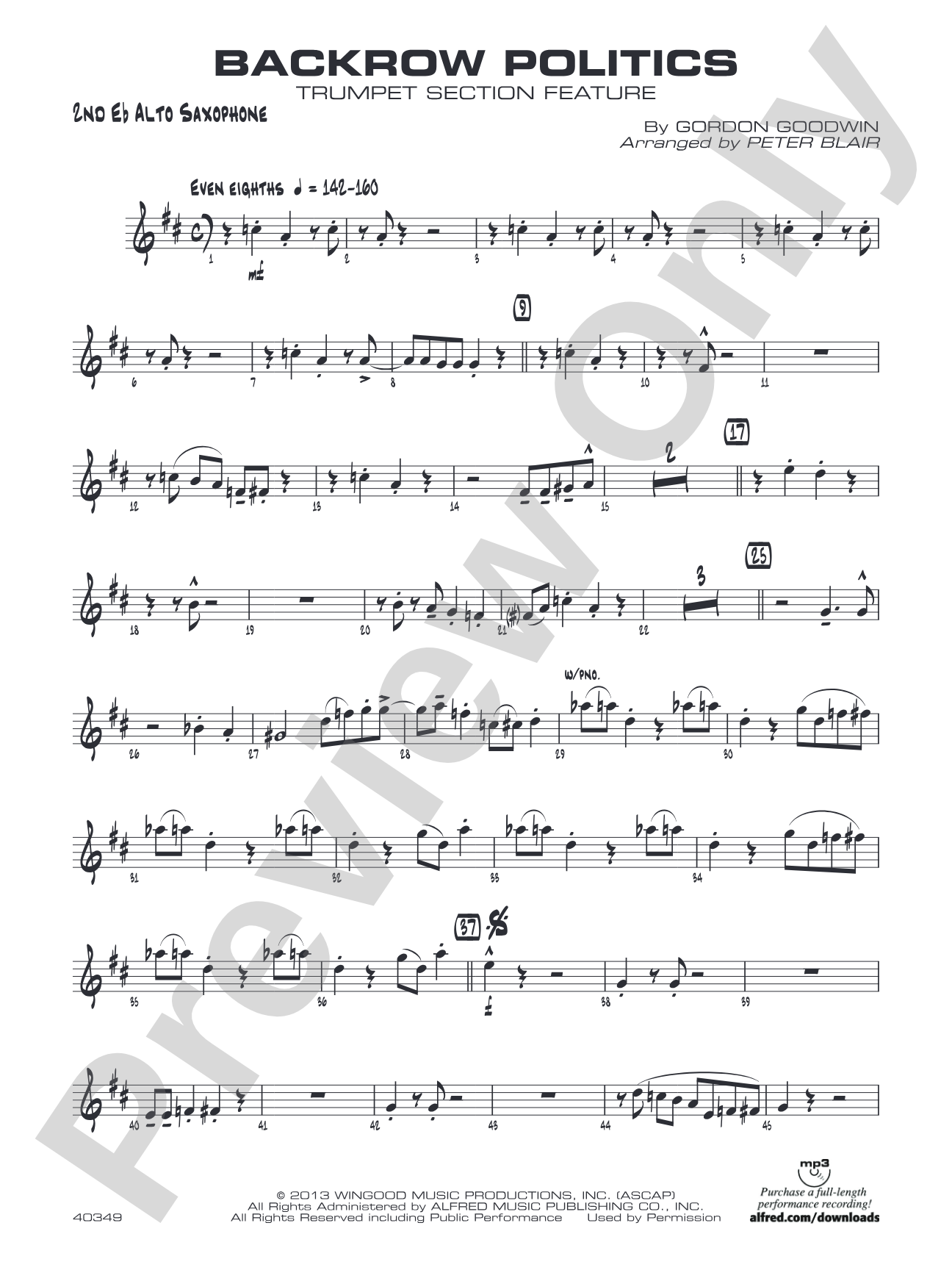

Backrow Politics: 2nd E-flat Alto Saxophone
Trumpet Section Feature
By Gordon Goodwin / arr. Peter Blair
Grade: 2 (Medium Easy)
Item: 00-PC-0017250_AX2
$3.00
Pickup currently not available
Description
A trumpet section feature with a straight-eighth groove. This chart was adapted for young players from Gordon Goodwin's Big Phat Band chart and it sizzles, yet is accessible. Available written trumpet solos for all four parts and the 1st trumpet range to written G on top of the staff. An exciting chart for sure! (4:23) This title is available in MakeMusic Cloud.


Don't just read it, hear it, play along with it, and watch your students grow with it. In MakeMusic Cloud, Backrow Politics: 2nd E-flat Alto Saxophone comes alive with professional accompaniment, adjustable tempo, and built-in practice tools that turn solo practice into real progress.
Open in the Player
Jump straight in and assign it today.
Start Your Free Trial
Open this title and explore the full library in minutes.
Sample Audio
1
Audio File
--:--
0:00
0:00
Sample Video
Additional Details
Series:
Young Jazz Ensemble
Publisher:
Alfred Music
Page Count:
102
SKU:
00-PC-0017250_AX2
More about this title
About the Composer: Gordon Goodwin

Gordon Goodwin began composing full works in his head at age five, transcribing complete compositions rather than fragments or isolated melodies. By thirteen, he had already written his first big band chart, Hang Loose, establishing a pattern of precocious mastery that would define his career across film, television, and concert jazz. His work has earned three Emmy Awards and multiple Grammy nominations, with orchestrations featured in films including Bad Boys II, Con Air, Remember the Titans, and Star Trek: Nemesis.
Throughout his career, Goodwin has written for artists ranging from Christina Aguilera to Ray Charles and conducted major symphony orchestras in Atlanta, Dallas, Utah, Seattle, Toronto, and London. Since founding Gordon Goodwin's Big Phat Band in 2000, he has established himself as a leading voice in contemporary big band jazz, balancing his cinematic work with the band's recordings and performances.
Why we love this
Peter Blair's adaptation captures everything that makes Goodwin's original chart compelling while keeping the demands accessible for young ensembles. The straight-eighth groove and trumpet section feature give students a chance to feel the swagger of professional big band writing without getting buried in technical complexity. Your ensemble will sound considerably more sophisticated than the grade level suggests, which is exactly what keeps players motivated and engaged.
What to expect
The piece brings a confident, modern groove into the room from the downbeat. Straight-eighth figures and a propulsive rhythm section create a forward-leaning energy while the trumpet section's featured material feels accessible yet genuinely cool. There's no strain or overreach here, just the pleasure of a well-crafted chart that swings without pretension.
Who it's for
Young jazz ensembles with developing chops and solid fundamentals seeking a piece that lets them explore contemporary jazz grooves and section writing. Trumpet players benefit especially from the four written solo opportunities that showcase individual voices without requiring advanced range or altissimo work. Conductors programming their first or second year jazz ensemble will find a chart that elevates the band's sound without creating frustration during rehearsal.
How to get the most out of it
- Lock the rhythm section (drums, bass, piano) into a cohesive pocket before adding the horns. The groove lives in the precision and pocket feel, not in rushing the tempo.
- Balance the trumpet section carefully so soloists cut through the ensemble without forcing. The written solos need space to breathe and be heard distinctly.
- Emphasize the straight-eighth character throughout. Avoid any swing-eighth impulse; this chart rides a contemporary jazz-funk sensibility that depends on that rhythmic foundation.
- Build the chart's energy progressively from section to section rather than playing everything at full volume from the top. Dynamic contrast makes the trumpet feature land harder when it arrives.
How to use it
Open a jazz concert with this chart to hook the audience immediately with an upbeat, energetic entry point. It also works as a strong closer if you arrange your program to build momentum; the groove and orchestration give students confidence for a satisfying final impression. Pair it alongside a ballad or a blues-based chart to show range, or use it as your anchor feature if you're programming a concert around contemporary jazz styles.
Skills your students will build
- Reading and executing straight-eighth rhythm figures with precision and pocket
- Playing individual written solos while maintaining ensemble balance and blend
- Responding to and locking with the rhythm section groove
- Interpreting contemporary jazz articulation and phrasing in an ensemble context
- Managing trumpet range from written low B up to written G on top of the staff