
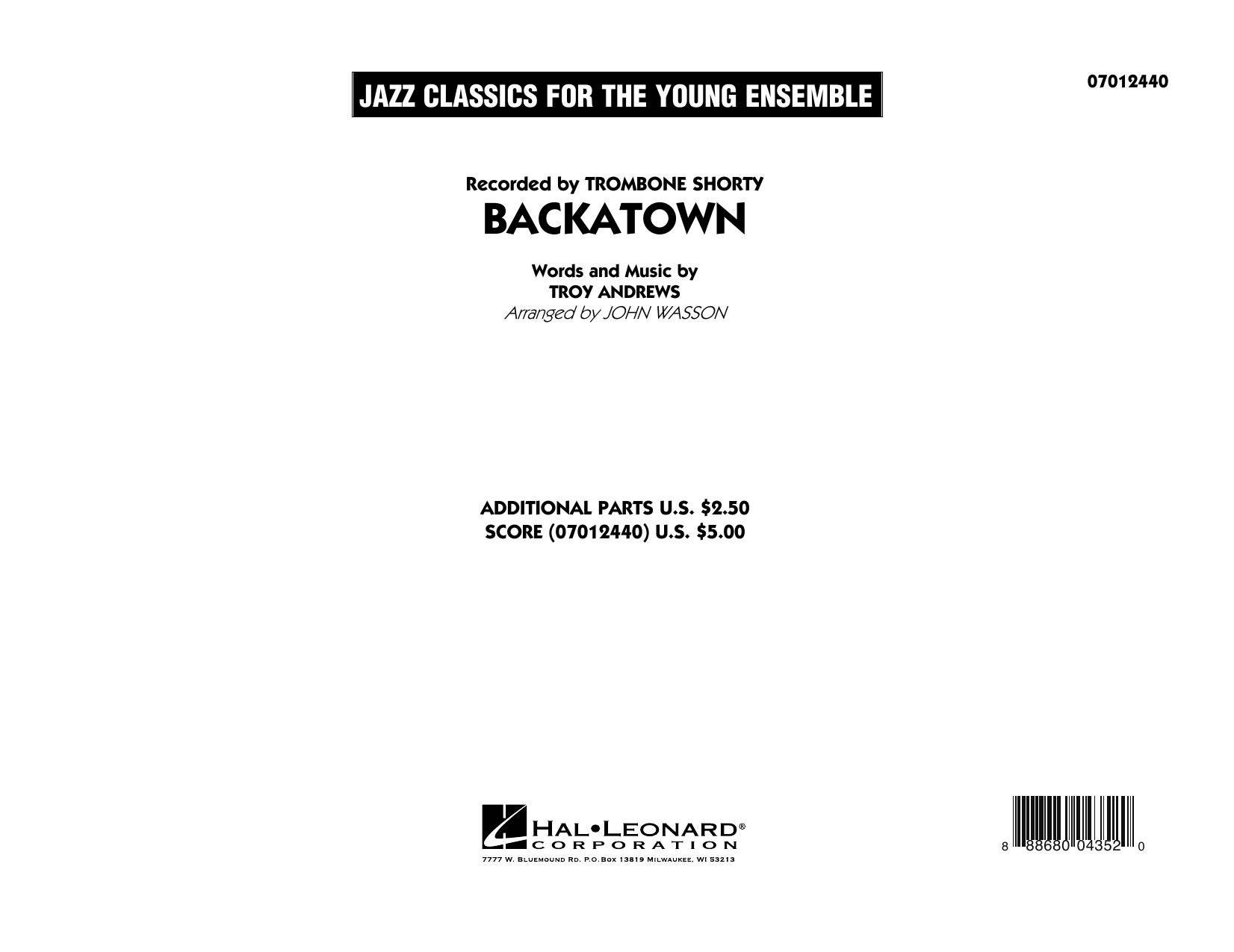

Backatown: Jazz Ensemble Conductor Score & Parts
As performed by Trombone Shorty / Arranged by John Wasson
Grade: 3
Item: 35-PK00303676
$50.00
Pickup currently not available
Buy Extra Parts (Digital PDF Download)
| Product | Price | Quantity |
|---|---|---|
| Backatown - Conductor Score (Full Score) | $7.50 | |
| Backatown - Alto Sax 1 | $6.00 | |
| Backatown - Alto Sax 2 | $6.00 | |
| Backatown - Tenor Sax 1 | $6.00 | |
| Backatown - Tenor Sax 2 | $6.00 | |
| Backatown - Baritone Sax | $6.00 | |
| Backatown - Trumpet 1 | $6.00 | |
| Backatown - Trumpet 2 | $6.00 | |
| Backatown - Trumpet 3 | $6.00 | |
| Backatown - Trumpet 4 | $6.00 | |
| Backatown - Trombone 1 | $6.00 | |
| Backatown - Trombone 2 | $6.00 | |
| Backatown - Trombone 3 | $6.00 | |
| Backatown - Trombone 4 | $6.00 | |
| Backatown - Guitar | $6.00 | |
| Backatown - Piano | $6.00 | |
| Backatown - Bass | $6.00 | |
| Backatown - Drums | $6.00 | |
| Backatown - Aux Percussion | $6.00 |
Parts Added to Cart!
Description
From Trombone Shorty's acclaimed CD "Backatown", here is the hot title cut arranged for big band in a funky medium tempo. With a blend of catchy riffs, solid ensemble passages, and stop-time breaks, this chart exudes a spirited and unmistakable New Orleans swagger.


Backatown: Jazz Ensemble Conductor Score & Parts isn't in MakeMusic Cloud just yet...but it could be. Let us know you'd like to see it, and you'll help shape what comes next. In the meantime, start a free trial and dive into thousands of interactive titles your students can play along with today.
Request This Title
Tell us you want it.
Start Your Free Trial
Explore everything that's ready to play right now.
Sample Audio
No sample audio found.
Sample Video
No sample videos found.
Additional Details
Publisher:
Hal Leonard
SKU:
35-PK00303676
More about this title
About the Artist: Trombone Shorty
Troy Andrews, known professionally as Trombone Shorty, is a New Orleans native who has become one of the most dynamic voices in contemporary jazz and funk. A virtuoso trombonist and bandleader, he grew up in the Tremé neighborhood steeped in the city's musical traditions, blending second line swagger with modern improvisation and funk grooves. His work bridges traditional New Orleans jazz with contemporary sounds, making him a vital figure in keeping the city's musical heritage alive while pushing it forward.
Why we love this
John Wasson captures the essence of Trombone Shorty's signature sound in a way that sits perfectly at Grade 3, giving ensembles genuine swagger without overwhelming complexity. The arrangement balances accessibility with authenticity, featuring the kind of stop-time breaks and funky ensemble hits that make players feel connected to real New Orleans jazz tradition. Your students will recognize this is the real deal, not a watered-down novelty piece.
What to expect
Hot, spirited, and unmistakably rooted in New Orleans tradition. The chart swings with infectious funk energy, built on catchy riffs that stick in your ear while the ensemble creates dynamic stop-time moments that pull everyone into tight rhythmic unison. There's joy in this music, the kind that comes from a city that has always known how to celebrate.
Who it's for
Jazz ensembles at the intermediate level who want repertoire that sounds sophisticated and grounded in real tradition. Directors seeking material that captures contemporary New Orleans style while remaining teachable for Grade 3 groups will find this especially valuable. Students who respond to funkier grooves and ensemble camaraderie will connect immediately to this chart.
How to get the most out of it
- Establish the groove pocket early in rehearsal. The medium tempo sits in a groove-oriented pocket that demands rhythmic precision from the rhythm section; lock the kick drum and bass together before layering horns.
- Keep the riffs conversational and relaxed rather than mechanical. These aren't march-style figures; they breathe with the funkiness of the original, so allow slight swing and pocket variations.
- Shape the stop-time breaks with deliberate space. The silence between hits carries as much weight as the notes themselves, creating tension that releases into the next section.
- Feature strong soloists over the form. Trombone Shorty's music invites individual voices to shine, so encourage your best players to personalize their solo passages within the structure.
How to use it
This works beautifully as a concert opener or closer, especially in a jazz-focused concert where it establishes energy and sets a celebratory tone. Pair it with other contemporary jazz repertoire to show students the full range of modern jazz expression, or program it alongside more traditional big band standards to illustrate how New Orleans tradition continues to evolve. It's also an excellent choice for spring concerts or outdoor performances where the groove and accessible appeal reach broader audiences.
Skills your students will build
- Reading and executing stop-time figures with rhythmic precision
- Grooving within an ensemble funky feel and medium swing tempo
- Balancing written arrangement integrity with the flexibility that funk requires
- Listening to and supporting prominent soloists within structured ensemble passages
- Articulation and phrasing in riff-based writing