Back When Sheet Music Preview

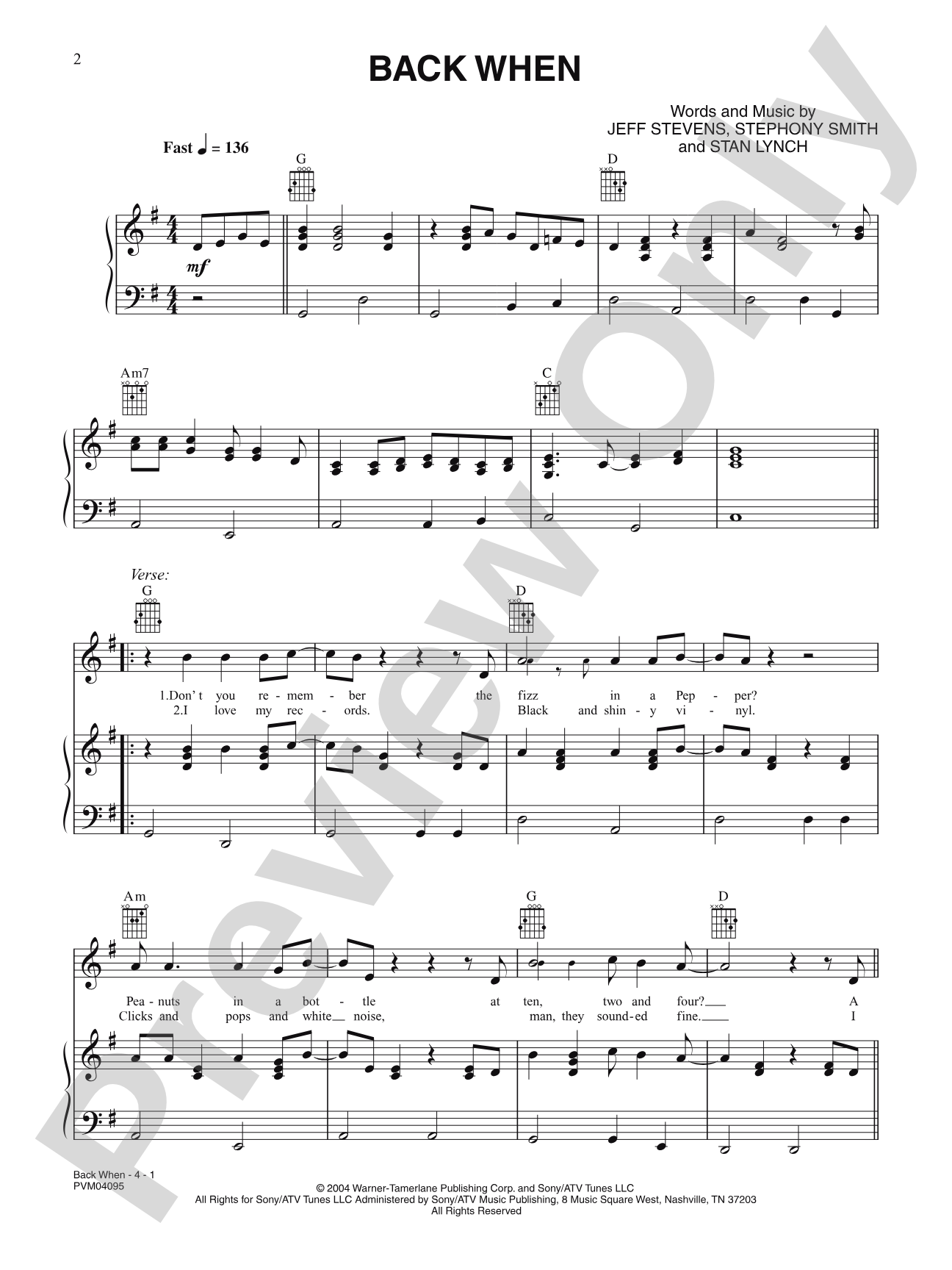
Back When: Piano/Vocal/Chords

Recorded by Tim McGraw

Item: 00-PIP-000608

Digital Download
$3.99

One moment…

Description

Back When: Piano/Vocal/Chords isn't in MakeMusic Cloud just yet...but it could be. Let us know you'd like to see it, and you'll help shape what comes next. In the meantime, start a free trial and dive into thousands of interactive titles your students can play along with today.

Sample Audio
No sample audio found.
Sample Video
Additional Details
Publisher: Alfred Music
SKU: 00-PIP-000608

More about this title

About the Artist: Tim McGraw

Tim McGraw is a country music artist whose career spans multiple decades and includes numerous chart-topping hits and awards. His songwriting draws from personal storytelling and emotional authenticity, making his compositions popular both in commercial and educational settings.

Why we love this

This arrangement captures the reflective quality that makes McGraw's songwriting resonate with performers. The piano/vocal/chords format gives students and adult musicians flexibility to interpret the arrangement while staying grounded in the song's emotional core.

What to expect

The song carries a nostalgic, introspective quality that invites performers to find their own emotional connection to the material. Musically, it sits in a space where country songwriting meets accessible piano arrangements, making it approachable without feeling simplified.

Who it's for

Singers working with piano accompaniment will find this arrangement accessible for both rehearsal and performance. Piano students interested in accompanying vocalists, as well as music directors building repertoire for recitals or informal performances, can all benefit from this resource.

How to get the most out of it

  • Pay attention to the lyrical phrasing over strict metric divisions; country music often sits comfortably behind or ahead of the beat for emotional effect.
  • Use the chord symbols as a foundation for accompaniment choices rather than a rigid harmonic blueprint. Adjust voicings to match your interpretive intent.
  • Let dynamics follow the story of the lyrics rather than adhering to a predetermined dynamic curve.

How to use it

This works well for voice lessons, recital programming, or as an audition piece in settings where contemporary country music is valued. It also serves emerging accompanists looking for repertoire that rewards thoughtful interpretation without excessive technical demands.

Skills your students will build

  • Accompanying singers while maintaining melodic clarity
  • Reading and interpreting chord symbols in performance
  • Balancing lyrical phrasing with metric structure
  • Applying country music style and feel to arranged music

You May Also Like