
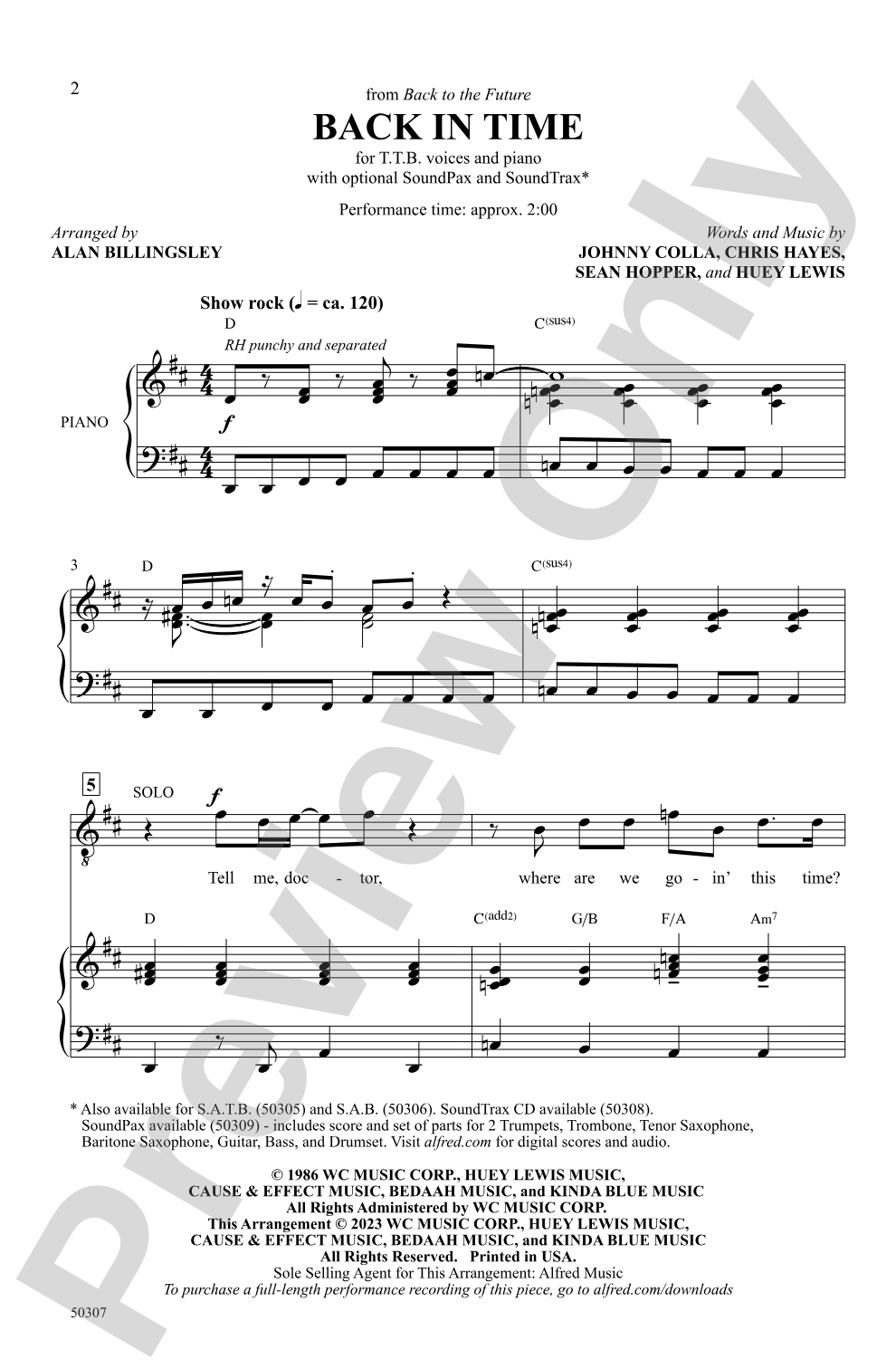
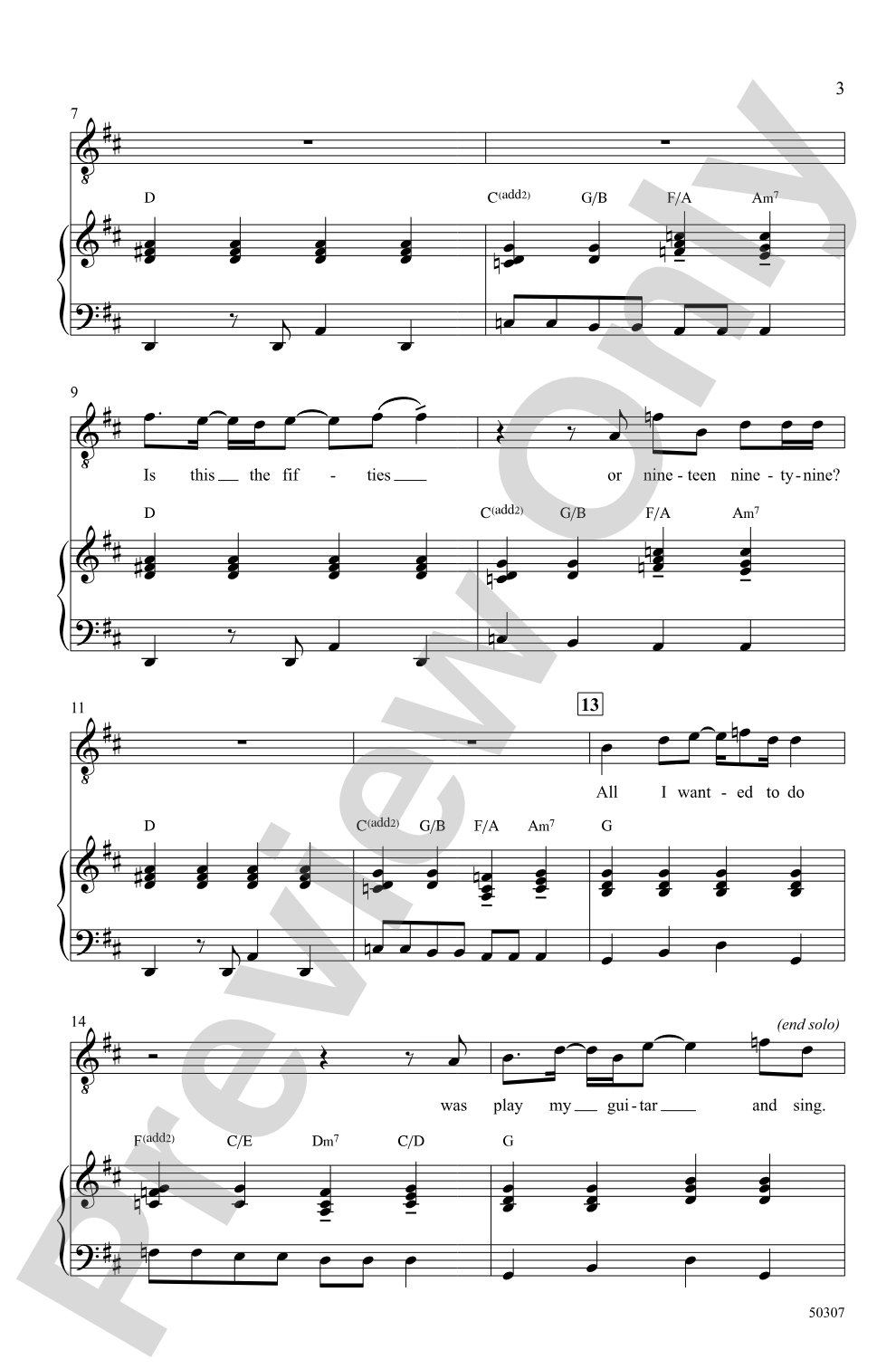
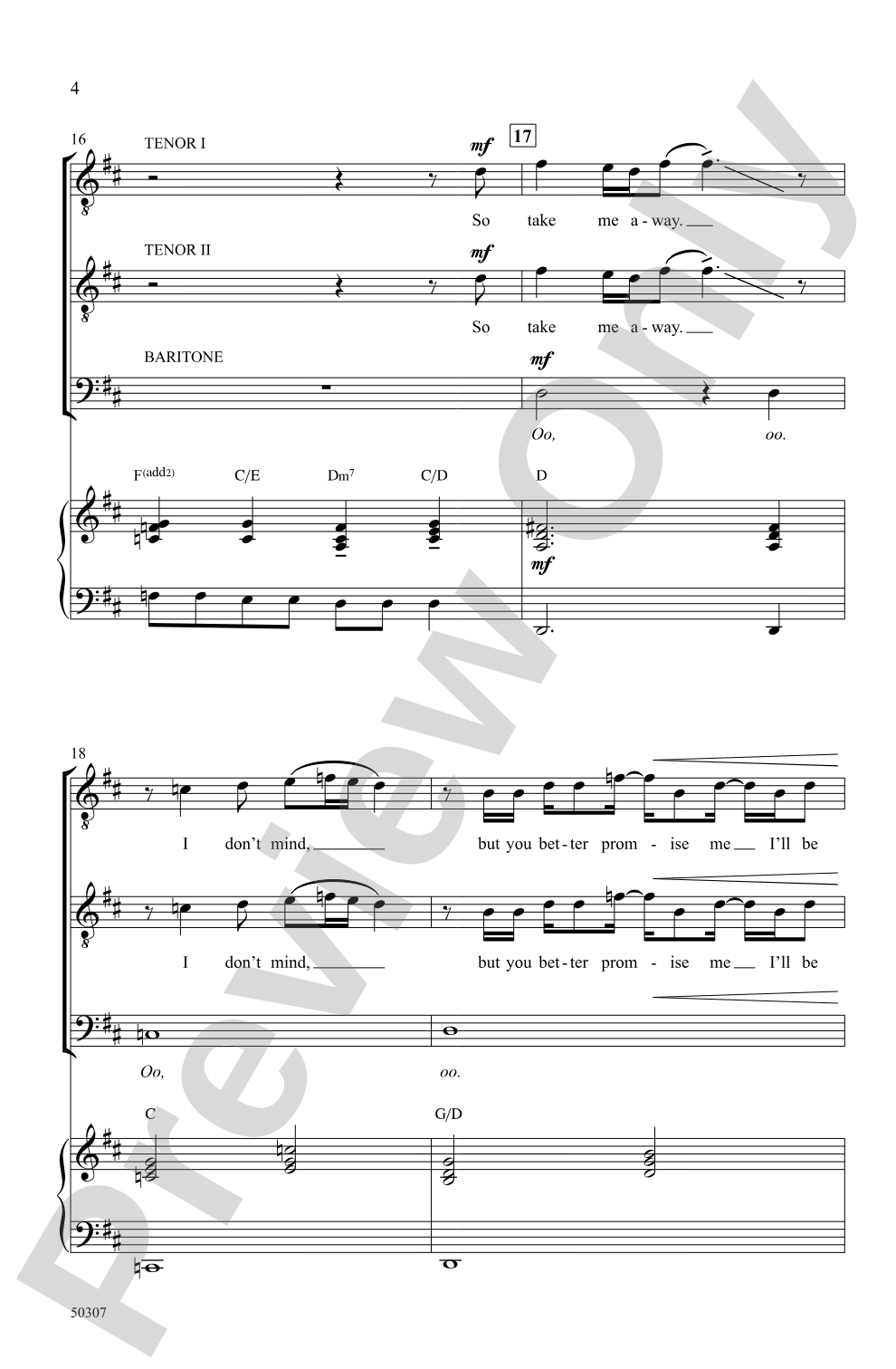

Back in Time: TTB Choral Octavo
Words and music by Johnny Colla, Chris Hayes, Sean Hopper, and Huey Lewis / arr. Alan Billingsley
Item: 00-PO-0007124
$2.25
Minimum order quantity: 20 copies
One moment…
Related Items
Back in Time: SoundTrax Digital Audio Download |
$29.98
|
View | |
Back in Time: SATB Choral Octavo |
$2.25
|
View | |
Back in Time: SAB Choral Octavo |
$2.25
|
View | |
Back in Time: Choral SoundPax |
$35.00
|
View | |
Back in Time: SATB Choral Octavo |
$2.25
|
View | |
Back in Time: SAB Choral Octavo |
$2.25
|
View | |
Back in Time: TTB Choral Octavo |
$2.25
|
View | |
Back in Time: Choral Octavo SoundTrax CD |
$29.99
|
View | |
Back in Time: Choral SoundPax |
$35.00
|
View |
Description
Great Scott! Back to the Future is back---and this time on Broadway! Take your audience on a two-minute ride to 1985 with this high-energy rock song by Huey Lewis and the News. Bring some lightning to the stage with the optional horns-and-rhythm SoundPax, or the electrifying SoundTrax accompaniment.


Discover MakeMusic Cloud: thousands of interactive titles your students can play along with today.
Sample Audio
1
Audio File
--:--
0:00
0:00
Sample Video
Additional Details
Series:
Alfred Pop Choral Series
Publisher:
Alfred Music
Page Count:
16
SKU:
00-PO-0007124
More about this title
About the Composer: Johnny Colla
Johnny Colla is a founding member and saxophonist of Huey Lewis and the News, the quintessential 1980s rock band that defined a generation of popular music. As a composer and arranger for the group, Colla helped craft the distinctive sound that made songs like "Back in Time" instant classics. His work spans decades of hit records and live performances that continue to resonate with audiences across age groups.
Why we love this
Alan Billingsley's arrangement captures the infectious energy and radio-friendly drive of the original without oversimplifying the harmony or groove. The TTB voicing sits perfectly for high school and college choirs, and the optional horns-and-rhythm parts transform this from a vocal feature into a full-band experience that audiences will recognize instantly. Programming this piece guarantees audience engagement; there's genuine joy in singing something this fun and musically substantial.
What to expect
Two minutes of pure kinetic energy, driven by a propulsive rock groove and the unmistakable synth-and-guitar sound of 1980s pop radio. Singing this piece feels like stepping into a time machine; there's an infectious confidence in the harmonies and a nostalgic warmth that audiences recognize immediately. It's high-spirited and celebratory without being campy.
Who it's for
High school and college choirs looking for contemporary repertoire with genuine pop credibility and audience appeal. Directors seeking a piece that energizes singers while maintaining musical substance will find this arrangement rewarding; it's accessible enough for developing choirs but engaging enough to challenge stronger ensembles.
How to get the most out of it
- Lock the rhythmic pulse early in rehearsal. This piece lives in the pocket, so nail the snare-crack backbeat and bass line before layering the vocal parts.
- Balance the three voice parts so the melody line (typically in the top voice) cuts through without drowning out the harmonic and rhythmic layers underneath.
- If using the recorded accompaniment, rehearse with it from day one. The groove is specific and performers need time to internalize the timing and feel.
- Bring out the personality in your soloists if the arrangement features individual moments. The rock idiom rewards confident, character-driven singing over technical perfection.
How to use it
Anchor a pops or contemporary music concert with this crowd-pleaser, or pair it with other movie or Broadway-inspired arrangements for a themed showcase. The two-minute runtime makes it ideal as an opener or closer on a mixed repertoire program, where it shifts the energy and reminds audiences that choral music can be this fun. Consider this a strategic programming tool: it builds momentum and leaves everyone smiling.
Skills your students will build
- Rhythmic precision and groove internalization in a popular music context
- Balancing three voice parts in close harmony
- Singing with stylistic authenticity in the rock and pop idiom
- Ensemble cohesion while maintaining individual voice independence
- Interpretation of contemporary secular choral arrangement