(Back Home Again In) Indiana: Flute Sheet Music Preview

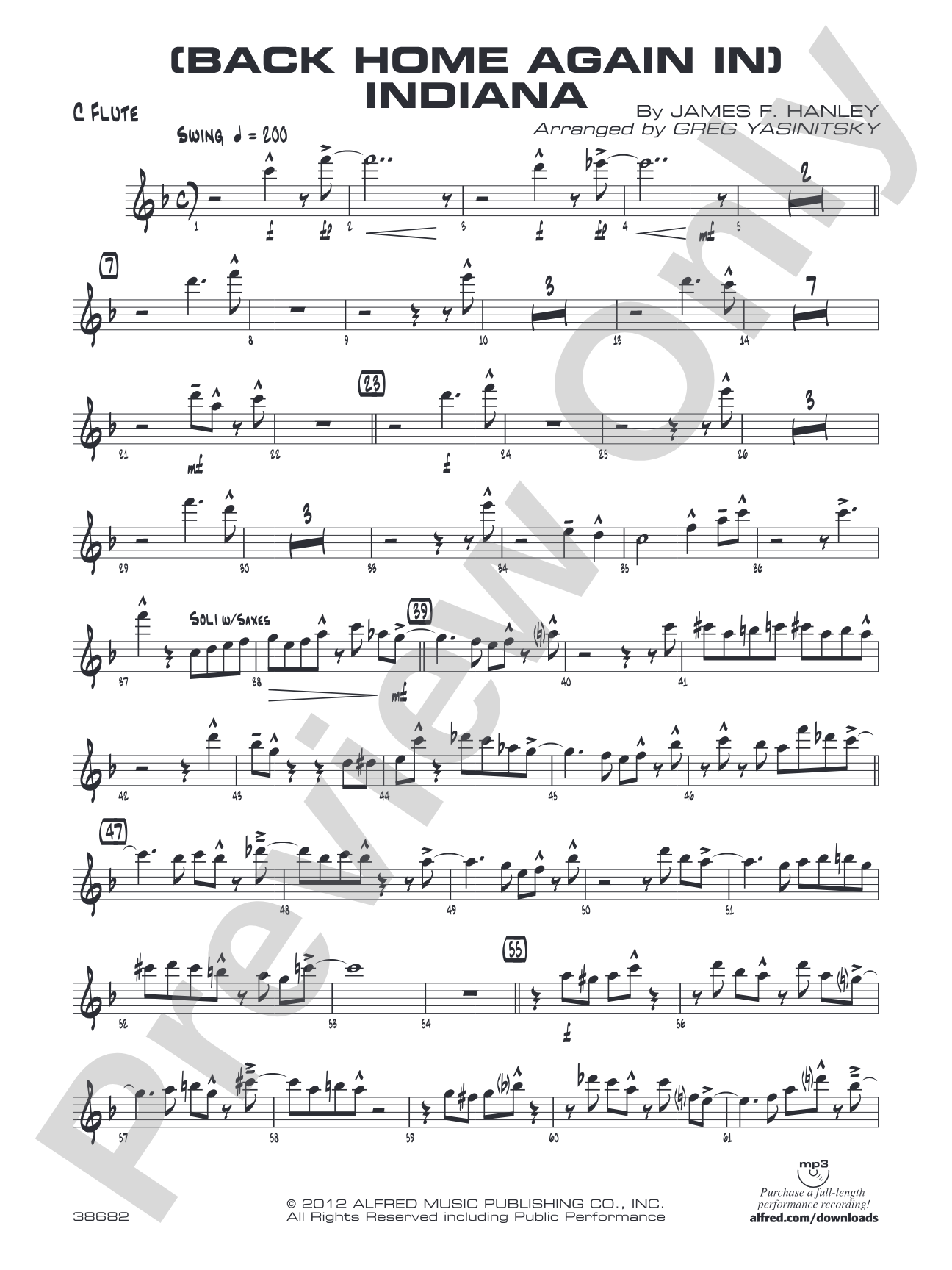
(Back Home Again In) Indiana: Flute

By James F. Hanley / arr. Greg Yasinitsky

Grade: 3 (Medium)

Item: 00-PC-0017225_F1

Digital Download
$3.00
Description
You'll be swingin' with this jazz classic! This chart features terrific sax solis, a written-out or ad lib tenor solo, some stop-time interludes, and a rousing shout. A fine opener or closer.

Don't just read it, hear it, play along with it, and watch your students grow with it. In MakeMusic Cloud, (Back Home Again In) Indiana: Flute comes alive with professional accompaniment, adjustable tempo, and built-in practice tools that turn solo practice into real progress.

Sample Audio
0:00
0:00
Sample Video
Additional Details
Series: Jazz Band Series
Publisher: Alfred Music
Page Count: 98
SKU: 00-PC-0017225_F1

More about this title

About the Composer: James F. Hanley

James F. Hanley (1892-1942) composed for stage and screen during the early decades of American popular music. His work epitomized the accessible, melodic style that defined the 1920s and 1930s, with "(Back Home Again In) Indiana" becoming one of his most enduring contributions to the American songbook.

Hanley's compositions have remained fixtures in jazz and popular music curricula because they balance singability with harmonic interest. His melodies sit naturally for improvisation, making them ideal teaching tools for ensemble musicians learning to navigate standards.

Why we love this

This arrangement captures everything that makes mid-grade jazz repertoire rewarding to conduct: solid harmonic structure that gives improvisers something to work with, featured solo opportunities that showcase individual voices, and enough textural variety (stop-time sections, shout endings) to keep ensemble energy climbing from downbeat to finale. The stop-time interludes provide natural moments to tighten ensemble response without requiring advanced rhythmic sophistication.

What to expect

Nostalgic and propulsive. The melody carries genuine warmth, anchored by swing rhythms that never rush. The stop-time breaks inject sudden stillness, making the return to full ensemble feel like a breath regained.

Who it's for

Jazz ensemble directors working with Grade 3 players who have solid fundamentals in swing feel and basic section balance. Students need comfortable command of their instruments and readiness for lead-follow dynamics, but not advanced sight-reading speed or complex harmonic substitution.

How to get the most out of it

  • Shape the sax solis with clear phrasing and consistent dynamics across the section; these lines are the chart's melodic anchor.
  • Let the written-out tenor solo sit slightly in front of the rhythm section to ensure voice clarity, then pull back if you opt for the ad lib version to allow more space for improvisation.
  • Lock the stop-time interludes with precise attacks and releases; even micro-hesitations will disrupt the intended punch.
  • Build toward the shout ending by gradually lifting the ensemble's dynamic from the preceding section, treating it as the natural conclusion rather than an afterthought.

How to use it

Program this as a concert opener to establish immediate swing credibility with your audience, or place it late in a set before a ballad to showcase rhythmic lift and sectional precision. The contained length and straightforward narrative structure make it an excellent choice for festival play or as a teaching performance that builds confidence in ensemble communication.

Skills your students will build

  • Swing feel and jazz articulation in ensemble context
  • Sectional balance and voice independence in a feature arrangement
  • Stop-time rhythmic accuracy and ensemble synchronization
  • Solo preparation (both reading and ad lib approaches to improvisation)
  • Dynamic shape and narrative arc in a single piece

You May Also Like