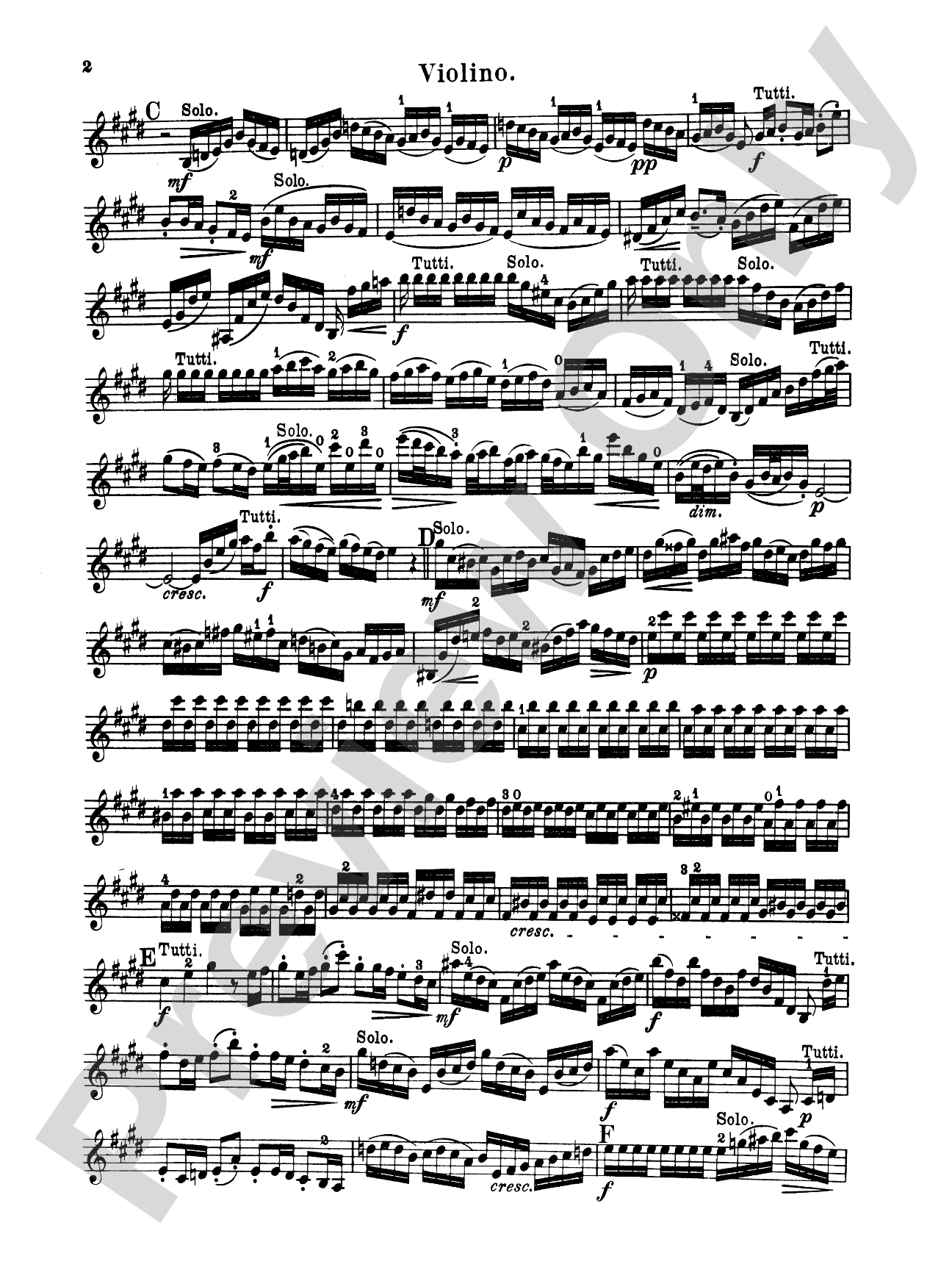
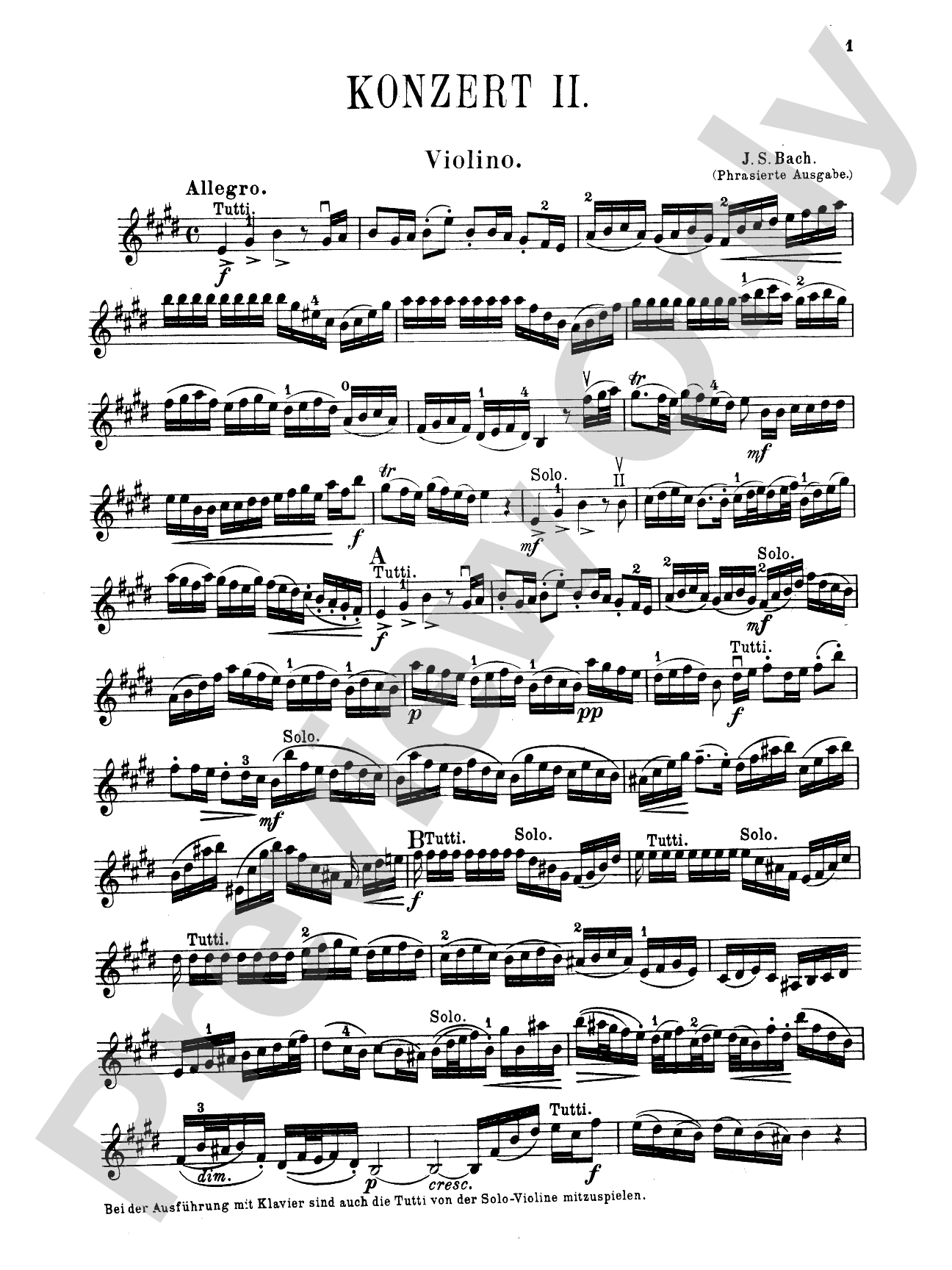
Bach: Violin Concerto No. 2 in E Major Sheet Music Preview

Bach: Violin Concerto No. 2 in E Major

By Johann Sebastian Bach

Item: 00-PC-0004253

Digital Download
$3.95
Description
A Violin solo with Piano Accompaniment composed by Johann Sebastian Bach.

Don't just read it, hear it, play along with it, and watch your students grow with it. In MakeMusic Cloud, Bach: Violin Concerto No. 2 in E Major comes alive with professional accompaniment, adjustable tempo, and built-in practice tools that turn solo practice into real progress.

Sample Audio
No sample audio found.
Sample Video
Additional Details
Series: Kalmus Edition
Publisher: Alfred Music
Page Count: 28
SKU: 00-PC-0004253

More about this title

About the Composer: Johann Sebastian Bach

Johann Sebastian Bach (1685-1750) stands as one of history's most prolific and technically inventive composers. Working primarily in Leipzig and Weimar, he mastered every instrumental and vocal form of the Baroque era, from fugues and cantatas to concertos and suites. His compositional approach combined mathematical precision with profound musical expression, establishing principles of counterpoint and harmonic language that shaped Western classical music for centuries to come.

Bach's violin concertos represent a pinnacle of Baroque string writing. Originally composed for court orchestras, these works demand both technical virtuosity and interpretive maturity from performers. The E Major concerto in particular showcases Bach's gift for crafting lyrical, singable lines while maintaining the structural sophistication that defines his mature compositional voice.

Why we love this

This concerto combines Baroque elegance with genuine technical challenge, making it ideal for advanced students preparing for competitions or performance festivals. The piano reduction preserves Bach's essential harmonic architecture while remaining idiomatic for keyboard accompaniment, and the three-movement structure gives performers a complete arc to shape across a substantial performance.

What to expect

Graceful and refined, with a courtly elegance that unfolds across three distinct movements. The outer movements sparkle with virtuosic passagework and buoyant rhythmic drive, while the central slow movement offers contemplative beauty and harmonic depth that rewards patient, singing tone.

Who it's for

Advanced high school and collegiate violinists preparing for competitions, festival performances, or recitals. This work suits musicians who have developed solid intonation control, secure upper position playing, and the musical maturity to sustain multi-movement Baroque forms.

How to get the most out of it

  • Shape the opening melodic phrases with subtle dynamic shaping rather than dramatic contrast; Bach's lines sing most convincingly when they breathe like vocal music
  • Attend carefully to the harmonic rhythm in the piano part, as it often establishes the structural downbeats that should guide your phrasing
  • Balance technical passages in the fast movements with musical intent; neither rush ornamental figures nor dawdle on them, but integrate them into the larger melodic shape
  • Recognize that articulation clarity serves the contrapuntal dialogue between violin and piano; crisp note separation in scalar passages helps the ear follow the architecture

How to use it

Program this as a full-length concerto feature on a chamber music or solo competition program, or pair the individual movements with other Baroque works to create a thematic concert around period string literature. The substantial page count and three-movement structure make it suitable as a centerpiece recital work rather than an encore.

Skills your students will build

  • Baroque ornamentation and articulation appropriate to stylistic period
  • Intonation stability in extended positions, particularly in the upper range
  • Sustained lyrical phrasing and singing tone quality across entire phrases
  • Rhythmic precision in virtuosic scalar passages and arpeggios
  • Chamber music coordination with piano accompaniment
  • Large-scale musical architecture across a multi-movement work

You May Also Like