

Bach: Various Works (Volume I)
By Johann Sebastian Bach
Level: Intermediate / Advanced
Item: 00-PC-0004980
$0.99
Pickup currently not available
Description
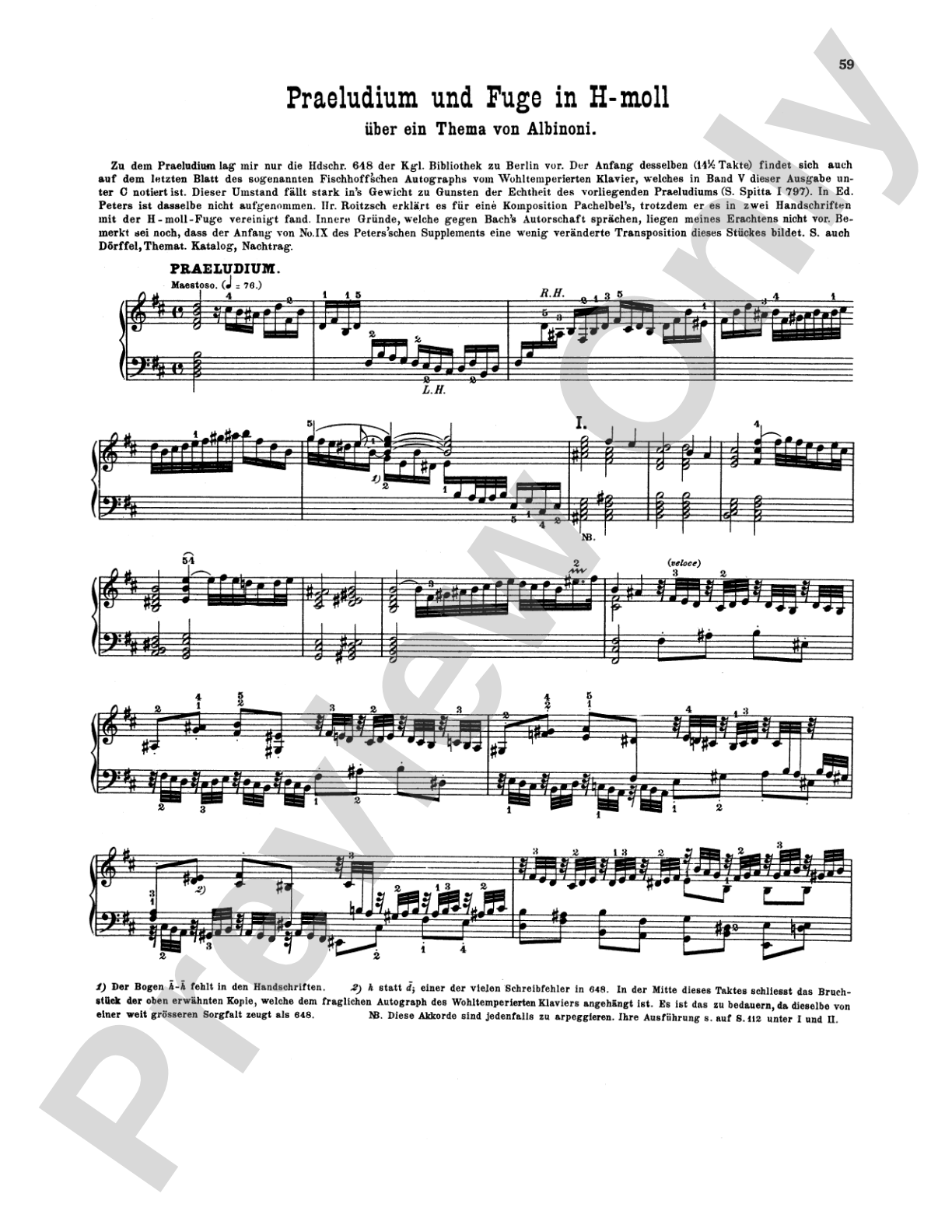
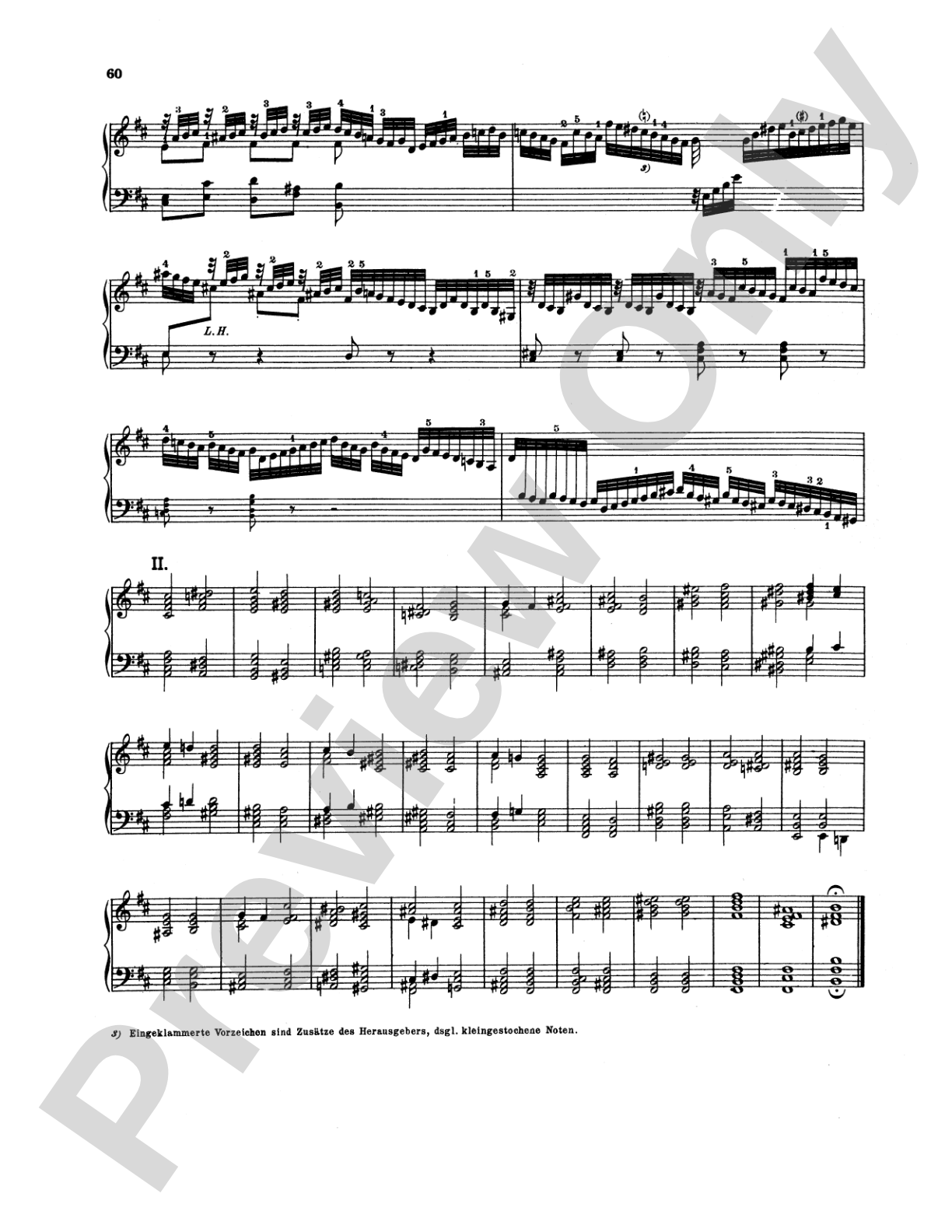
Volume 1 of Hans Bischoff's edition of some miscellaneous works for keyboard by Johann Sebastian Bach. 80 pages. Includes: 3 Keyboard Pieces in Suite-Form * Adagio in G Major * Fantasie in A Minor * Fantasie in C Minor * Fantasie in G Minor * Fugue in A Major * Fugue in B Minor * Fugue in D Minor * Overture in F Major * Prelude and Fugue in B Minor * Prelude, Fugue and Allegro in E-Flat Major * Prelude and Fugue on the Name "BACH" * Suite in E Minor * Suite in F Minor (Fragment) * Variation in A Minor for Keyboard (Aria variata alla maniera Italiana).


Don't just read it, hear it, play along with it, and watch your students grow with it. In MakeMusic Cloud, Bach: Various Works (Volume I) comes alive with professional accompaniment, adjustable tempo, and built-in practice tools that turn solo practice into real progress.
Open in the Player
Jump straight in and assign it today.
Start Your Free Trial
Open this title and explore the full library in minutes.
Sample Audio
No sample audio found.
Sample Video
No sample videos found.
Additional Details
Series:
Kalmus Edition
Publisher:
Alfred Music
Page Count:
80
SKU:
00-PC-0004980
More about this title
About the Composer: Johann Sebastian Bach
Johann Sebastian Bach (1685-1750) fundamentally shaped Western music through his mastery of counterpoint, harmonic innovation, and structural clarity. Working across sacred and secular genres, Bach synthesized German, Italian, and French musical traditions into a unified language that remains the foundation of music theory and composition pedagogy. His keyboard works in particular demonstrate how technical rigor and expressive depth are inseparable; they reward both the student seeking to understand musical architecture and the mature artist pursuing interpretive subtlety.
Why we love this
This collection spans Bach's keyboard output with pieces at multiple levels of difficulty, making it an essential reference for pianists who want to understand his stylistic range without committing to the complete Keyboard Works. The inclusion of both narrative pieces (Fantasias, Suites) and abstract forms (Fugues, Preludes) gives students room to discover what draws them to Bach's writing, while offering directors a reservoir of recital-quality material that fits intermediate-advanced programs.
What to expect
These works pulse with intellectual clarity and emotional directness. Whether you encounter the crystalline precision of a Fugue or the improvisatory wandering of a Fantasia, Bach's music feels both mathematically inevitable and human in its phrasing. The collection as a whole suggests a composer thinking out loud across different forms, treating each genre as a distinct conversation.
Who it's for
This edition serves intermediate to advanced pianists who have solid technique and want to study Bach's keyboard language in depth. It works equally well for conservatory students building their Bach literacy, mature amateurs returning to classical repertoire, and teachers assembling a personal reference library of well-edited scores.
How to get the most out of it
- Approach the Fantasias and Preludes as improvisational landscapes. Bach's sudden harmonic shifts and register changes are intentional gestures, not accidental roughness; allow them to breathe without over-smoothing the texture.
- In the Fugues, resist the urge to equalize all voices. Subtle dynamic shaping and voice-leading clarity matter far more than mechanical evenness; the subject should always be findable by the listener's ear.
- The Suites reward attention to dance character and phrasing. Each movement has a rhythmic profile and affective purpose; studying historical dance forms (sarabande, gigue, courante) deepens your interpretation.
- Where ornaments appear, consult the Bischoff edition's prefatory notes on performance practice. Bach's ornamental language is precise, and realizing turns, trills, and mordents correctly changes the rhythmic and harmonic flow.
How to use it
A single Prelude and Fugue or Fantasia makes an excellent standalone recital piece that signals musical sophistication without dominating a program. Alternatively, pair two or three shorter works from this volume as a Bach moment within a mixed-era recital. The Suites and larger forms work well as centerpieces for all-Bach or all-Baroque programming.
Skills your students will build
- Voice independence and tracking in polyphonic texture
- Recognition and interpretation of Baroque formal structures (prelude-fugue pairing, suite movements, dance forms)
- Ornamentation realization and period-appropriate articulation
- Harmonic analysis and functional harmony in tonal contexts
- Physical independence of hands across registers and keyboard positions
- Structural hearing and long-line phrasing in abstract forms