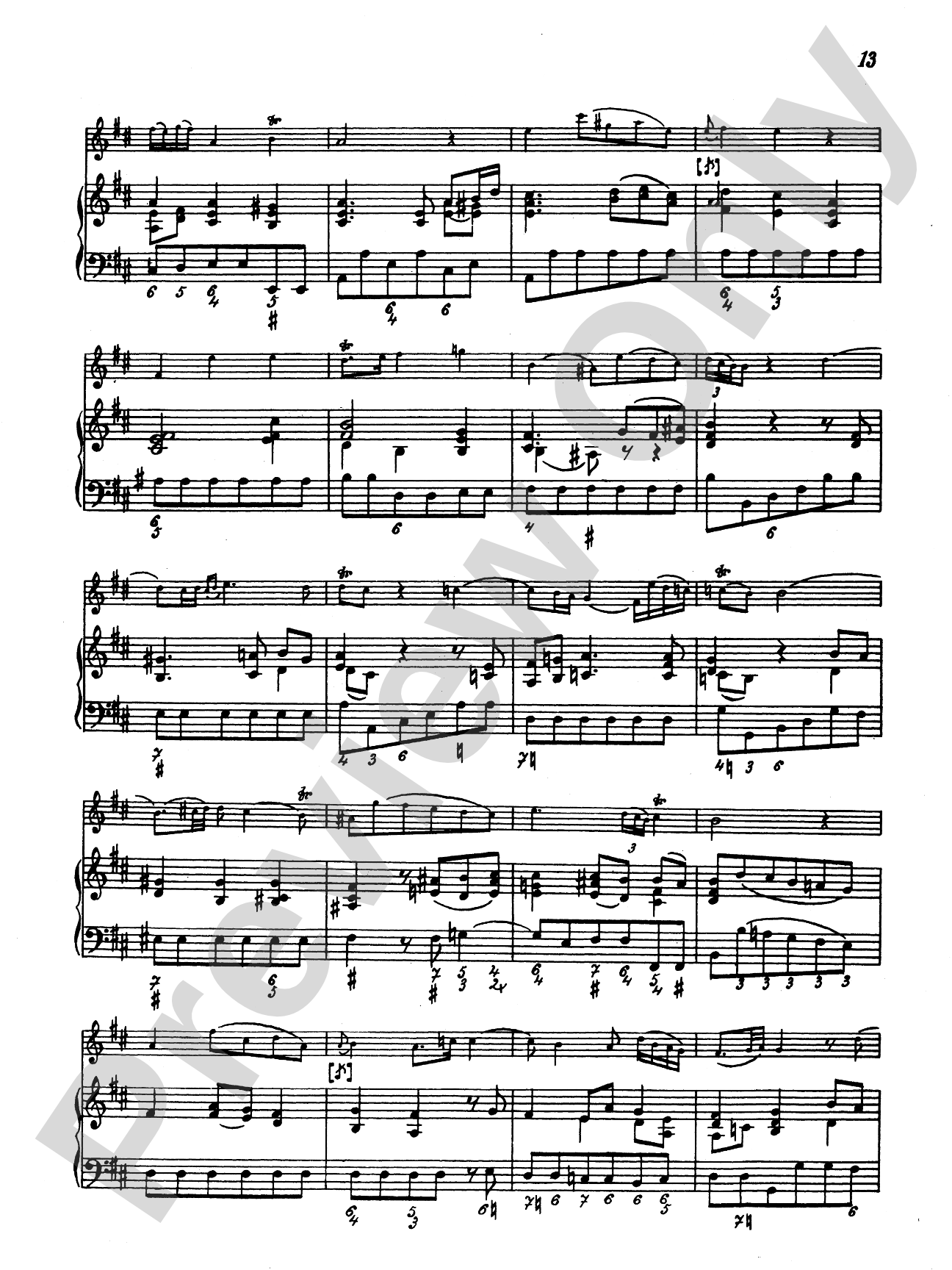
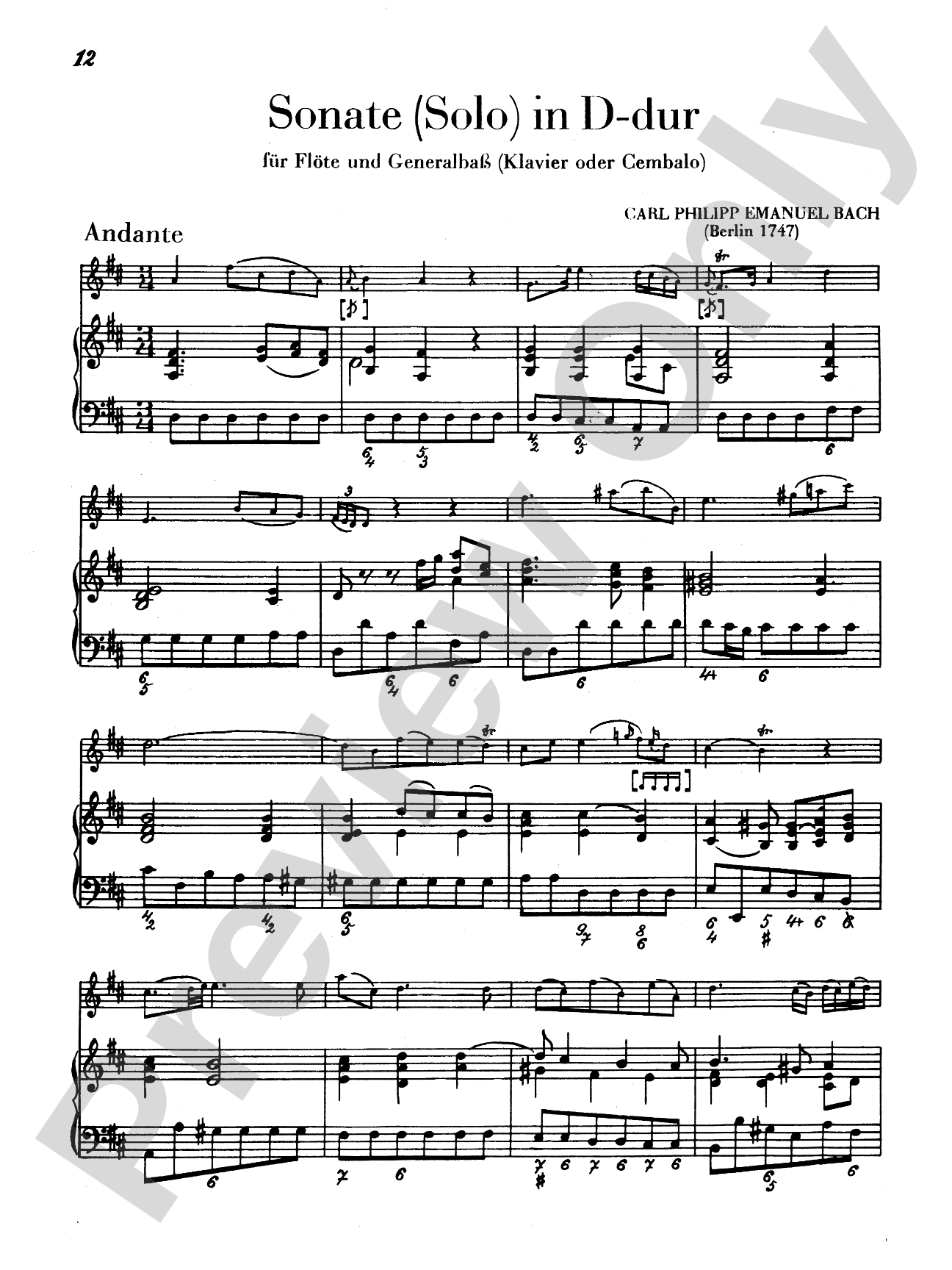
Bach: Two Sonatas (A Minor and D Major) Sheet Music Preview

Bach: Two Sonatas (A Minor and D Major)

By Carl Philipp Emanuel Bach

Item: 00-PC-0011030

Digital Download
$3.99
Description
Two duets for Flute and Basso Continuo, composed by Carl Philipp Emanuel Bach.

Don't just read it, hear it, play along with it, and watch your students grow with it. In MakeMusic Cloud, Bach: Two Sonatas (A Minor and D Major) comes alive with professional accompaniment, adjustable tempo, and built-in practice tools that turn solo practice into real progress.

Sample Audio
No sample audio found.
Sample Video
Additional Details
Series: Kalmus Edition
Publisher: Alfred Music
Page Count: 36
SKU: 00-PC-0011030
Instrumentation: Flute & Basso Continuo

More about this title

About the Composer: Carl Philipp Emanuel Bach

Carl Philipp Emanuel Bach (1714-1788) was the second surviving son of Johann Sebastian Bach and became one of the most influential composers of the 18th century. He spent most of his career at the court of Frederick the Great in Berlin, where he served as court composer and keyboard player, composing prolifically across all genres and pioneering the empfindsamer Stil (sensitive style) that bridged Baroque and Classical aesthetics.

C.P.E. Bach's chamber music reveals a composer constantly experimenting with form, harmony, and the expressive possibilities of individual instruments. His flute sonatas, written for patrons and professional musicians, remain essential repertoire for understanding how Baroque instrumental technique evolved into Classical rhetoric.

Why we love this

These two sonatas showcase C.P.E. Bach at his most inventive, with writing that respects the flute's lyrical character while keeping the continuo part intellectually engaging. They bridge the gap between Bach's contrapuntal world and the galant style, making them ideal for ensembles seeking substantial yet accessible Baroque chamber repertoire that avoids the most elaborate keyboard writing.

What to expect

The A minor sonata unfolds with introspective elegance, its minor key coloring the flute line with gentle melancholy while the continuo propels the harmony forward with understated momentum. The D major sonata brings warmth and galant ease, with clearer phrase structures and more extrovert character, yet both works maintain the intellectual rigor expected of court chamber music.

Who it's for

This music serves flute and keyboard duos at the intermediate to advanced level who are ready to tackle figured bass realization and the interpretive demands of 18th-century style. Chamber ensembles preparing concert programs that emphasize historical depth will find these sonatas both musically rewarding and attractive to audiences familiar with Baroque and Classical forms.

How to get the most out of it

  • Establish the continuo realization carefully before the first rehearsal. The figured bass notation reflects 18th-century practice; a single continuo player should negotiate which notes to voice and when to include both hands.
  • Shape the flute phrases with clear harmonic awareness, especially in the slower movements. C.P.E. Bach's melodic lines often pivot on unexpected harmonic turns, and the flutist's phrasing should honor these arrivals rather than treat the line as purely decorative.
  • Use strategic rubato in the affect-driven passages, particularly in the A minor sonata. The written note values should flex slightly with the harmonic rhythm to avoid mechanical pacing.
  • Balance volume so the flute line and continuo engage as partners, not soloists and accompaniment. Movements with lighter texture offer a chance to experiment with how much sound each instrument needs.

How to use it

Program these sonatas as a pair on a recital devoted to 18th-century chamber music, or split them across different concerts to highlight the contrasts between keys and character. They work well after a brief solo keyboard piece and before a larger ensemble work, establishing historical continuity while celebrating the flute as a conversation partner rather than merely a soloist.

Skills your students will build

  • Reading figured bass notation and coordinating with a realizing keyboard player
  • Ornamentation and phrasing in the empfindsamer Stil (sensitive style)
  • Harmonic awareness and phrase shaping across longer formal structures
  • Baroque and early Classical articulation and expression
  • Ensemble balance between melody and continuo support

You May Also Like