
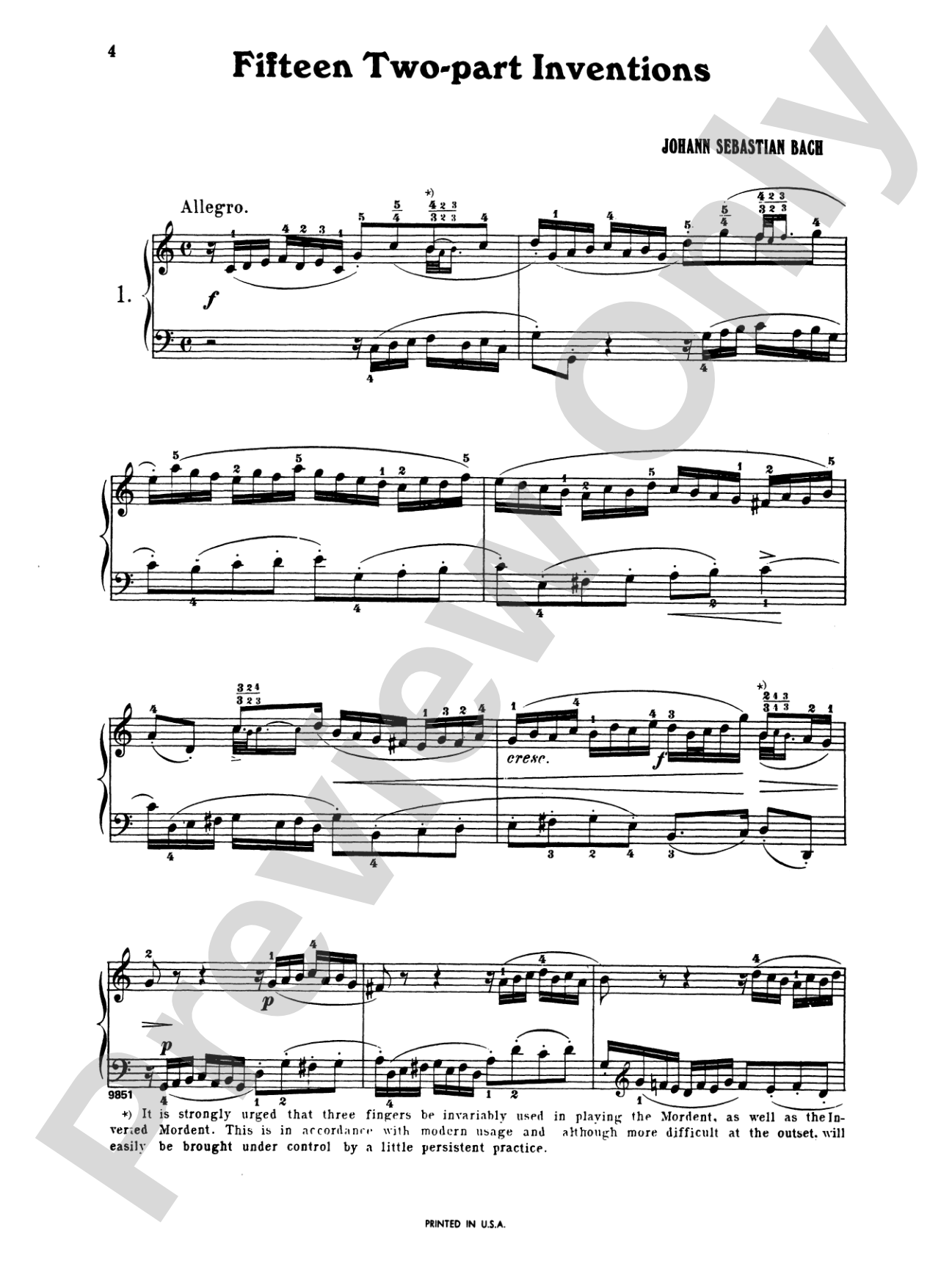
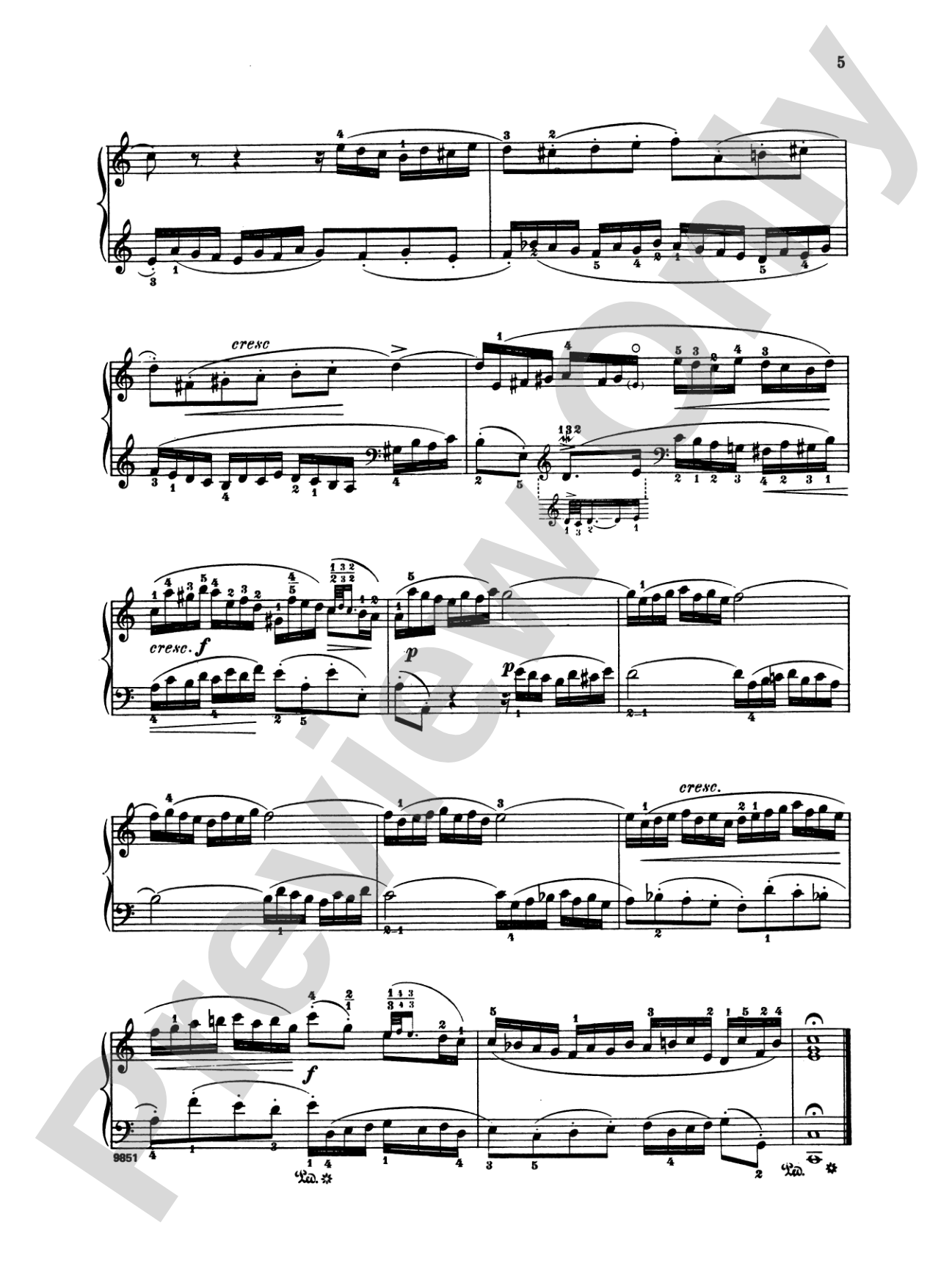

Bach: Two-Part Inventions (Ed. Mason): Piano Book
By Johann Sebastian Bach / ed. William Mason
Item: 00-PK-0003878

$9.99
Pickup currently not available
Buy Extra Parts (Digital PDF Download)
Parts Added to Cart!
Related Items
Two-Part Inventions: Piano Book |
$9.95
|
View |
Description
This collection includes a preface and table of embellishments by William Mason.


Don't just read it, hear it, play along with it, and watch your students grow with it. In MakeMusic Cloud, Bach: Two-Part Inventions (Ed. Mason): Piano Book comes alive with professional accompaniment, adjustable tempo, and built-in practice tools that turn solo practice into real progress.
Open in the Player
Jump straight in and assign it today.
Start Your Free Trial
Open this title and explore the full library in minutes.
Sample Audio
No sample audio found.
Sample Video
No sample videos found.
Additional Details
Series:
Kalmus Edition
Publisher:
Alfred Music
Page Count:
36
SKU:
00-PK-0003878
More about this title
About the Composer: Johann Sebastian Bach
Johann Sebastian Bach (1685, 1750) was a German Baroque composer and organist whose mastery of counterpoint and harmonic language shaped the entire trajectory of Western music. His output spans sacred and secular genres, cantatas, suites, concertos, and keyboard works, each revealing his mathematical precision fused with profound expression. For music students, Bach remains essential study: his works teach voice leading, harmonic function, and the architecture of musical thought itself.
Why we love this
Mason's editorial approach to the Two-Part Inventions makes these teaching masterpieces even more accessible, with his preface and embellishment table guiding students through Bach's ornamental language. These 15 inventions sit at the sweet spot between technical challenge and musical reward, complex enough to demand careful attention but rewarding enough that students actually want to practice them. They're the backbone of any serious keyboard curriculum.
What to expect
Each invention unfolds as a musical conversation between two equal partners, neither dominating the other. The writing is transparent yet intricate, with surprising harmonic turns and moments where the two voices seem to dance around each other before resolving into clarity. There is a kind of mathematical inevitability to these pieces, yet they sing with genuine musicality when played with understanding.
Who it's for
Pianists working toward independence of both hands and fluency in contrapuntal thinking will find Bach's two-part inventions essential. Teachers use this collection with intermediate to advanced students as a bridge between scales and larger Bach works, and as a foundation for understanding counterpoint across all repertoire. These pieces reward daily engagement and repay careful study for years.
How to get the most out of it
- Separate the two voices physically and aurally before combining them; practice each hand alone until the melodic line is secure, then add the other voice without losing independence.
- Observe Bach's implied phrasing through harmonic rhythm and voice leading rather than imposing Romantic gestures; let the counterpoint itself suggest where breaths and structural points occur.
- Maintain consistent voice leading in each hand even when one voice is resting; this clarity prevents muddiness and keeps the mathematical elegance of the writing audible.
- Use the table of embellishments as a reference when Mason's edition indicates ornament interpretation, keeping realizations clean and idiomatic to the Baroque style.
How to use it
Work these inventions into a recital program as part of a Bach suite or grouping with later contrapuntal works (Brahms, Reger) to show the throughline of two-voice writing. They also serve as meaningful supplementary material during a unit on Baroque music in group lessons or studio classes, or as preparation for larger Bach works like the Prelude and Fugue series.
Skills your students will build
- Two-voice independence and balance between hands
- Reading and executing Baroque articulation and embellishments
- Contrapuntal voice leading and harmonic awareness
- Maintaining consistent tempo and rhythmic clarity across both hands
- Musical phrasing derived from structure rather than applied externally