
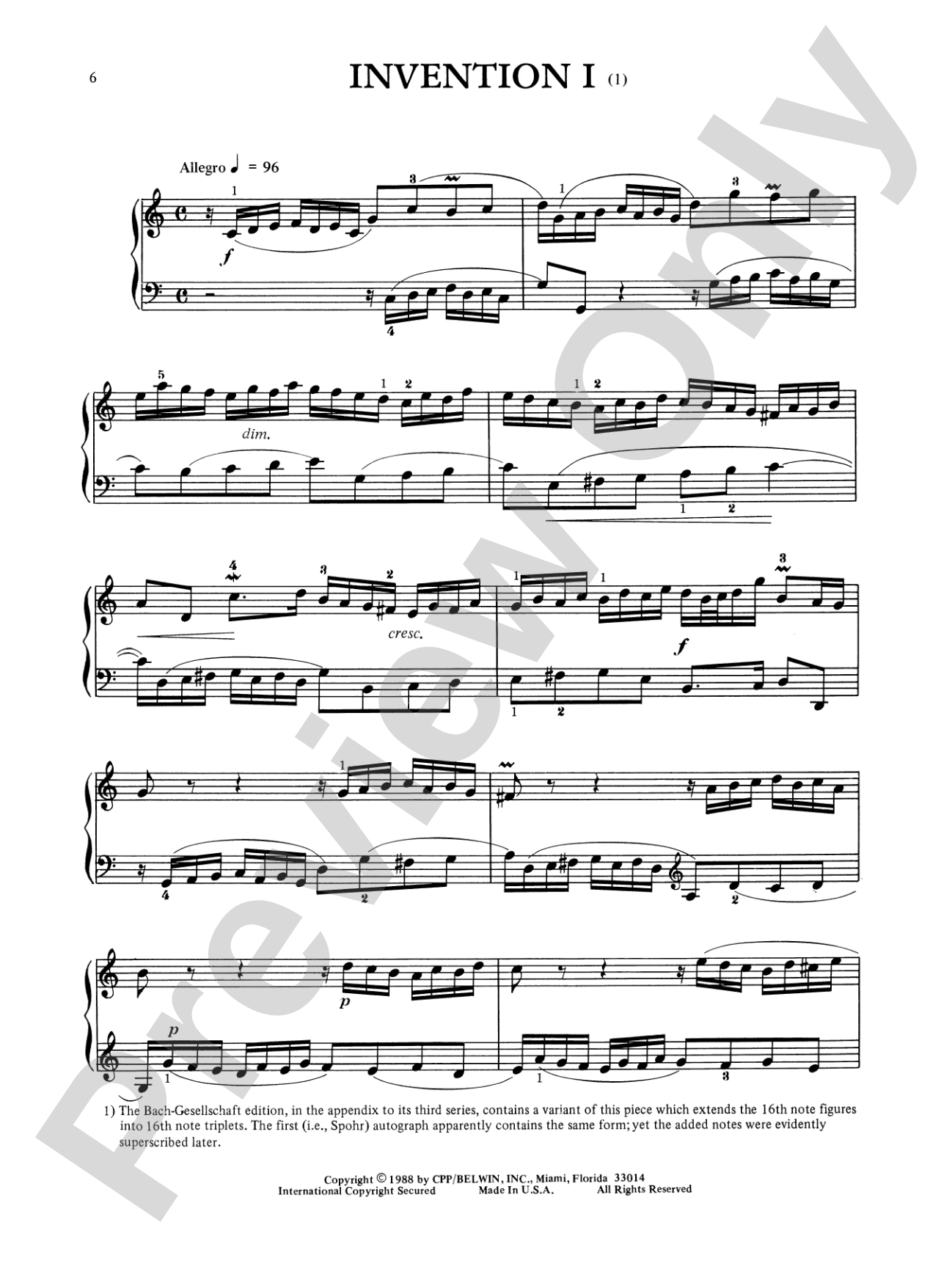
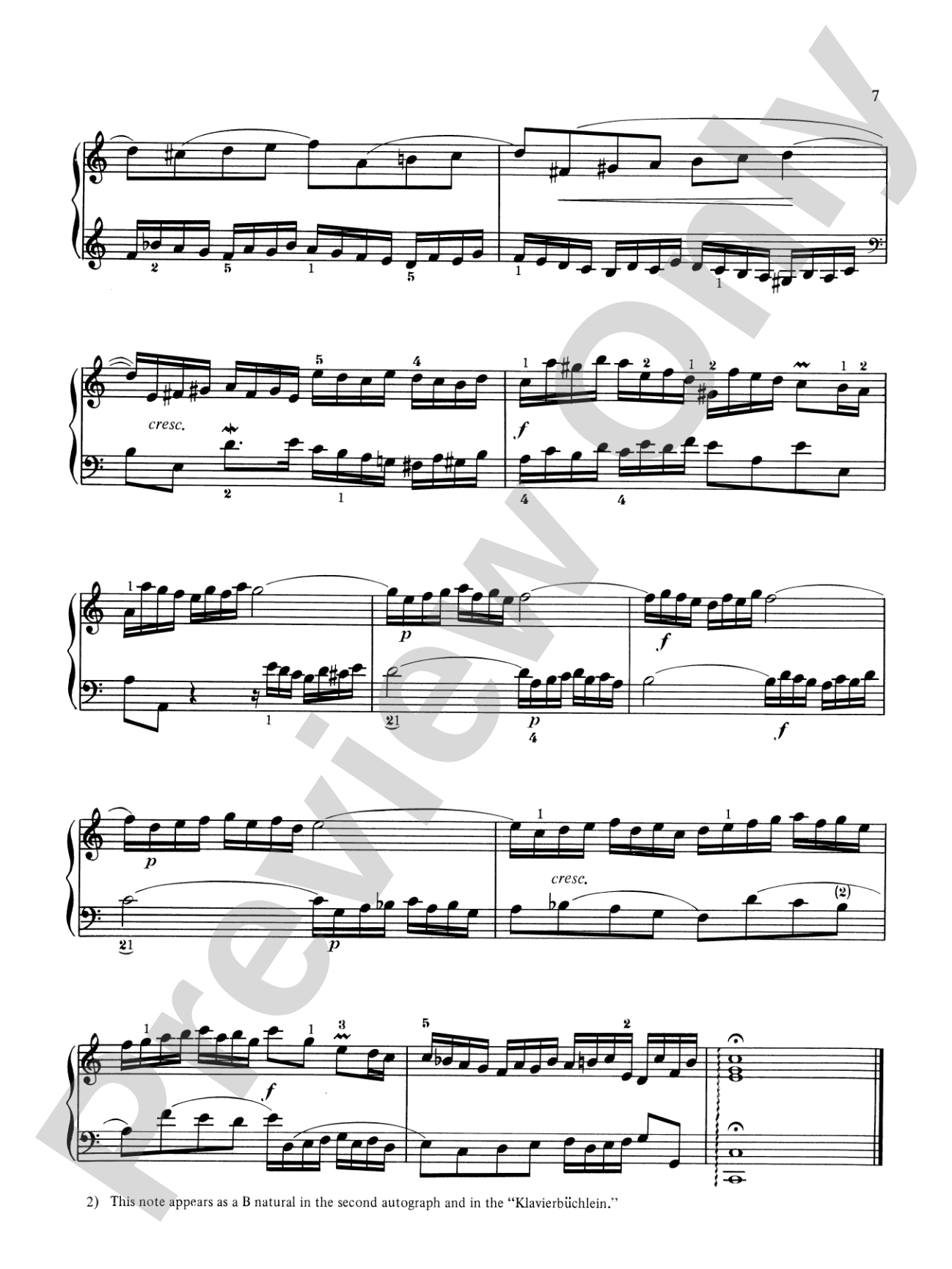

Bach: Two-Part Inventions (Ed. Hans Bischoff): Piano Book
By Johann Sebastian Bach / ed. Hans Bischoff
Item: 00-PK-0002851

$6.99
Pickup currently not available
Buy Extra Parts (Digital PDF Download)
Parts Added to Cart!
Related Items
Two-Part Inventions: Piano Book |
$6.95
|
View |
Description
This collection includes a preface and a table of embellishments.


Don't just read it, hear it, play along with it, and watch your students grow with it. In MakeMusic Cloud, Bach: Two-Part Inventions (Ed. Hans Bischoff): Piano Book comes alive with professional accompaniment, adjustable tempo, and built-in practice tools that turn solo practice into real progress.
Open in the Player
Jump straight in and assign it today.
Start Your Free Trial
Open this title and explore the full library in minutes.
Sample Audio
No sample audio found.
Sample Video
No sample videos found.
Additional Details
Series:
Kalmus Edition
Publisher:
Alfred Music
Page Count:
36
SKU:
00-PK-0002851
More about this title
About the Composer: Johann Sebastian Bach
Johann Sebastian Bach (1685, 1750) stands as the architect of modern counterpoint and harmonic language. His systematic exploration of musical structures laid the foundation for everything that came after, from Mozart to Brahms to contemporary composers working in classical forms.
Why we love this
These inventions occupy a unique space in piano pedagogy: they sound effortless and lyrical while demanding serious musicianship from the player. Unlike exercise-driven method books, each invention stands as a complete musical statement with character and purpose. Pianists at this level benefit enormously from sustained contact with Bach's voice leading; it clarifies how melody and bass interact and trains the ear for authentic harmonic movement.
What to expect
Two voices in conversation, trading ideas and mirroring each other with mathematical precision yet graceful, singing quality. Each invention unfolds with clarity and purpose, revealing new details in counterpoint and harmony with each encounter. The music feels both intellectually substantial and emotionally direct, never precious or ornamental.
Who it's for
Intermediate to advanced pianists moving beyond early-level repertoire who are ready to engage with real counterpoint. These inventions serve students preparing for music theory study, those entering high school or college music programs, and pianists seeking to deepen their understanding of musical structure and voice independence.
How to get the most out of it
- Separate the voices by dynamic shaping rather than extreme volume differences. Let the inner voice breathe with subtle inflection so both lines remain audible and independent.
- Practice each hand alone until the voice is secure, then bring hands together with clear awareness of which voice leads at any given moment.
- Attend to the embellishments listed in the preface with stylistic consistency. Period ornaments are integral to the line, not decorative additions.
- Shape phrases by voice rather than by harmonic arrival. Follow the melodic contour of each line to reveal Bach's structural thinking.
How to use it
Program these as recital repertoire for students demonstrating technical and musical maturity. A single invention or a curated group of three to five makes an elegant addition to a student recital, positioning the pianist as a serious musician. They also work well alongside Baroque ensemble pieces in a concert exploring period music, or as the foundation for a program tracing keyboard music from Bach to the Romantics.
Skills your students will build
- Two-part voice leading and independence between hands
- Recognition and interpretation of Baroque ornaments and embellishments
- Phrasing and shaping by voice rather than by harmonic progression
- Clarity in articulation and touch to support contrapuntal texture
- Score reading and analysis of structural design and thematic development