

Bach: Twenty One Favorite Pieces
By Johann Sebastian Bach
Level: Intermediate / Advanced
Item: 00-PC-0013352
$0.99
Pickup currently not available
Description
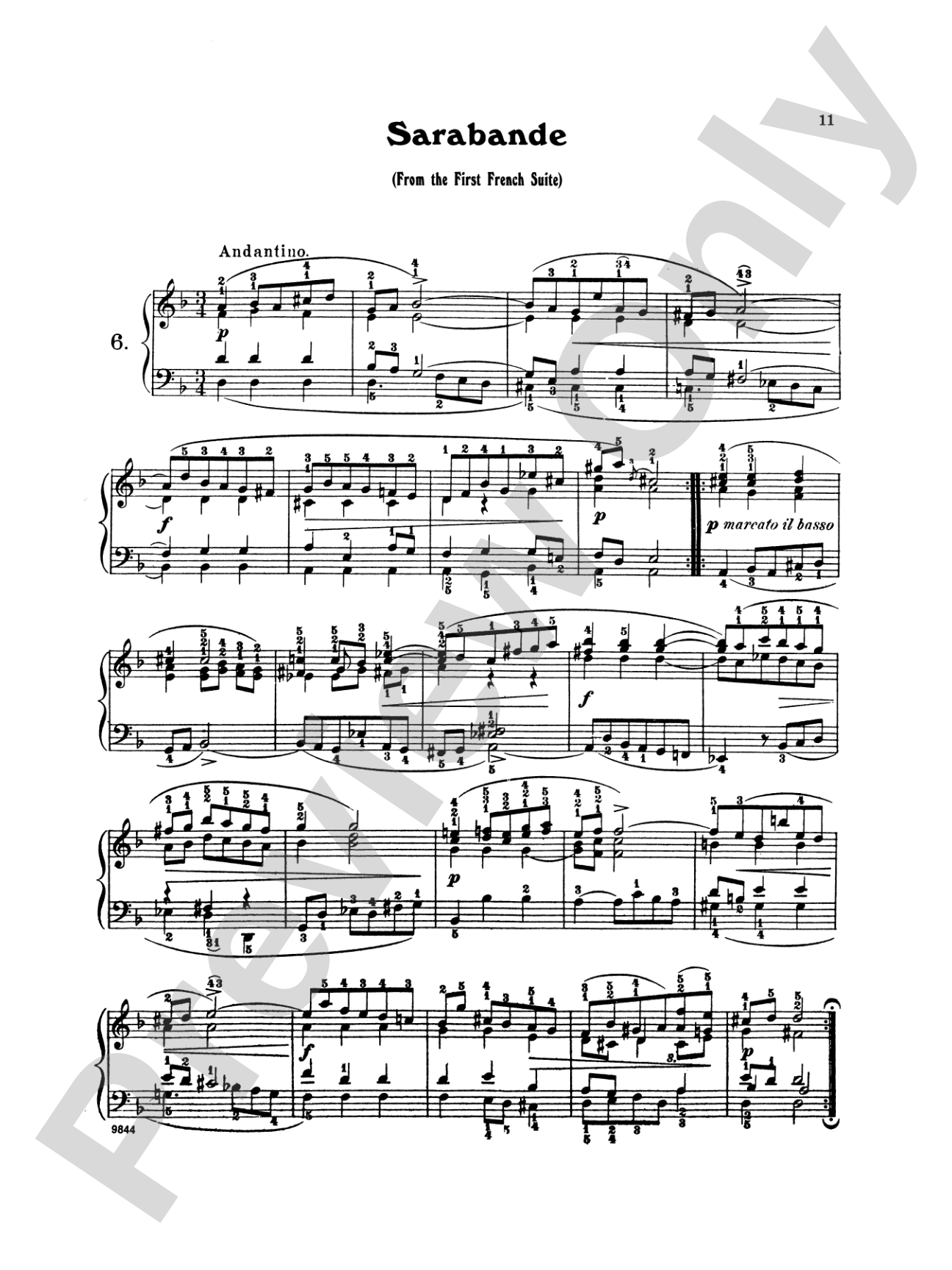
This collection of pieces by Johann Sebastian Bach, edited by Heinze, contains both original keyboard works and transcriptions for piano from other instrumental works, all of them well-known and suitable for recital performance at the piano. 43 pages. Includes: Aria from Partita No. 4 in D * Aria from the "Pfingst-Cantate" (Pentecost Cantata) in F * Bourree from English Suite No. 2 in A Minor * Bourree from Cello Suite No. 3 in G * Bourree from Trumpet suite in D * Bourree from Violin Sonata No. 2 in G Minor * Gavotte from French Suite No. 5 in G * Gavotte from English Suite No. 6 in D Minor * Gavotte from English Suite No. 3 in E Minor * Gavotte from Cello Suite No. 6 in D * Gigue from Partita No. 1 in B-flat * Intrata from Cello Suite No. 5 in G Minor * Menuet from Partita No. 1 in B-flat * Menuet from French Suite No. 3 in B Minor * Menuet from Cello suite No. 1 in D * Passepied from English Suite No. 5 in E Minor * Praeludium from Partita No. 1 in B-flat * Preamble from Violin Sonata No. 6 in E * Rondo-Gavotte from Violin Sonata No. 6 in E * Sarabande from English Suite No. 5 in E Minor * Sarabande from French Suite No. 1 in D Minor.


Don't just read it, hear it, play along with it, and watch your students grow with it. In MakeMusic Cloud, Bach: Twenty One Favorite Pieces comes alive with professional accompaniment, adjustable tempo, and built-in practice tools that turn solo practice into real progress.
Open in the Player
Jump straight in and assign it today.
Start Your Free Trial
Open this title and explore the full library in minutes.
Sample Audio
No sample audio found.
Sample Video
No sample videos found.
Additional Details
Series:
Kalmus Edition
Publisher:
Alfred Music
Page Count:
44
SKU:
00-PC-0013352
More about this title
About the Composer: Johann Sebastian Bach
Johann Sebastian Bach (1685-1750) stands as one of the most prolific and systematically rigorous composers in Western music history. His output spans nearly every musical genre of the Baroque era, from intimate keyboard works to large-scale vocal compositions, and his music demonstrates an unmatched mastery of counterpoint, harmonic language, and structural coherence.
Why we love this
This collection captures Bach's genius at the keyboard level while preserving the sophistication of works originally written for other instruments. The arrangement of pieces across keys and dance forms creates natural programming variety, and the inclusion of both partitas and suites alongside transcriptions introduces pianists to the full breadth of Bach's keyboard and instrumental catalog without requiring equal facility on violin, cello, or harpsichord.
What to expect
These pieces balance intellectual clarity with genuine lyricism. Whether performing a graceful Gavotte or a rhythmically intricate Gigue, the music unfolds with the precision of a fugue but the emotional warmth of a dance. The transcriptions retain the melodic character of their original instrumental voices while inviting the fuller harmonic palette that only the piano can provide.
Who it's for
Pianists at the intermediate to advanced level who are building a foundation in Baroque keyboard practice and seeking recital-ready repertoire. This collection also serves teachers and pianists who want to explore Bach beyond the Well-Tempered Clavier and Inventions, and performers preparing for competitions or examinations that require historical repertoire.
How to get the most out of it
- Maintain transparent voice leading in polyphonic sections; Bach's counterpoint reveals its elegance only when each line remains clearly audible throughout passage work.
- Observe the character and tempo implied by each dance form. A Minuet moves with courtly restraint; a Gigue demands rhythmic precision and articulation that conveys its sprightly character.
- Shape phrases by understanding harmonic rhythm rather than relying on dynamic swells. Bach's phrase architecture often turns on harmonic arrivals, not expressive peaks.
- Balance ornamentation carefully in transcriptions from other instruments. What may sound natural on violin or cello often requires judicious restraint on piano to avoid muddying texture.
How to use it
Pair selections from this collection to create all-Bach recital programs that demonstrate pianistic range across different keys and forms. A Praeludium, Menuet, and Gigue from the Partitas can anchor a first-half classical program, while an English Suite Gavotte and Sarabande provide refined late-program contrast. The collection also works well for prelude programs, church services, or salon recitals where sustained focus on a single great composer deepens audience understanding.
Skills your students will build
- Baroque counterpoint and voice independence
- Ornamentation and stylistically authentic embellishment
- Dance forms and their characteristic rhythmic profiles
- Keyboard independence across hand parts in polyphonic textures
- Harmonic analysis through functional listening
- Transcription awareness and adaptation of instrumental idiom to piano