
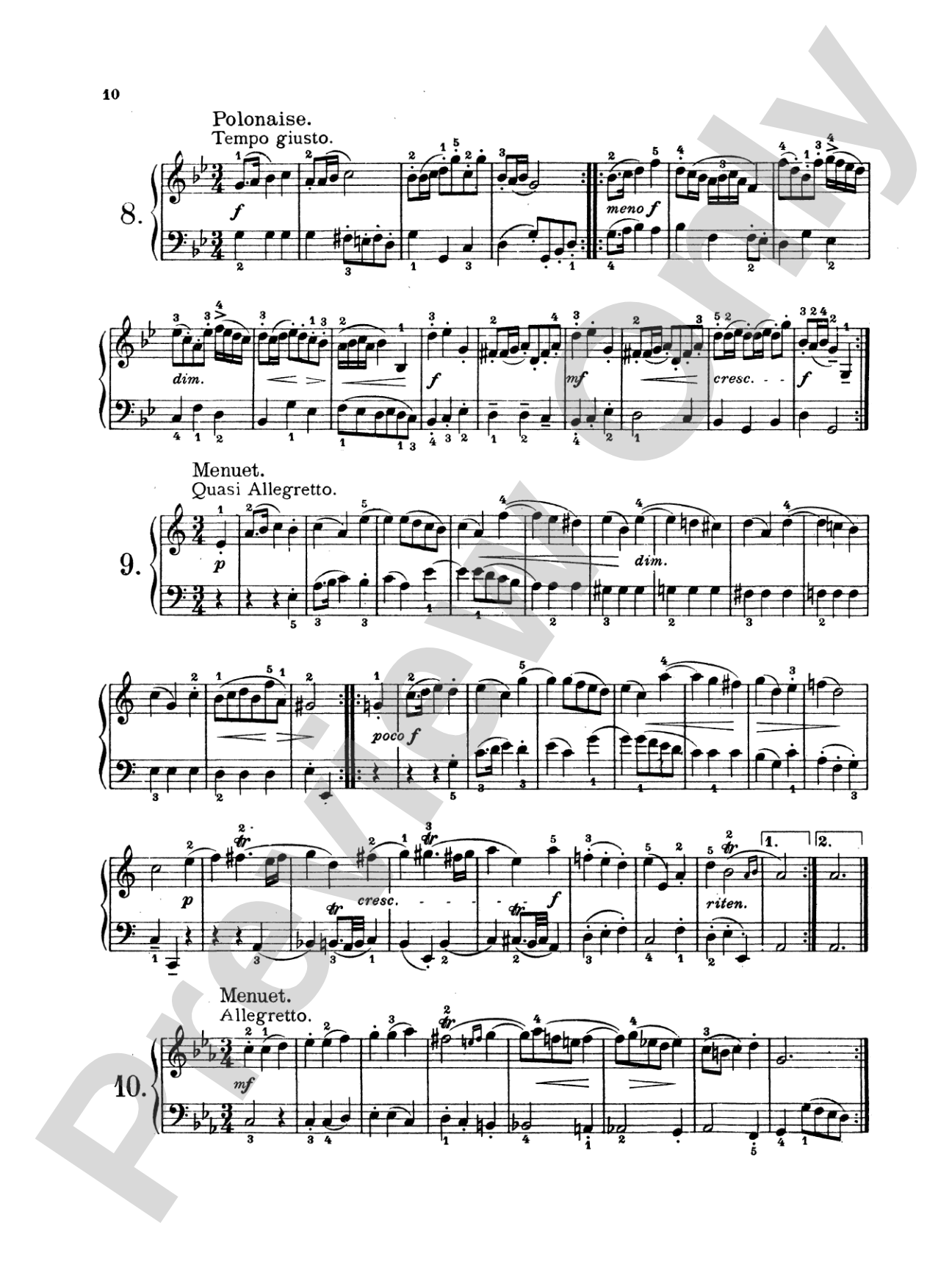

Bach: Twenty Easy Pieces from the Anna Magdalena Notenbuch
By Johann Sebastian Bach
Item: 00-PC-0004417
$0.99
Pickup currently not available
Description
A collection of piano solos composed by Johann Sebastian Bach.


Don't just read it, hear it, play along with it, and watch your students grow with it. In MakeMusic Cloud, Bach: Twenty Easy Pieces from the Anna Magdalena Notenbuch comes alive with professional accompaniment, adjustable tempo, and built-in practice tools that turn solo practice into real progress.
Open in the Player
Jump straight in and assign it today.
Start Your Free Trial
Open this title and explore the full library in minutes.
Sample Audio
No sample audio found.
Sample Video
No sample videos found.
Additional Details
Series:
Kalmus Edition
Publisher:
Alfred Music
Page Count:
20
SKU:
00-PC-0004417
More about this title
About the Composer: Johann Sebastian Bach
Johann Sebastian Bach (1685-1750) stands as one of music's most prolific and influential composers, with a catalog spanning nearly every Baroque genre except opera. Working primarily as a church musician and court composer across Germany, Bach synthesized German, Italian, and French musical traditions into a language of unmatched contrapuntal sophistication and harmonic depth. His pedagogical works, including the Anna Magdalena Notenbuch, reveal a composer who understood how to craft pieces that teach while they inspire, making them essential repertoire for developing pianists across centuries.
Why we love this
These twenty pieces are direct pathways into Bach's world without the technical demands of the Inventions or Prelude and Fugue cycles. Each piece teaches genuine voice-leading and harmonic thinking while remaining approachable, making them ideal for students ready to move beyond generic teaching pieces into real musical literature. The Kalmus edition presents them cleanly and affordably, removing barriers between students and one of music's foundational voices.
What to expect
These miniatures radiate clarity and order while remaining genuinely expressive; each one unfolds with the inevitability of a perfectly crafted sentence, where every note serves both structural and musical purpose. The dialogue between voices creates conversations that feel natural and conversational rather than academic, inviting performers into Bach's world of transparent sophistication and quiet depth. There is elegance in their economy; these are not pieces that sprawl or rely on keyboard display, but rather distill Baroque musical thought into its most refined form.
Who it's for
Early intermediate to intermediate pianists who have moved past note-reading exercises and are ready to engage with genuine Baroque repertoire. Students studying music history or theory benefit from performing pieces that embody the harmonic and contrapuntal principles they are learning in the classroom. Teachers seeking material that bridges technical development with musical substance will find these pieces invaluable for students preparing for competitions, recitals, or simply deepening their repertoire.
How to get the most out of it
- Shape each line with independence; Bach's inner voices carry melodic weight equal to the top voice, so bring out all four voices with appropriate dynamic nuance rather than letting them fade into accompaniment.
- Honor the baroque phrasing by thinking in longer musical arcs; avoid the modern habit of separating phrases into isolated gestures, and instead shape toward natural harmonic goals.
- Approach ornaments and articulation with period style in mind; keep decorative figures light and quick unless the context suggests otherwise, and remember that baroque articulation often separates notes more cleanly than later styles.
- Pay close attention to the figured bass logic underlying these pieces, as understanding the harmonic progression will clarify voice leading and help you hear why each note belongs where it does.
How to use it
Feature individual pieces throughout a recital program to anchor contrasting sections alongside Romantic or contemporary works; a single Bach prelude or minuet offers elegant balance and historical foundation. Assign them sequentially through a lesson year to develop technical and musical facility in parallel, using each piece as a stepping stone toward more complex Bach literature. Include them in student recitals that emphasize Baroque masters, or program several in succession to create a portrait of Bach's accessible yet sophisticated keyboard writing.
Skills your students will build
- Reading baroque notation and understanding figured bass contexts
- Independent voice leading with all four voices carrying musical weight
- Baroque ornamentation and period-appropriate articulation
- Harmonic analysis and understanding functional progressions
- Long-line phrasing and shaping across multiple voices
- Recognizing structural patterns and baroque formal conventions