
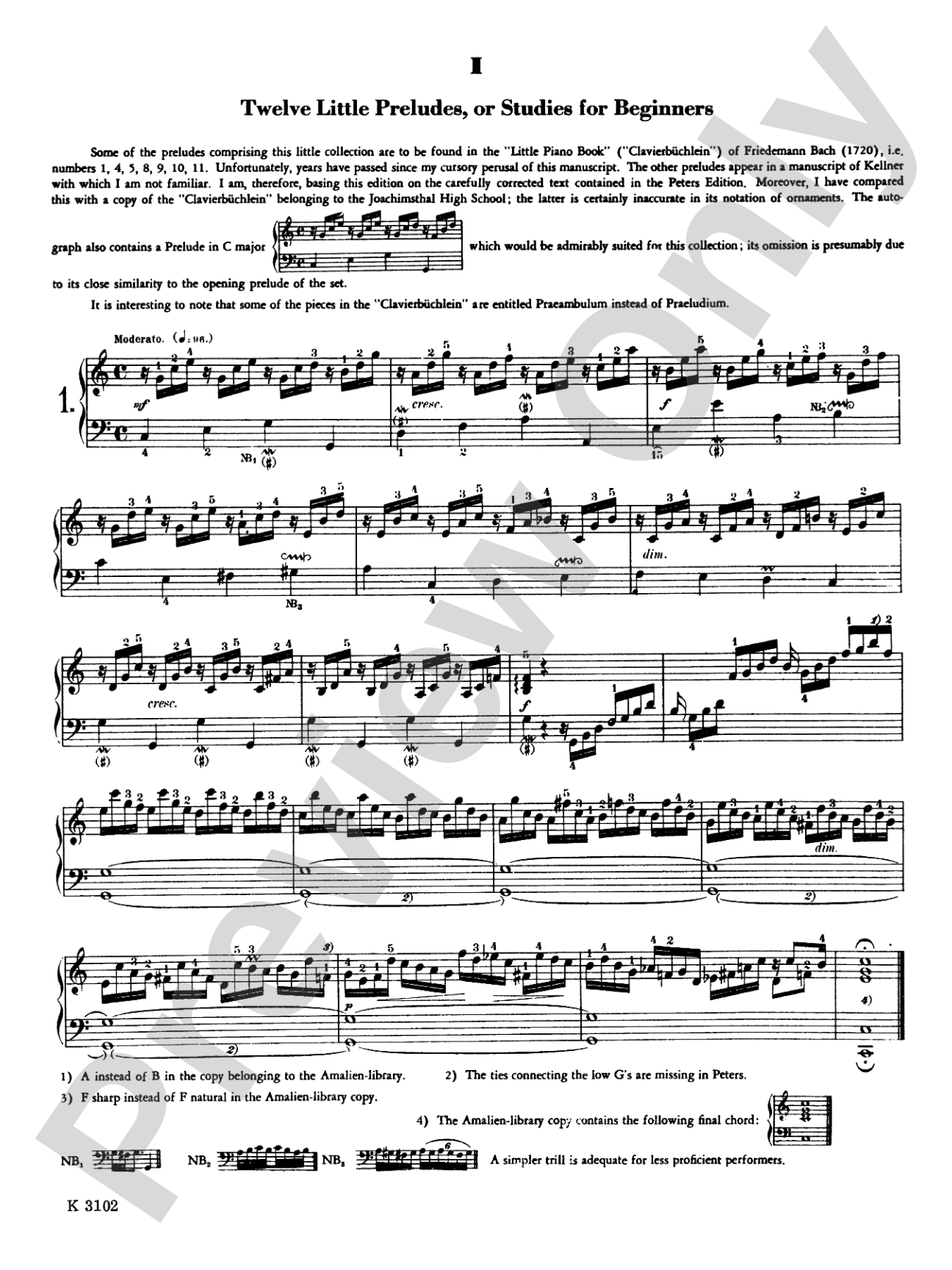

Bach: Twelve Little Preludes: Piano Book
By Johann Sebastian Bach
Item: 00-PK-0002879

$6.99
Pickup currently not available
Buy Extra Parts (Digital PDF Download)
| Product | Price | Quantity |
|---|---|---|
| Bach: Twelve Little Preludes | $0.99 | |
| Bach: Twelve Little Preludes | $0.99 | |
| Bach: Twelve Little Preludes | $0.99 | |
| Bach: Twelve Little Preludes | $0.99 | |
| Bach: Twelve Little Preludes | $0.99 | |
| Bach: Twelve Little Preludes | $0.99 | |
| Bach: Twelve Little Preludes | $0.99 | |
| Bach: Twelve Little Preludes | $0.99 | |
| Bach: Twelve Little Preludes | $0.99 | |
| Bach: Twelve Little Preludes | $0.99 | |
| Bach: Twelve Little Preludes | $0.99 | |
| Bach: Twelve Little Preludes | $0.99 |
Parts Added to Cart!
Related Items
Twelve Little Preludes: Piano Book |
$6.95
|
View |
Description
A collection of piano solos composed by Johann Sebastian Bach.


Don't just read it, hear it, play along with it, and watch your students grow with it. In MakeMusic Cloud, Bach: Twelve Little Preludes: Piano Book comes alive with professional accompaniment, adjustable tempo, and built-in practice tools that turn solo practice into real progress.
Open in the Player
Jump straight in and assign it today.
Start Your Free Trial
Open this title and explore the full library in minutes.
Sample Audio
No sample audio found.
Sample Video
No sample videos found.
Additional Details
Series:
Kalmus Edition
Publisher:
Alfred Music
Page Count:
12
SKU:
00-PK-0002879
More about this title
About the Composer: Johann Sebastian Bach
Johann Sebastian Bach (1685, 1750) stands as one of history's most prolific and intellectually rigorous composers. His output spans nearly every musical form of the Baroque era, from fugues and cantatas to keyboard works and chamber music, all marked by intricate counterpoint and harmonic innovation that influenced composers for centuries after his death.
Bach's keyboard works in particular shaped how pianists and organists approach technique and musical thinking. His Preludes and Fugues, Inventions, and other didactic collections were often written to teach his own students, which is why they remain among the most effective tools for developing both technical facility and musical maturity.
Why we love this
These twelve pieces offer a rare combination of musical authenticity and pedagogical clarity. Rather than write down to students, Bach created genuine preludes that teach through their own musical logic, giving pianists immediate access to Baroque voice-leading, phrasing, and keyboard idiom without the steep difficulty curve of his larger works.
What to expect
Clean, purposeful keyboard writing with transparent counterpoint. Each prelude unfolds with elegant inevitability, moving through harmonic space with the calm authority of a master composer thinking aloud. The textures remain intimate despite their architectural sophistication.
Who it's for
Early to intermediate pianists seeking authentic Baroque literature beyond simplified arrangements. These pieces serve students transitioning from method books to real repertoire, as well as teachers building a foundational collection of historically significant keyboard works.
How to get the most out of it
- Shape each phrase with clear articulation between voices. Bach's counterpoint demands that listeners hear multiple melodic lines simultaneously; slight separation between voices and deliberate legato within lines clarifies his writing.
- Observe the implied harmonic rhythm rather than mechanically keeping time. These pieces often contain subtle agogic emphasis that reveals structural harmony if you allow yourself to breathe at harmonic turning points.
- Pay attention to register and hand distribution. Bach frequently shifts motivic material between hands; keep each voice audible by maintaining even tone and avoiding the reflex to crescendo on right-hand melody.
- Approach ornaments as integral to phrasing, not decoration. Where Bach includes them, ornaments typically fall on structural downbeats and strengthen harmonic arrival points.
How to use it
Program these as recital openers or interludes between larger Romantic works, allowing audiences to hear the harmonic foundations underlying later music. In studio settings, use them as supplementary material alongside method books to demonstrate idiomatic keyboard writing and Baroque phrasing in real time.
Skills your students will build
- Baroque voice-leading and independent hand parts
- Reading Baroque keyboard texture and two-staff coordination
- Phrasing across implicit harmonic structure
- Articulation that clarifies polyphonic voices
- Ornamentation and its structural purpose
- Tempo flexibility and agogic emphasis