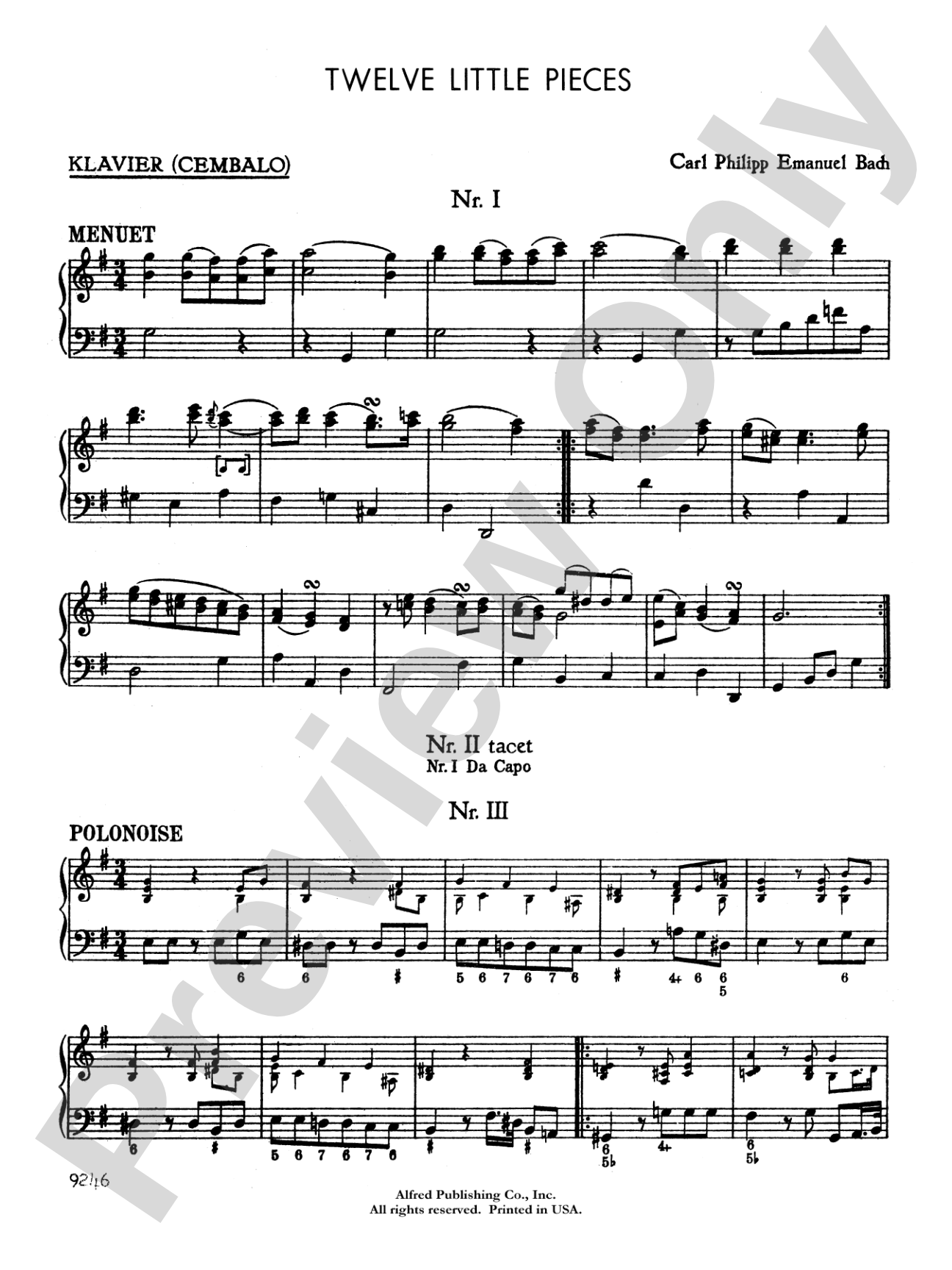
Bach: Twelve Little Pieces Sheet Music Preview

Bach: Twelve Little Pieces

By Carl Philipp Emanuel Bach

Item: 00-PC-0011946

Digital Download
$5.99
Description
A collection of exercises for Flute (or Violin) with Piano Accompaniment composed by Carl Philipp Emanuel Bach.

Don't just read it, hear it, play along with it, and watch your students grow with it. In MakeMusic Cloud, Bach: Twelve Little Pieces comes alive with professional accompaniment, adjustable tempo, and built-in practice tools that turn solo practice into real progress.

Sample Audio
No sample audio found.
Sample Video
Additional Details
Series: Kalmus Edition
Publisher: Alfred Music
Page Count: 20
SKU: 00-PC-0011946
Instrumentation: Flute (or Violin) & Piano

More about this title

About the Composer: Carl Philipp Emanuel Bach

Carl Philipp Emanuel Bach (1714–1788) was the second surviving son of Johann Sebastian Bach and one of the most influential composers of the eighteenth century. While his father was steeped in Baroque polyphony, C.P.E. Bach became a leading figure in the empfindsamer Stil (the "sensitive style"), blending expressive melody with harmonic innovation. His output includes over 200 sonatas, numerous concertos, and countless works for keyboard and chamber ensemble that shaped the Classical style. For music educators, Bach's pedagogical works stand apart for their clarity and musicality; they challenge students without overwhelming them.

Why we love this

These twelve pieces distill the elegance of mid-eighteenth-century style into accessible but genuinely musical material. The writing sits perfectly for developing flute players; the accompaniment is supportive rather than intricate, letting the soloist shine without pressure. You'll find these pieces strike a rare balance: elementary enough for intermediate students, yet refined enough that they sound mature in performance.

What to expect

Intimate and graceful. These pieces unfold with the refinement of salon music, each one a small portrait of feeling expressed through clean, singable lines. The piano supports without cluttering the texture, creating space for the flutist's voice to breathe and resonate.

Who it's for

Intermediate flute students (or violinists) ready to step beyond basic method books into genuine musical literature. These pieces work equally well for students pursuing performance exams, building recital programs, or discovering how melody and accompaniment interact in chamber music.

How to get the most out of it

  • Shape each phrase with clear direction toward its goal. C.P.E. Bach's melodies reward expressive phrasing even when the note values are straightforward.
  • Work with your pianist to establish a conversation rather than accompaniment. The piano part often mirrors or complements the flute line; lock these moments together early.
  • Observe the stylistic context. These pieces sit between Baroque and Classical language, so avoid heavy rubato; instead, let articulation and dynamic shape convey expression.
  • Keep your tone warm and singing throughout. The simplicity of texture means every note matters, and a well-rounded sound elevates even brief passages.

How to use it

Program one or two of these pieces as standalone recital items alongside more contemporary work; they provide stylistic contrast and demonstrate command of the Baroque-Classical repertoire. Alternatively, use them as pedagogical touchstones during the school year to build fluency in period style and chamber collaboration before students tackle longer sonatas.

Skills your students will build

  • Baroque and early Classical phrasing and articulation
  • Melodic shape and expression within restrained, elegant harmonic language
  • Chamber music balance and collaboration with keyboard accompaniment
  • Lyrical tone production over varied dynamic ranges
  • Reading and interpreting the ornaments and stylistic conventions of the mid-eighteenth century

You May Also Like