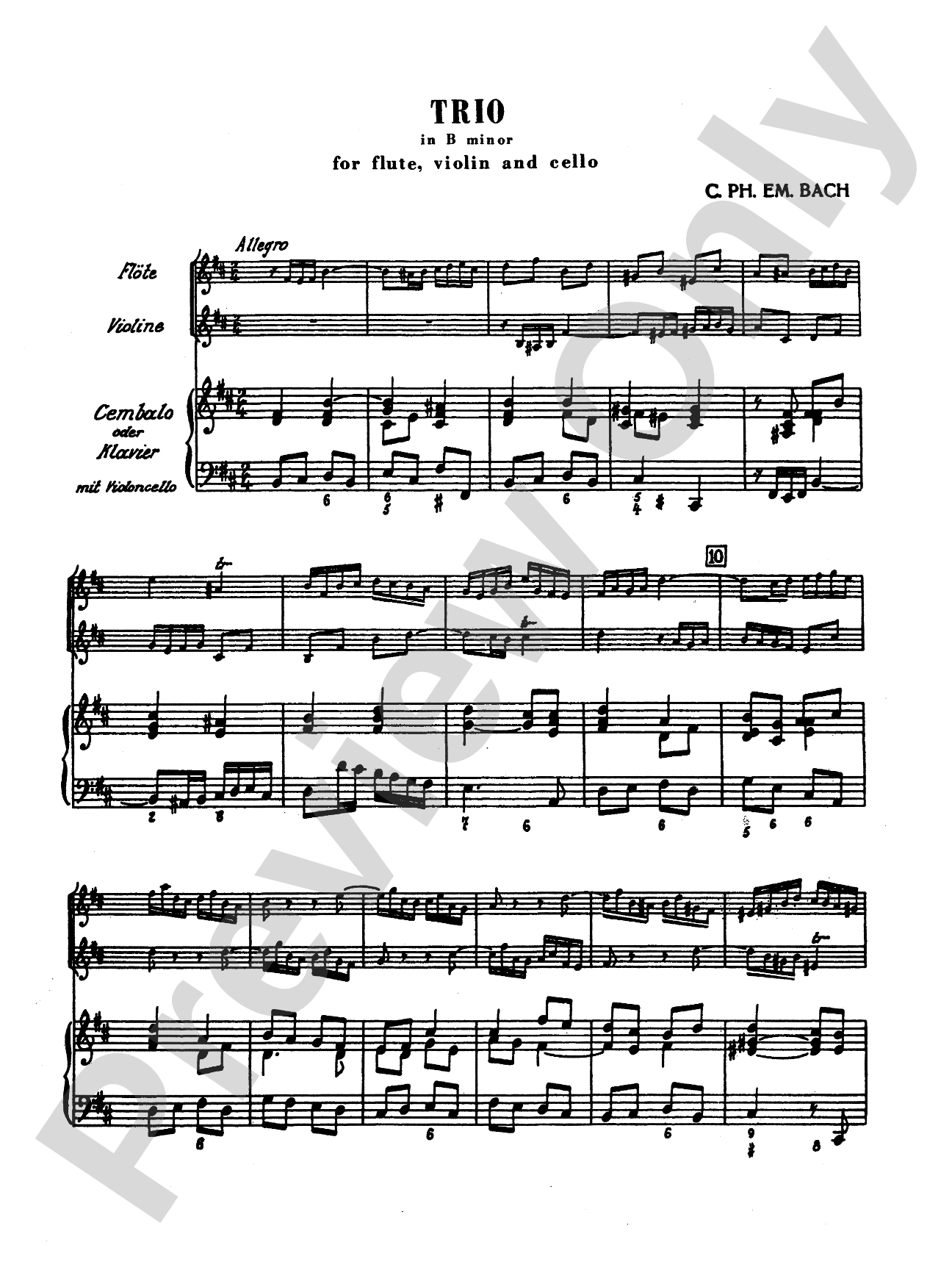
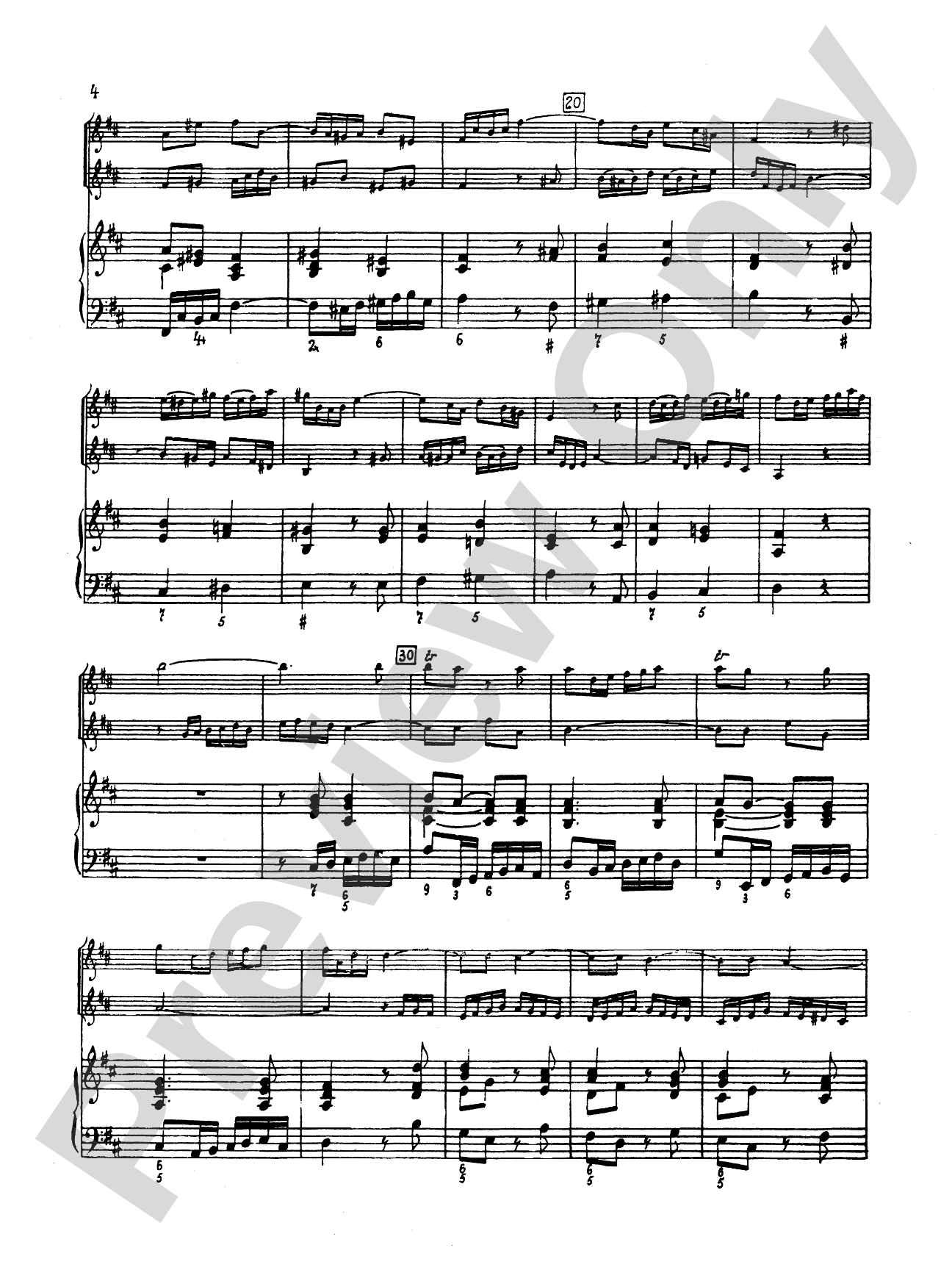
Bach: Trio in B Minor Sheet Music Preview

Bach: Trio in B Minor

By Carl Philipp Emanuel Bach

Item: 00-PC-0011123

Digital Download
$8.99
Description

Don't just read it, hear it, play along with it, and watch your students grow with it. In MakeMusic Cloud, Bach: Trio in B Minor comes alive with professional accompaniment, adjustable tempo, and built-in practice tools that turn solo practice into real progress.

Sample Audio
No sample audio found.
Sample Video
Additional Details
Series: Kalmus Edition
Publisher: Alfred Music
Page Count: 28
SKU: 00-PC-0011123
Instrumentation: Flute, Violin, & Cello (with Piano)

More about this title

About the Composer: Carl Philipp Emanuel Bach

Carl Philipp Emanuel Bach (1714-1788) was the second surviving son of Johann Sebastian Bach and became one of the most influential composers of the eighteenth century. His work bridged the Baroque and Classical periods, and he developed a highly expressive compositional style that emphasized emotional depth and harmonic innovation. As a keyboardist and composer, he served at the courts of Frederick the Great in Berlin and later at Hamburg, where his prolific output of chamber music, keyboard works, and symphonies shaped the emerging Classical aesthetic.

C.P.E. Bach's chamber music is essential to the repertoire. His trio sonatas and similar works demonstrate the sophisticated interplay between instruments that became a hallmark of the Classical chamber ensemble. Teachers and students value these works for their elegant counterpoint, dramatic harmonic language, and the clarity they bring to ensemble playing.

Why we love this

This trio sits at a crucial stylistic crossroads where the Baroque's contrapuntal rigor meets the Classical period's expressive lyricism. The writing for flute, violin, and cello with keyboard support creates naturally balanced sonorities and gives each player meaningful material throughout, making it both musically rewarding and pedagogically sound for advanced chamber musicians.

What to expect

Graceful and introspective, with moments of genuine pathos that reflect C.P.E. Bach's "Empfindsamkeit" (sensitive style). The B minor tonality lends an intimate, sometimes melancholic character, while the interweaving of the three instruments creates a sense of elegant conversation rather than display.

Who it's for

Advanced chamber ensembles and conservatory-level students ready to engage with early Classical style and counterpoint. This work suits flutists, violinists, and cellists who are developing ensemble maturity and want to explore the sophisticated writing of the galant period.

How to get the most out of it

  • Balance the three melodic lines carefully in the opening sections; the flute and violin often exchange material that needs clear articulation to distinguish voices.
  • Attend to the harmonic rhythm created by the keyboard part; its figures often establish the structural pulse, so coordinate with the continuo player to maintain ensemble cohesion.
  • Shape phrases according to the harmonic destinations rather than bar lines; C.P.E. Bach's phrase structures often extend across measures in ways that reward long-line thinking.
  • The B minor key signature invites darker, more introspective colors; resist the urge toward a modern bright sound, and explore the warmer registers available to each instrument.

How to use it

Program this alongside other Baroque and early Classical chamber works to illustrate the stylistic transition of the eighteenth century. It pairs naturally with music by Quantz, Telemann, or early Mozart, and works well as a centerpiece for a chamber concert showcasing the depth of the galant repertoire.

Skills your students will build

  • Counterpoint in three parts with harmonic awareness
  • Balancing independent melodic lines within a cohesive ensemble sound
  • Phrasing according to harmonic rhythm rather than metric structure
  • Expressive performance of galant-style ornamentation and articulation
  • Collaborative listening and response in a chamber setting

You May Also Like