
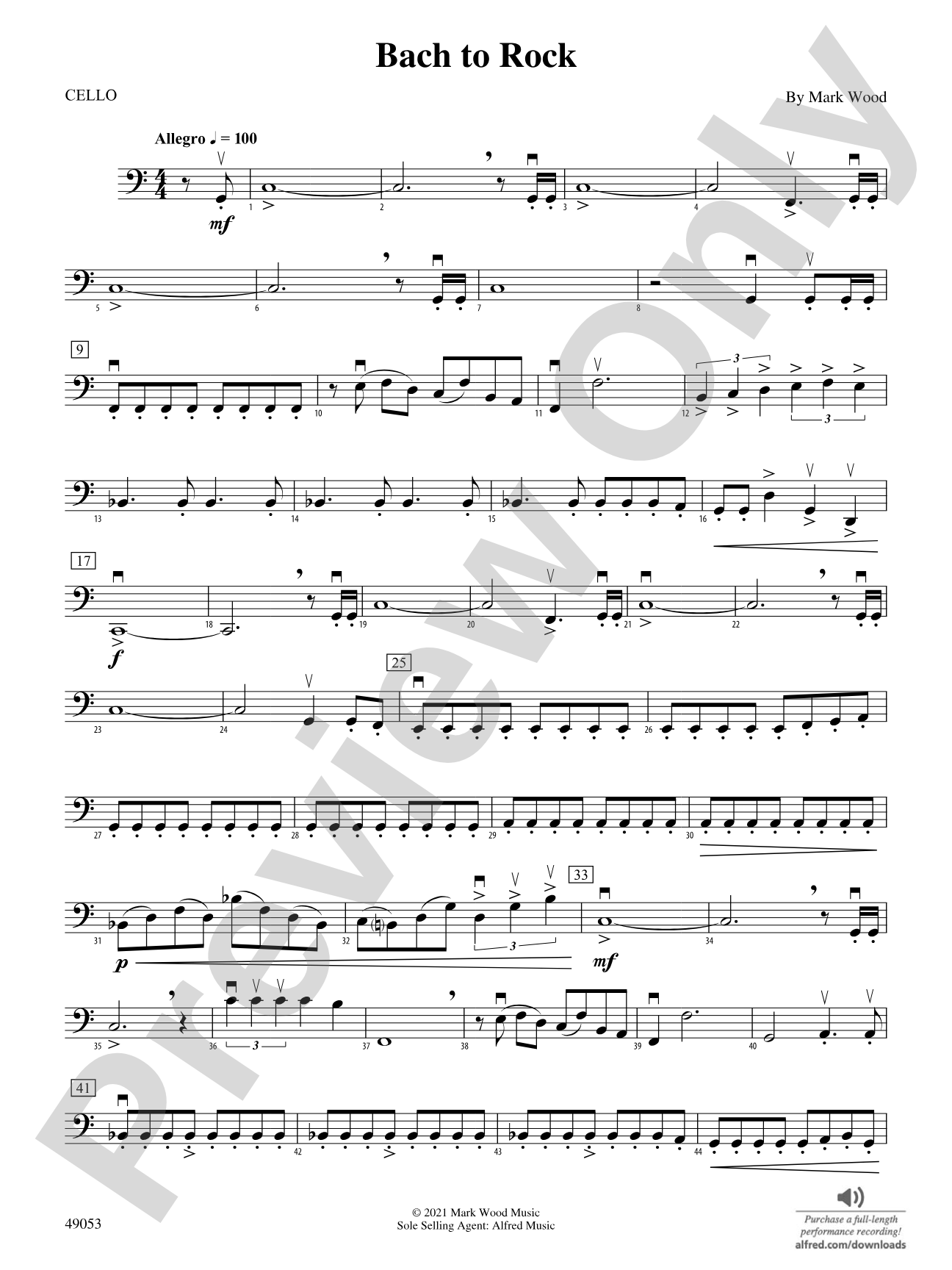

Bach to Rock: Cello
By Mark Wood
Grade: 3.5
Item: 00-PC-0019150_VC1
$3.00
Pickup currently not available
Description
The traditional bolero is a moderately slow dance in triple meter which originated in late-18th century Spain. Since then it has spread to other countries and become transformed in the process. The Cuban bolero became a bit faster in tempo and duple in meter. In the U.S. it became a staple of competitive ballroom dancing, even faster and in 4/4 time. Maurice Ravel's Boléro for orchestra harkens back to the slower Spanish dance in three. Wood's Bolero by Mark Wood, on the other hand, focuses on the American version but maintains elements of the dance's origins and first iterations. For string orchestra with optional rock rhythm section parts. (3:10)
Download Play-Along Track


Download Play-Along Track
Bach to Rock: Cello isn't in MakeMusic Cloud just yet...but it could be. Let us know you'd like to see it, and you'll help shape what comes next. In the meantime, start a free trial and dive into thousands of interactive titles your students can play along with today.
Request This Title
Tell us you want it.
Start Your Free Trial
Explore everything that's ready to play right now.
Sample Audio
1
Bach to Rock
--:--
Bach to Rock
0:00
0:00
Sample Video
Additional Details
Series:
Mark Wood Series
Publisher:
Alfred Music
SKU:
00-PC-0019150_VC1
More about this title
About the Composer: Mark Wood
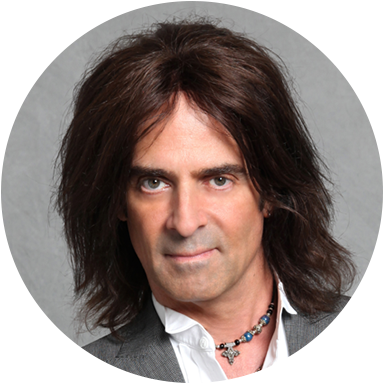
Mark Wood stands as the electric violinist who redefined what strings could do in a rock context. Over four decades, he's moved from pioneering the genre itself as a founding member of Trans Siberian Orchestra to building a prolific career as a composer, performer, and inventor. His work spans film and television scores (including an Emmy for Olympic broadcast music), seven solo albums, collaborations with artists from Paul McCartney to Lenny Kravitz, and performances on stages from Carnegie Hall to Madison Square Garden.
Beyond the concert hall and recording studio, Wood has become a vital advocate for music education. His compositions and arrangements for student ensembles demonstrate his commitment to bringing the energy and innovation that define his own artistry into the hands of young musicians. He remains actively engaged in composition and performance through The Mark Wood Experience, his touring band with vocalist Laura Kaye.
Why we love this
This arrangement captures the swagger of American ballroom style while honoring the bolero's Spanish roots, giving your students a piece that feels contemporary without demanding virtuosity beyond their reach. Wood's approach to orchestration creates momentum across the string section that makes players feel like they're part of something energetic and alive, not just executing technical passages. The optional rock rhythm section keeps doors open for flexible instrumentation while the play-along track anchors ensemble cohesion for conductors managing mixed reading levels.
What to expect
The piece pulses with controlled energy, swaying between the hypnotic repetition of traditional bolero and the driving momentum of American competitive ballroom. Layers of string texture create a sophisticated soundscape that feels both modern and rooted in something ancient, with enough forward motion to keep young players engaged and listeners leaning in.
Who it's for
String orchestras at the intermediate to early advanced level (Grade 3.5) seeking repertoire that engages students with contemporary style without asking them to abandon technique. This works equally well for programs building hybrid ensembles with optional rhythm section or for traditional string configurations looking to bridge classical and popular idioms.
How to get the most out of it
- Establish the groove with your rhythm section players first, even if they're optional. Their pulse defines the American bolero character and steadies the string parts that ride over it.
- Emphasize the layering of melodic lines rather than uniform balance across sections. The bolero style thrives when different voices maintain distinct colors and forward motion simultaneously.
- Use the play-along track in sectionals before full ensemble rehearsal. String players can lock into the harmonic and rhythmic foundation before adding their own textural nuance.
- Shape phrases with slight tempo flexibility around the turning points, but return to the groove immediately. The rock underpinning demands rhythmic precision even when expressive choices bend the line.
How to use it
Position this as a spring or year-end concert offering that showcases your ensemble's ability to navigate contemporary popular idioms. It pairs effectively alongside classical Spanish repertoire in a thematic concert, or stands alone as a bridge piece that opens programming conversations with audiences who might not expect strings to command a pop-rock stage.
Skills your students will build
- Maintaining rhythmic precision in duple and implied triple metric relationships
- Balancing sustained harmonic texture against melodic lines in different registers
- Playing with rhythmic drive and forward momentum without rushing
- Responding to optional rhythm section accompaniment and play-along tracks
- Executing clean transitions between textural layers and thematic sections