

Bach: Three-Part Inventions (Ed. Mugellini): Piano Book
By Johann Sebastian Bach / ed. Bruno Mugellini
Item: 00-PK-0003792

$8.99
Pickup currently not available
Buy Extra Parts (Digital PDF Download)
Parts Added to Cart!
Related Items
Three-Part Inventions: Piano Book |
$8.95
|
View |
Description
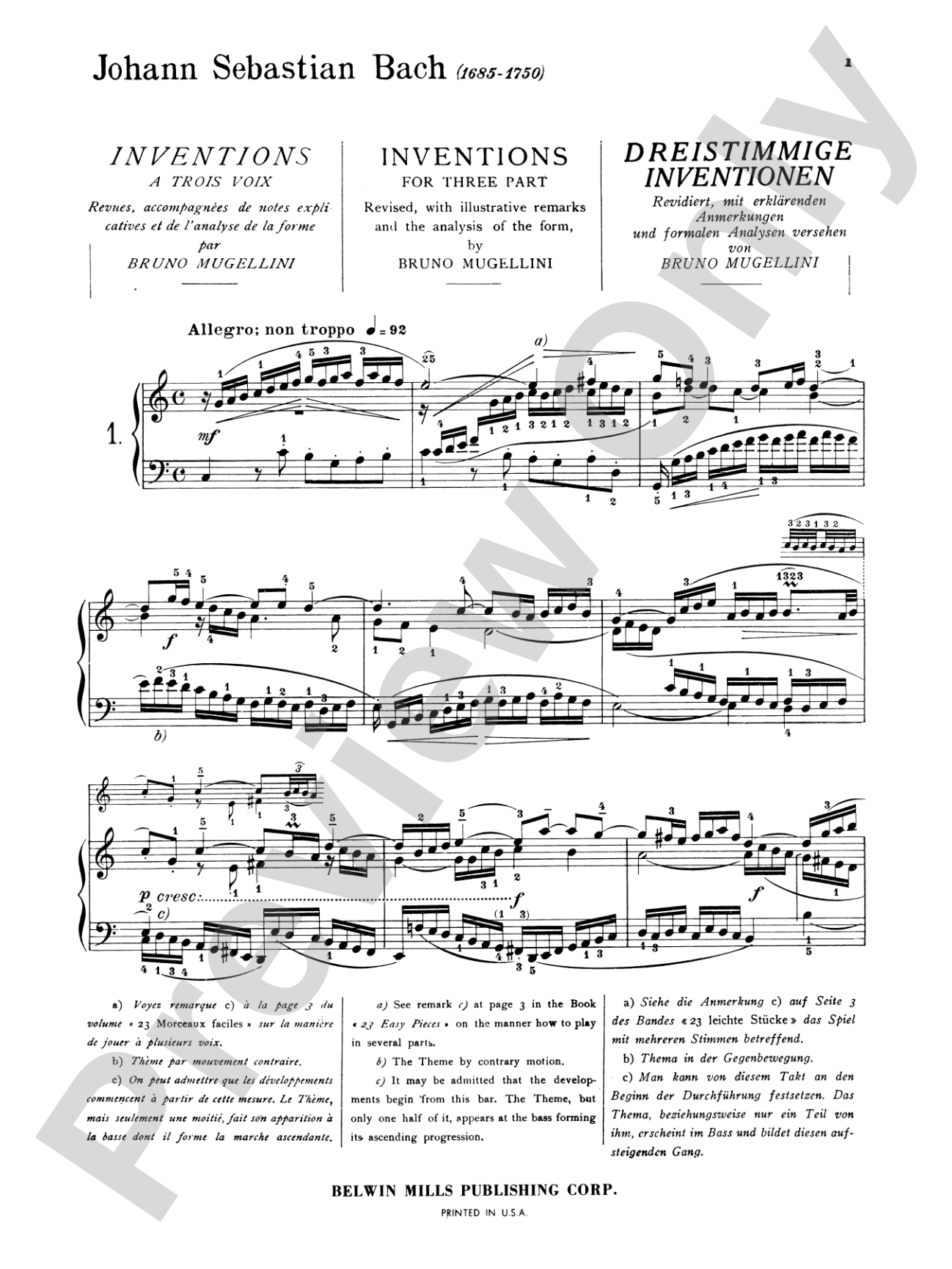
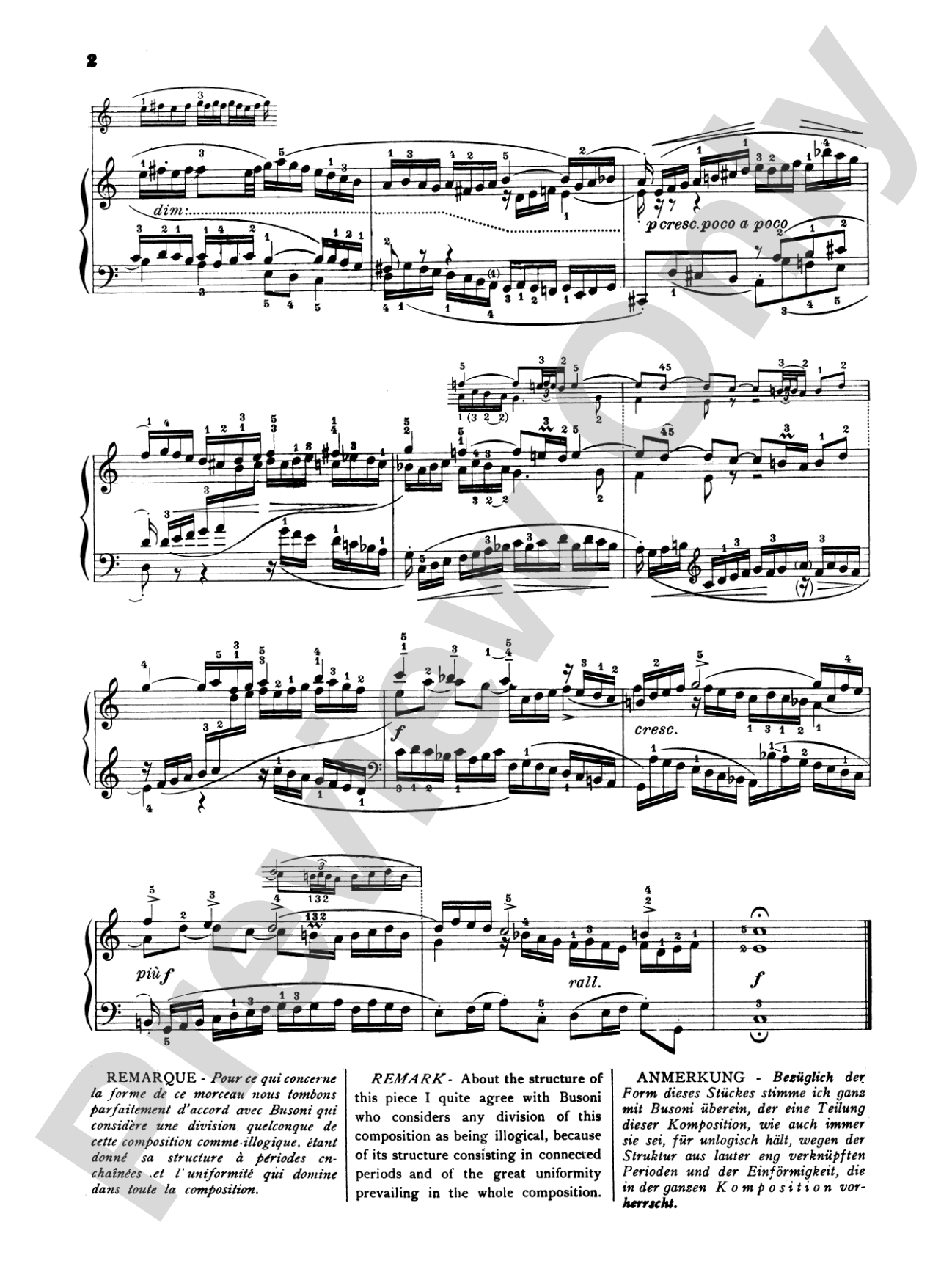
The edition of Johan Sebastian Bach's fifteen 3-Part Inventions, edited by Bruno Mugellini, is labeled as "revised, with illustrative remarks and the analysis of the form, by Bruno Mugellini." These pieces will exhibit a large amount of editorial additions, including dynamics, footnotes regarding execution of ornamentation, articulation marks and tempo indications. 46 pages.


Don't just read it, hear it, play along with it, and watch your students grow with it. In MakeMusic Cloud, Bach: Three-Part Inventions (Ed. Mugellini): Piano Book comes alive with professional accompaniment, adjustable tempo, and built-in practice tools that turn solo practice into real progress.
Open in the Player
Jump straight in and assign it today.
Start Your Free Trial
Open this title and explore the full library in minutes.
Sample Audio
No sample audio found.
Sample Video
No sample videos found.
Additional Details
Series:
Kalmus Edition
Publisher:
Alfred Music
Page Count:
48
SKU:
00-PK-0003792
More about this title
About the Composer: Johann Sebastian Bach
Johann Sebastian Bach (1685-1750) was a German composer and organist whose mastery of counterpoint and harmonic language shaped the foundation of Western classical music. His pedagogical works, including the Well-Tempered Clavier, Inventions, and Sinfonias, were written explicitly to develop the technical and musical abilities of young keyboard players, making him one of the most influential composition teachers in history.
Why we love this
Mugellini's edition strips away the mystery of Bach's ornamentation and structural intent through thoughtful editorial markings, making these masterworks accessible without sacrificing their intellectual rigor. The analytical notes and execution guides transform fifteen pieces that can feel forbidding into a coherent curriculum for developing independence between hands and clarity of voice leading.
What to expect
These inventions sparkle with mechanical precision and intellectual play, yet beneath the crystalline counterpoint lies emotional sophistication. Each piece is a compact conversation between voices, witty and rigorous, unfolding with the clarity of a well-reasoned argument.
Who it's for
Intermediate to advanced piano students who are ready for serious contrapuntal study and pianists preparing for performance or teaching of Baroque keyboard literature. This edition serves teachers who want editorial support without overwhelming their students with too many interpretive choices.
How to get the most out of it
- Observe the editorial articulation marks scrupulously; they clarify Bach's voice independence and prevent lines from bleeding into one another.
- Practice each voice separately at tempo before combining, even though this seems elementary. Bach's contrapuntal logic only becomes audible when each line speaks with intention.
- Attend to Mugellini's tempo indications as interpretive starting points, not fixed law. Allow the texture and harmonic rhythm to breathe, especially in slower movements.
- Use the footnotes on ornament execution as a springboard for exploration. Try different realizations and listen for which feels most idiomatic to the surrounding material.
How to use it
Program one or two inventions as fillers between Romantic or contemporary pieces to demonstrate harmonic clarity and rhythmic vitality. They also serve beautifully in a recital devoted to keyboard literature across centuries or as part of a Bach-focused concert.
Skills your students will build
- Independent voice leading and hand coordination across three polyphonic lines
- Reading and executing Baroque ornaments (trills, turns, mordents) with historical awareness
- Understanding melodic imitation, countersubject development, and formal structure in miniature
- Clarity of articulation and dynamic control to distinguish simultaneous melodic gestures
- Rhythmic independence and subdivision, essential for maintaining three voices without metric confusion