

Bach: Three-Part Inventions (Ed. Mason): Piano Book
By Johann Sebastian Bach / ed. William Mason
Item: 00-PK-0003877

$7.99
Pickup currently not available
Buy Extra Parts (Digital PDF Download)
Parts Added to Cart!
Related Items
Three-Part Inventions: Piano Book |
$7.95
|
View |
Description
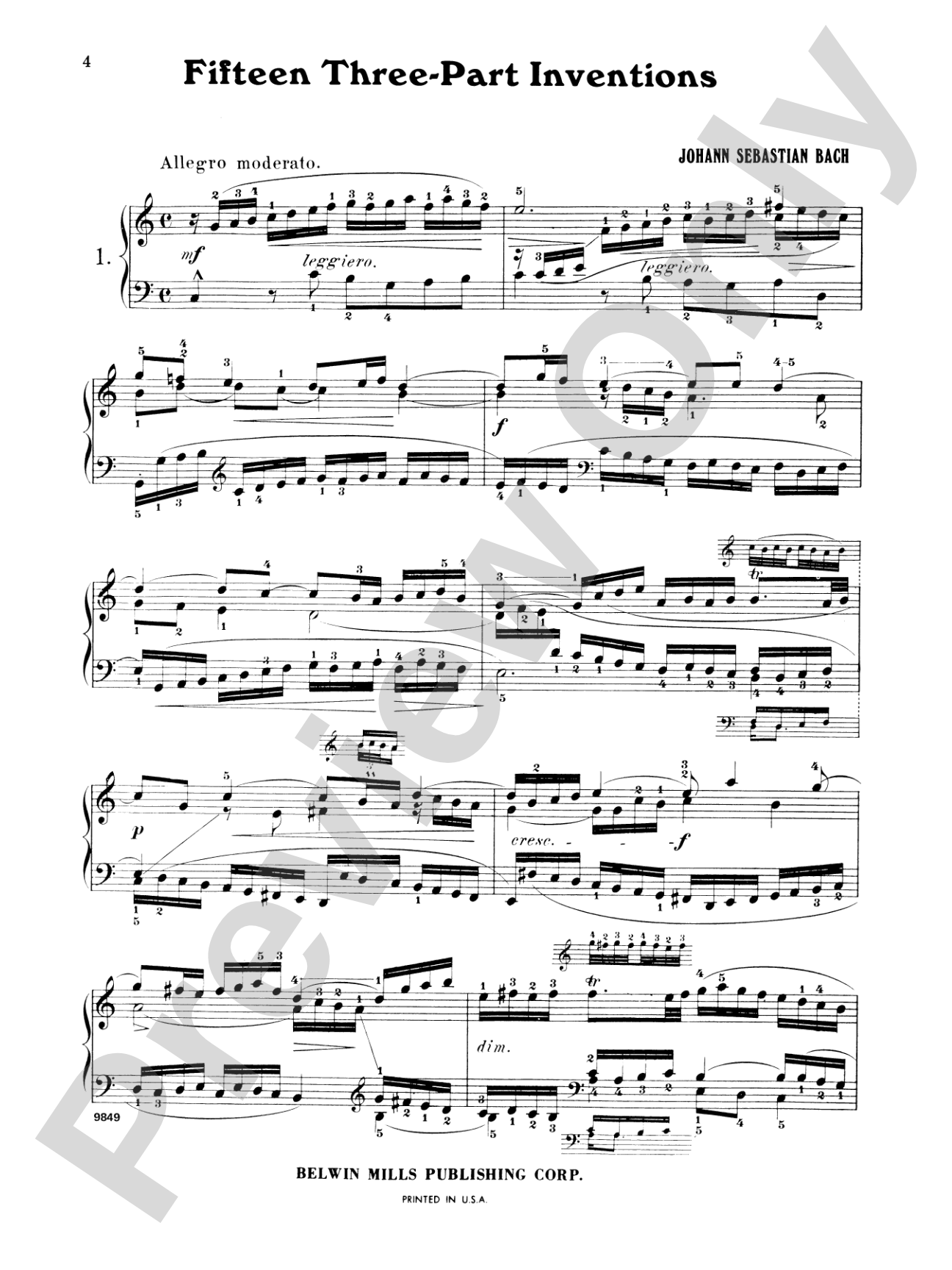
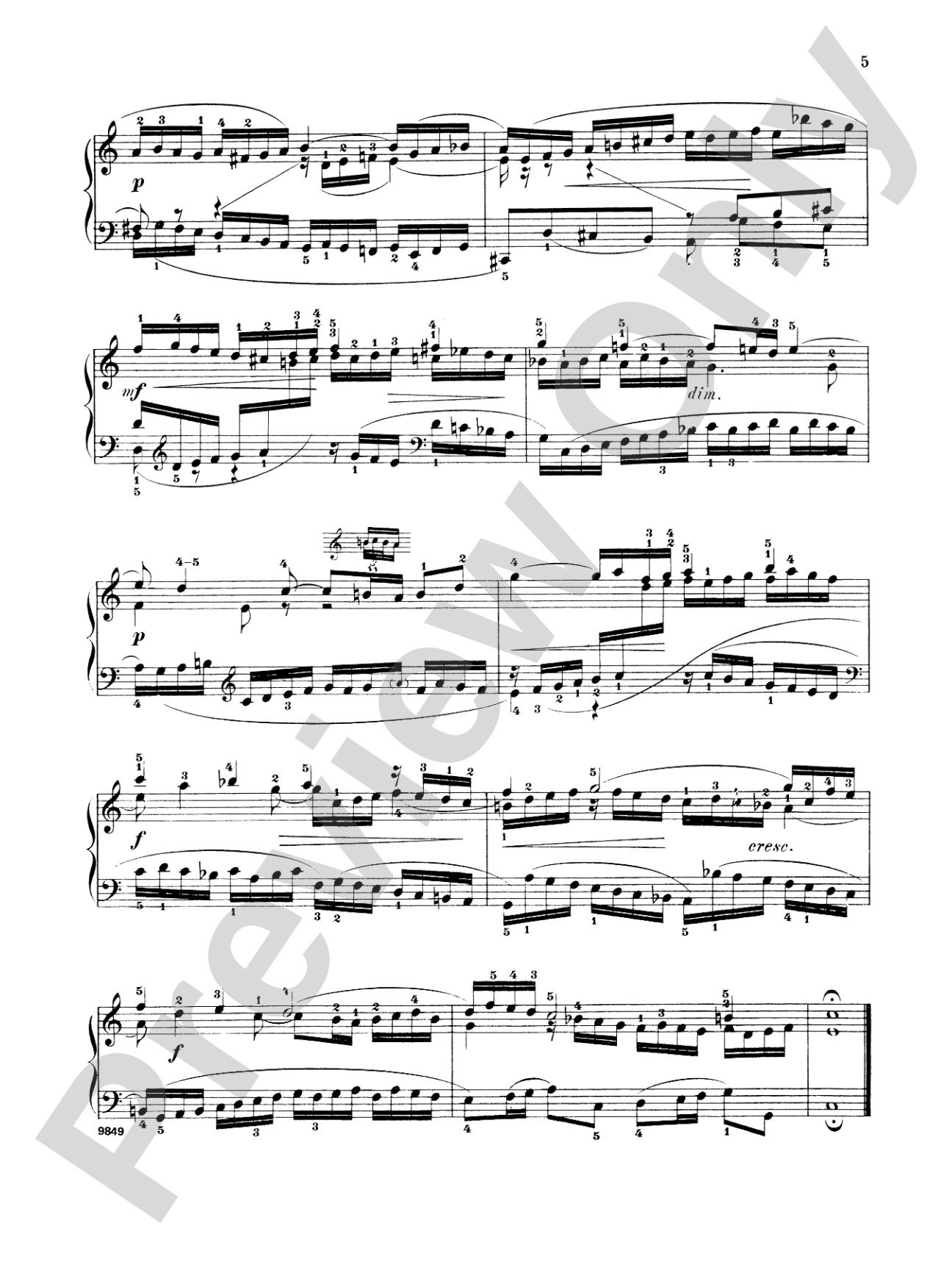
The edition of Johan Sebastian Bach's fifteen 3-Part Inventions, edited by William Mason, contains editorial additions, including dynamics, footnotes regarding execution of ornamentation, fingering and tempo indications. 33 pages.


Don't just read it, hear it, play along with it, and watch your students grow with it. In MakeMusic Cloud, Bach: Three-Part Inventions (Ed. Mason): Piano Book comes alive with professional accompaniment, adjustable tempo, and built-in practice tools that turn solo practice into real progress.
Open in the Player
Jump straight in and assign it today.
Start Your Free Trial
Open this title and explore the full library in minutes.
Sample Audio
No sample audio found.
Sample Video
No sample videos found.
Additional Details
Series:
Kalmus Edition
Publisher:
Alfred Music
Page Count:
36
SKU:
00-PK-0003877
More about this title
About the Composer: Johann Sebastian Bach
Johann Sebastian Bach (1685, 1750) was a master of counterpoint whose works became the foundation of music theory pedagogy. His systematic explorations of musical technique, especially in works like the Well-Tempered Clavier and the Inventions, demonstrate how structural rigor and artistic invention reinforce each other.
Why we love this
Mason's edition strips away the interpretive guesswork by providing clear fingerings, dynamics, and performance notes that honor Bach's intent without over-editing. Three-part writing sits in an ideal pedagogical sweet spot: intricate enough to develop genuine polyphonic thinking, yet more manageable than the six-part Ricercari or the two-part Inventions' unrelenting textural density. These fifteen pieces give your students a complete survey of Bach's contrapuntal genius in one accessible volume.
What to expect
Bach's three-part inventions unfold with surgical clarity and mathematical elegance, yet they sing with genuine emotional shape. Each voice weaves in and out of the texture like a conversation between three thoughtful speakers, building momentum through sequential patterns and harmonic tension before resolving with satisfying inevitability. The result feels both intellectually rigorous and musically alive.
Who it's for
Pianists progressing from basic classical repertoire into serious contrapuntal study will find these inventions essential. Teachers preparing advanced elementary through early intermediate students for music theory and ear training benefit from having all fifteen pieces with reliable editorial guidance in one volume. Organists and harpsichordists also use this repertoire, though this particular edition is formatted for piano.
How to get the most out of it
- Treat each voice as a complete melodic line with its own character and phrasing; resist the urge to emphasize one hand over the other just because it sits higher on the staff.
- Study Mason's fingering suggestions closely, especially for hand position shifts and voice crossings, since thoughtful fingering choices directly shape how cleanly you can articulate separate voices.
- Practice slowly enough that you can hear all three voices entering and exiting clearly; the contrapuntal architecture disappears if any line rushes or blurs into the texture.
- Pay attention to the editorial ornament notations and tempo indications as guides for stylistic consistency across the set.
How to use it
Feature individual inventions in student recitals throughout the year, pairing them with Baroque solo works or contrasting them with Romantic-era pieces to highlight stylistic differences. Program a complete set of three or four inventions as part of a Bach focus concert or as the classical anchor in a mixed-era student showcase. Use them in masterclass settings to demonstrate counterpoint and voice leading to ensemble musicians across all instruments.
Skills your students will build
- Independent voice leading and hearing multiple melodic lines simultaneously
- Baroque ornamentation execution and period-appropriate articulation
- Polyphonic texture clarity and voice balance on a single instrument
- Following editorial fingering choices to optimize technical execution and musical intent
- Harmonic analysis within a contrapuntal framework
- Structural awareness of imitative form and sequential development